
Solving the High Cost of Imported Feed: Make Your Own Floating Pellets with a Fish Feed Pellet Machine
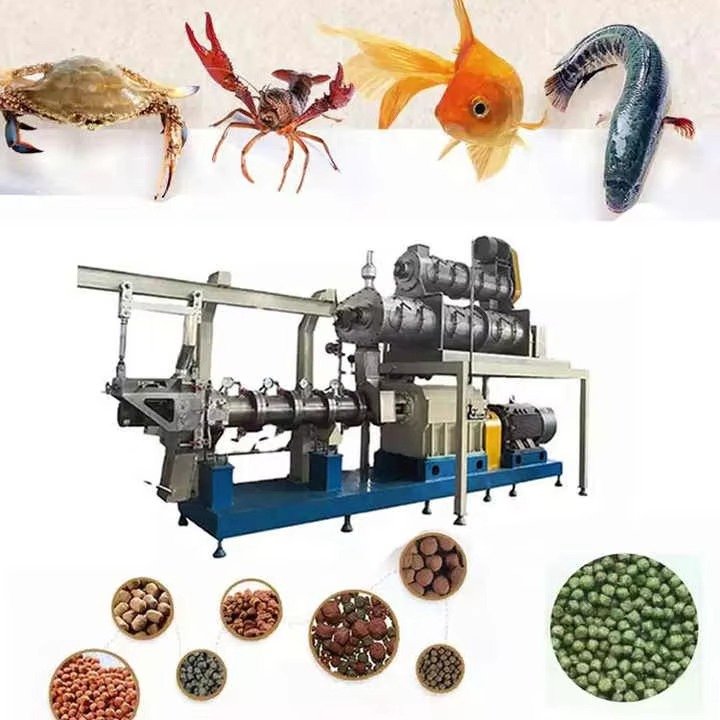
Every fish farmer in Nigeria knows the struggle. You watch your profits disappear into bags of imported feed. The prices keep climbing month after month. Your catfish grow slower because quality varies between batches. You wonder if there is a better way to run your fish farm.
There is a solution right here in Nigeria. You can produce your own high-quality floating fish feed pellets. This cuts your feed costs by half. You control the ingredients. Your fish grow faster and healthier.
MAIKONG has helped over 200 Nigerian farmers and businesses take control of their feed production. We bring 20 years of manufacturing experience directly to your farm or business. Our fish feed pellet machine technology works with local raw materials like cassava, maize, soya, and groundnut cake.
Why Imported Feed Costs Are Draining Your Fish Farm Profits
The numbers tell a painful story for Nigerian fish farmers. Feed typically consumes 60 to 70 percent of total operational costs. When you rely on imported feed pellets, you face multiple hidden expenses beyond the bag price.
The Real Cost of Buying Ready-Made Fish Feed
Transportation adds 15 to 20 percent to your feed bill. Distributors take their margins. Currency fluctuations make prices unpredictable. You cannot plan your budget properly.
Quality inconsistency creates bigger problems. One batch works well. The next batch causes slow growth. Your fish waste feed because the pellet size changes. Water quality suffers when pellets sink too quickly.
Storage losses hurt profits silently. Imported feed often arrives near its expiration date. Humidity in Nigerian climate degrades the feed quickly. You throw away 5 to 10 percent before your fish even eat it.
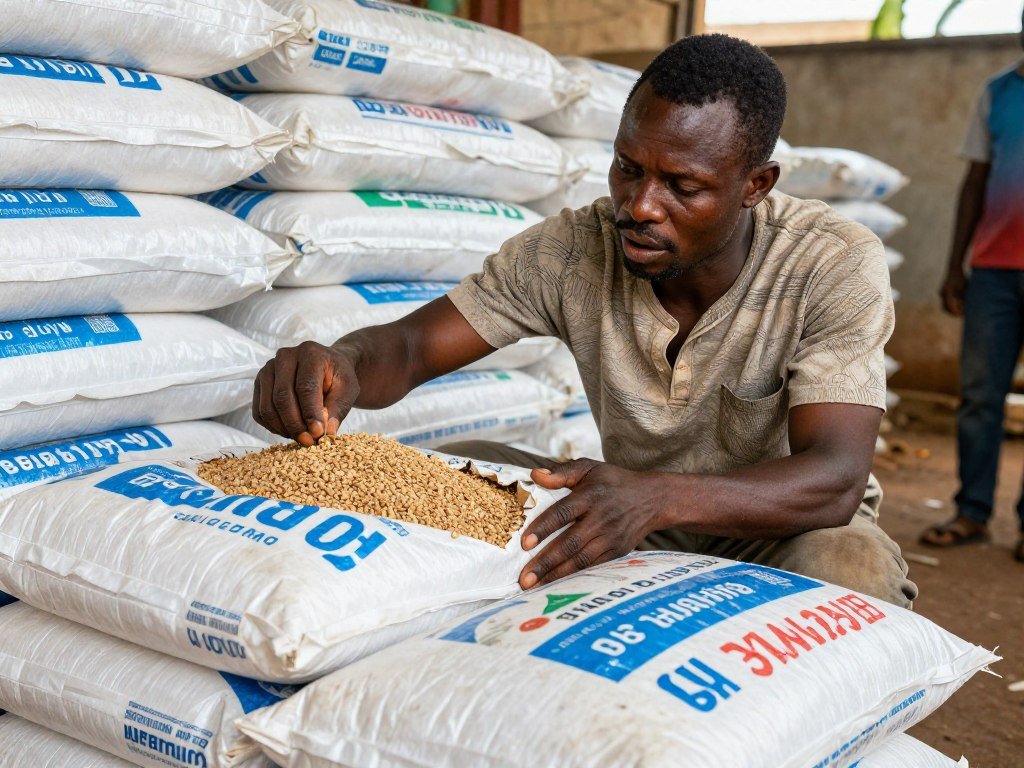
How Local Production Changes Everything
Nigerian farmers who switched to their own fish feed pellet machine report dramatic cost reductions. Your savings start immediately because you buy raw materials directly from local suppliers. No middlemen take their cut.
You create feed formulas specifically for your fish species. Catfish need different nutrition than tilapia. Large fish require bigger pellets than fingerlings. Your machine produces exactly what your fish need at each growth stage.
The floating fish feed your machine produces stays on water surface longer. This reduces waste. You see faster growth rates. Your harvest cycles shorten by 10 to 15 percent.
Imported Feed Reality
- Costs rise 15-25% annually
- Quality varies between batches
- Storage losses reach 10%
- No control over ingredients
- Currency risks increase prices
- Long supply chain delays
Own Production Benefits
- Fixed costs with local materials
- Consistent quality every batch
- Fresh feed daily
- Custom formulations possible
- No currency exposure
- Produce on demand
What Makes a Fish Feed Pellet Machine Essential for Nigerian Aquaculture
A quality fish feed pellet machine transforms affordable local ingredients into professional-grade floating fish feed. The technology behind modern fish feed machinery has advanced significantly in recent years.
Understanding Floating vs Sinking Fish Feed Production
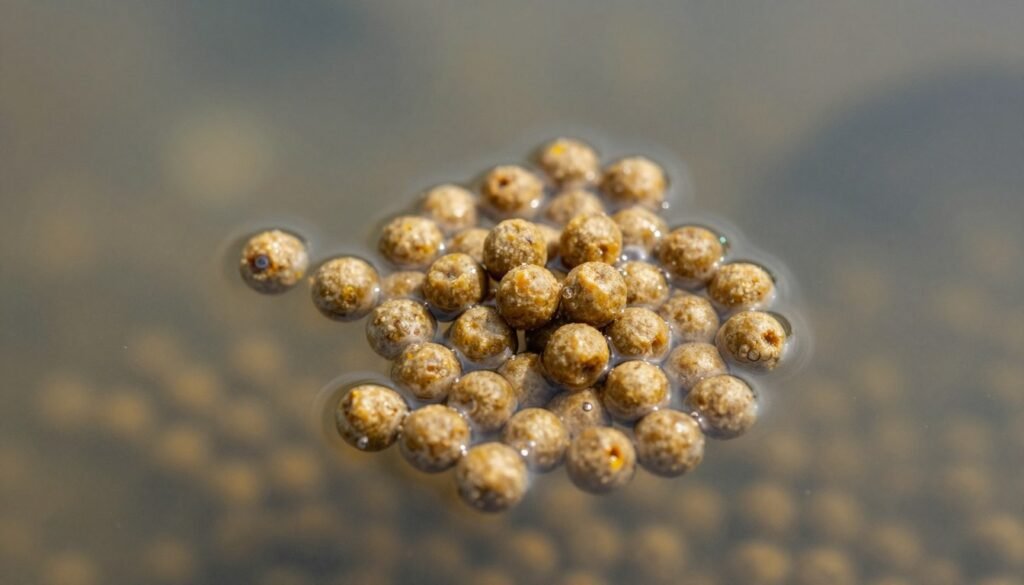
The type of fish feed you produce matters greatly. Floating fish feed pellets remain on water surface for 12 hours or more. This allows farmers to monitor feeding carefully. You see exactly how much fish consume. You adjust portions to avoid waste.
Sinking feed works better for bottom-feeding fish species. Some farmers need both types. MAIKONG fish feed pellet machines can produce either type by adjusting temperature and moisture settings during extrusion.
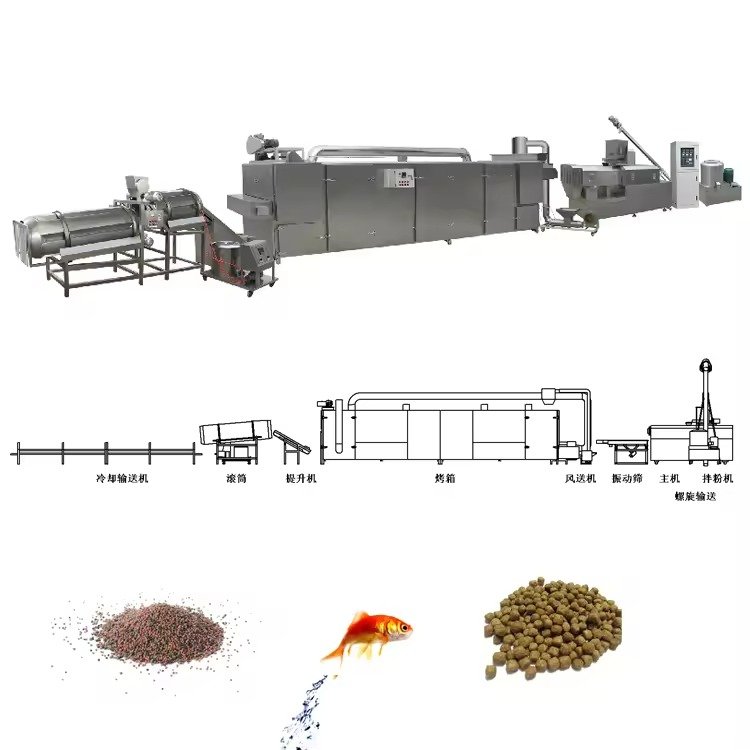
The extrusion process cooks ingredients under high temperature and pressure. This creates the air pockets that make pellets float. The same process also kills harmful bacteria and breaks down anti-nutritional factors in some raw materials.
Key Components That Determine Machine Quality
The die and roller assembly forms the heart of any pellet machine. This component shapes raw material into uniform pellets. MAIKONG uses hardened alloy steel that lasts 5 to 7 times longer than standard steel dies.
Motor power determines production capacity. Small farms need 15 to 22 kilowatts for 100 to 150 kilograms per hour. Larger operations require 37 to 55 kilowatts for 300 to 500 kilograms per hour output.
Temperature control system ensures consistent pellet quality. Our machines maintain precise heat during extrusion. This creates pellets with proper density and floating characteristics every time.
Stop Losing Money on Imported Feed
Get a free production line design and ROI calculation customized for your farm size and fish species. Our engineers will show you exactly how much you can save monthly.
How Nigerian Fish Farms Benefit from Their Own Feed Production Line
Real results from Nigerian farms demonstrate the power of owning a fish feed pellet machine. These success stories come from customers across different states and farm sizes.
Cost Reduction Results from Nigerian Fish Farmers
A catfish farmer in Ogun State reduced feed costs from ₦450 per kilogram to ₦180 per kilogram. His 20-pond operation now saves ₦2.7 million naira monthly. The machine paid for itself in four months.
A commercial tilapia farm in Kano produces 800 kilograms of floating fish feed daily. They eliminated dependence on unreliable suppliers. Their fish growth rate improved by 18 percent due to consistent feed quality.
Small-scale farmers benefit too. A woman-owned cooperative in Enugu shares one machine among five members. Each produces feed two days per week. Their collective savings exceed ₦500,000 monthly.
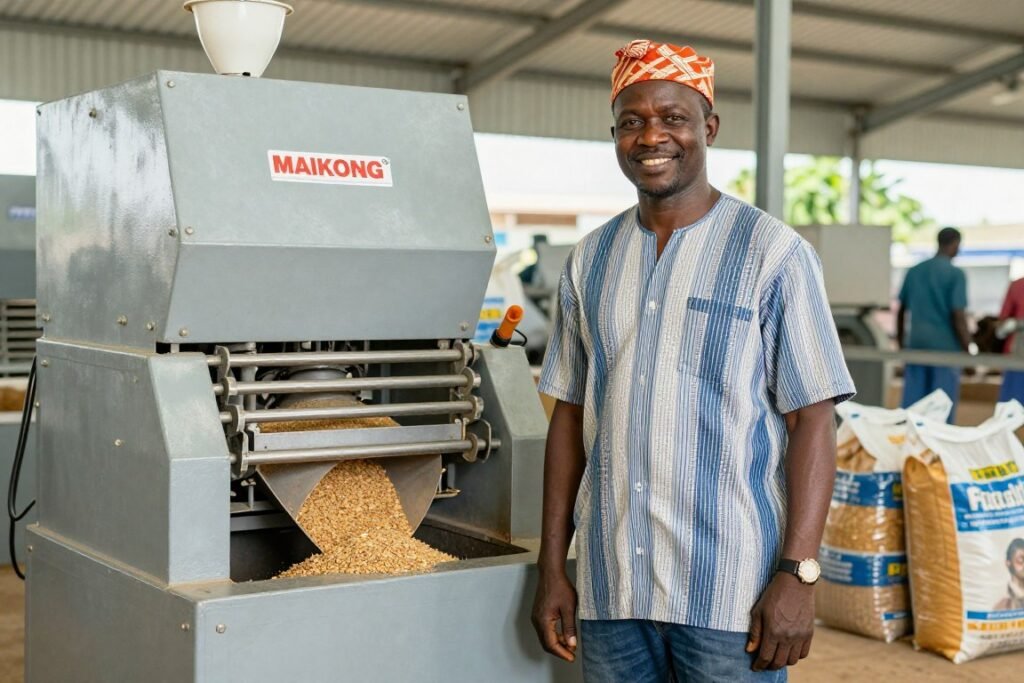
Quality Improvements Beyond Cost Savings
Fish health improves dramatically with fresh, custom-formulated feed. Farmers report lower disease rates and mortality. Veterinary costs drop by 30 to 40 percent on average.
Water quality stays cleaner with proper floating feed. Pellets do not dissolve quickly and cloud the water. This reduces the need for frequent water changes. Labor costs decrease accordingly.
Harvest size increases measurably. Catfish reach market weight 3 to 4 weeks faster. This means more production cycles per year. Annual revenue grows 20 to 35 percent without expanding pond capacity.
Small Farm (100-300 kg/day)
Investment: ₦3.5-5.5 million
Monthly savings: ₦800k-1.2M
Payback period: 4-6 months
Best for: Individual farmers, small cooperatives
Medium Farm (300-800 kg/day)
Investment: ₦6.5-12 million
Monthly savings: ₦2-4.5 million
Payback period: 3-5 months
Best for: Commercial farms, feed distributors
Large Operation (800+ kg/day)
Investment: ₦15-35 million
Monthly savings: ₦6-15 million
Payback period: 2-4 months
Best for: Major producers, feed mills
Choosing the Right Fish Feed Pellet Machine for Your Nigerian Operation
The Nigerian market offers various fish feed pelletizer machines options. Understanding key specifications helps you select the best equipment for your needs and budget.
Manual Fish Feed Pellet Machine vs Automatic Systems
A manual fish feed pellet machine requires an operator to feed materials continuously. These machines cost less initially. They work well for very small farms producing 50 to 100 kilograms daily. Output depends heavily on operator skill and attention.
Automatic systems include hoppers that feed material steadily into the pellet machine. Production runs consistently without constant supervision. One worker monitors multiple stages of the process. This reduces labor costs significantly for larger operations.
Semi-automatic systems offer a middle path. The feeding process requires some manual attention. But the pelleting, cutting, and cooling stages operate automatically. Many Nigerian farms find this balance optimal.
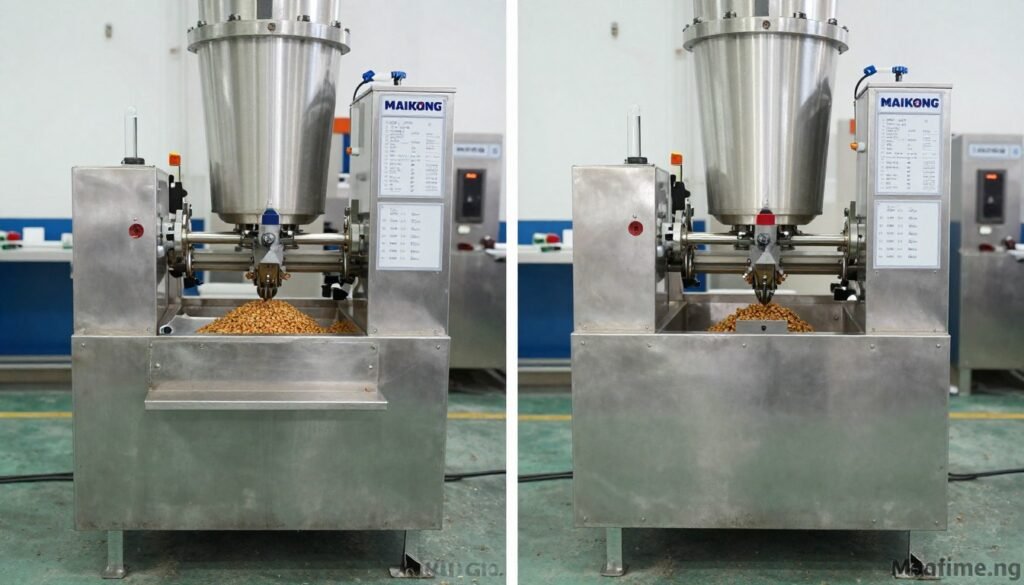
Where to Buy Fish Feed Pellet Machine in Nigeria
Local availability matters greatly for after-sales support. MAIKONG maintains service centers in Lagos, Abuja, Kano, and Port Harcourt. Our technicians respond within 24 hours to any service request.
Beware of cheap imports without local representation. You save money initially. But you lose much more when the machine breaks down and parts take months to arrive from overseas. Nigerian climate and power conditions require machines built to handle these challenges.
Consider total cost of ownership rather than purchase price alone. A slightly more expensive machine with local parts availability and expert support delivers better value over its 10 to 15 year lifespan.
| Machine Type | Capacity (kg/hour) | Power (kW) | Best For | Price Range |
| Manual Flat Die | 60-100 | 7.5-15 | Backyard farms, testing | ₦800k-1.5M |
| Semi-Auto Flat Die | 100-200 | 15-22 | Small commercial farms | ₦2M-3.5M |
| Auto Ring Die | 200-400 | 22-37 | Medium farms, cooperatives | ₦4M-7M |
| Floating Feed Extruder | 150-300 | 18.5-30 | Quality-focused farms | ₦5M-9M |
| Complete Production Line | 500-1000 | 75-132 | Feed mills, large operations | ₦15M-35M |
Technical Specifications and Operation of Fish Feed Machinery
Understanding how a fish feed pellet machine operates helps you maximize production efficiency and pellet quality. The process involves several carefully coordinated stages.
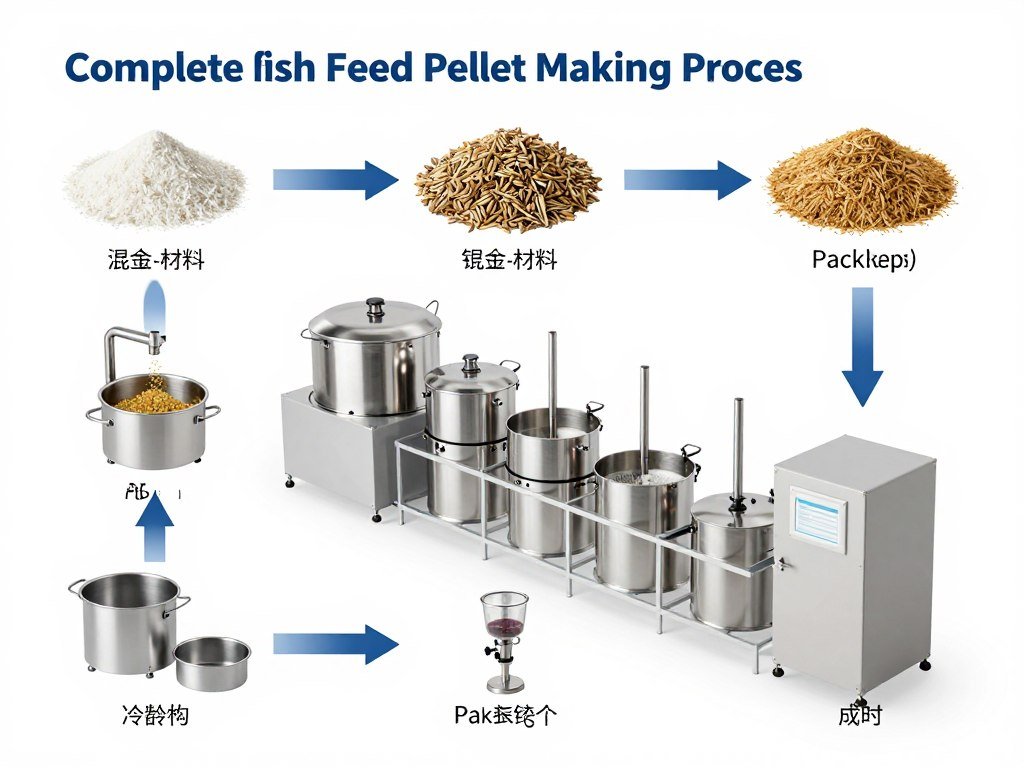
The Feed Pellet Making Process Explained
Raw material preparation starts the process. You grind corn, soybean meal, fish meal, and other ingredients to uniform particle size. This typically means 2 to 3 millimeter particles. Uniform grinding ensures consistent pellet density.
Mixing combines all ingredients thoroughly with proper moisture content. The mixture should reach 15 to 20 percent moisture for optimal pelleting. Too dry and pellets crumble. Too wet and they clog the die.
The pelleting stage forces the mixed material through die holes under high pressure. Temperature reaches 80 to 120 degrees Celsius from friction. This heat cooks the starch and binds ingredients together.
Cooling and drying stabilize the finished pellets. Pellets exit the die at 60 to 80 degrees Celsius. They need to cool to ambient temperature before packaging. This prevents moisture condensation inside storage bags.
Raw Materials Suitable for Nigerian Fish Feed Production
Nigerian farmers have access to excellent local raw materials for fish feed. Corn provides energy and makes up 30 to 45 percent of most formulas. It is available nationwide at competitive prices.
Soybean meal supplies protein. Quality soybean meal contains 44 to 48 percent protein. Nigerian soybeans from northern states work excellently. You can substitute groundnut cake when soybean prices rise.
Fish meal adds essential amino acids and palatability. Local fish meal from processing plants costs less than imported varieties. It should contain minimum 60 percent protein and maximum 10 percent ash content.
Cassava flour serves as an affordable energy source. It replaces some corn to reduce costs. Cassava availability across Nigeria makes it particularly valuable. Proper processing removes anti-nutritional factors.
Energy Sources (40-50%)
These ingredients provide calories for fish growth and activity.
- Maize/corn – widely available
- Cassava flour – cost-effective
- Wheat bran – good fiber source
- Rice bran – rich in vitamins
Protein Sources (35-45%)
Essential for fish tissue development and growth.
- Soybean meal – best protein value
- Groundnut cake – local alternative
- Fish meal – high quality protein
- Blood meal – supplementary protein
Binders & Additives (5-10%)
These hold pellets together and add nutrition.
- Cassava starch – natural binder
- Vegetable oil – improves floating
- Salt – electrolyte balance
- Bone meal – calcium source
Supplements (1-3%)
Critical for complete nutrition and health.
- Vitamin premix – immune support
- Mineral premix – bone development
- Lysine – essential amino acid
- Methionine – growth promoter
MAIKONG Fish Feed Pellet Machine Models for Every Scale
MAIKONG manufactures a complete range of fish feed machinery specifically for the Nigerian market. Our 20 years of experience shows in every design detail.
Small-Scale Catfish Feed Pellet Machines
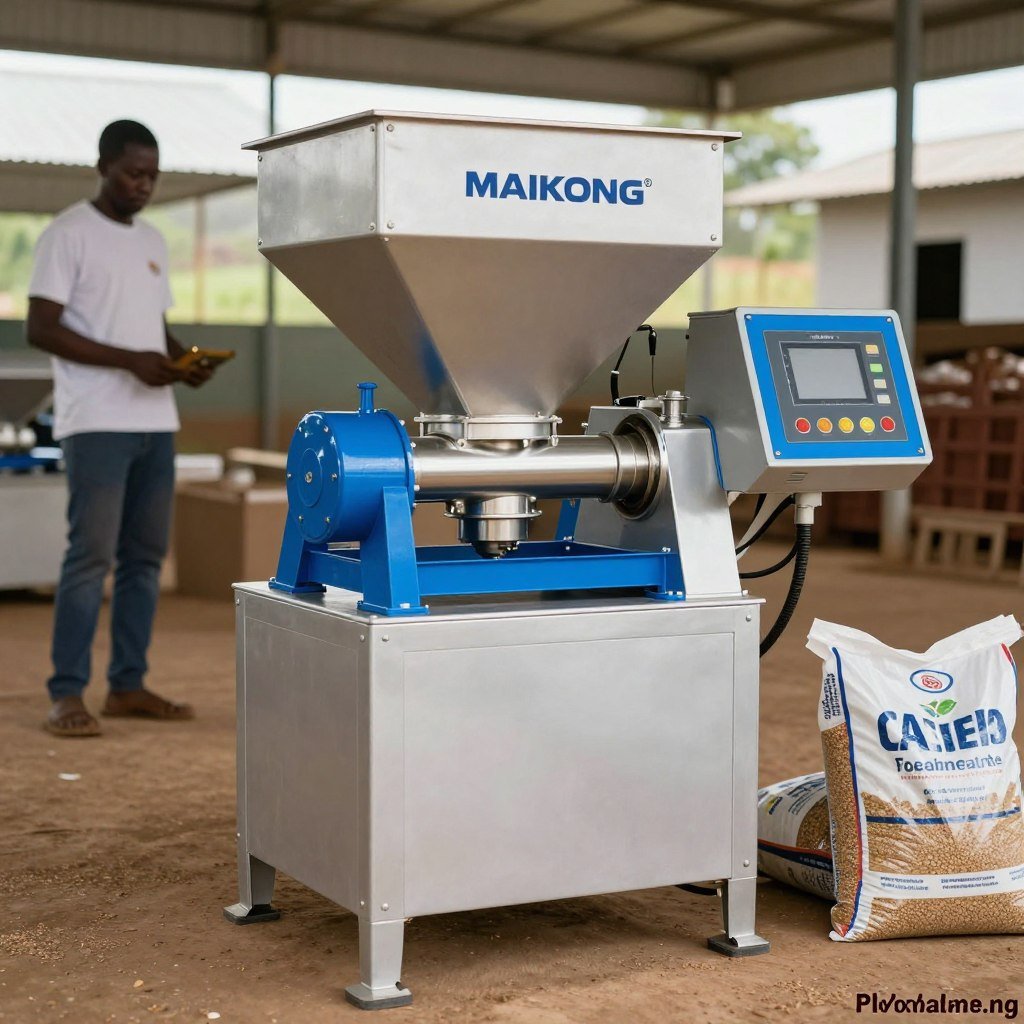
Our catfish feed pellet machine models for small farms produce 100 to 200 kilograms per hour. These compact units fit in a 3 by 4 meter space. Power consumption stays low at 15 to 22 kilowatts.
The die diameter measures 200 to 250 millimeters. This size offers the best balance between output and electricity cost for farms with 10 to 30 ponds. You can change die hole size to produce pellets from 2 to 8 millimeters diameter.
Noise levels stay below 75 decibels during operation. This matters for farms near residential areas. Our sound-dampening design uses quality bearings and balanced rotors.
Medium and Large Capacity Floating Fish Feed Systems
Commercial operations need higher capacity. Our 300 to 500 kilogram per hour models serve medium-sized farms and feed distributors. These systems include automated feeding, mixing, and cooling stages.
Large feed production line installations can reach 1000 kilograms per hour. These complete systems handle everything from raw material grinding through final packaging. One operator manages the entire line from a central control panel.
Customization options include pellet size range, automation level, and additional equipment like oil sprayers or vitamin dosing systems. We design each line for your specific production requirements and available space.
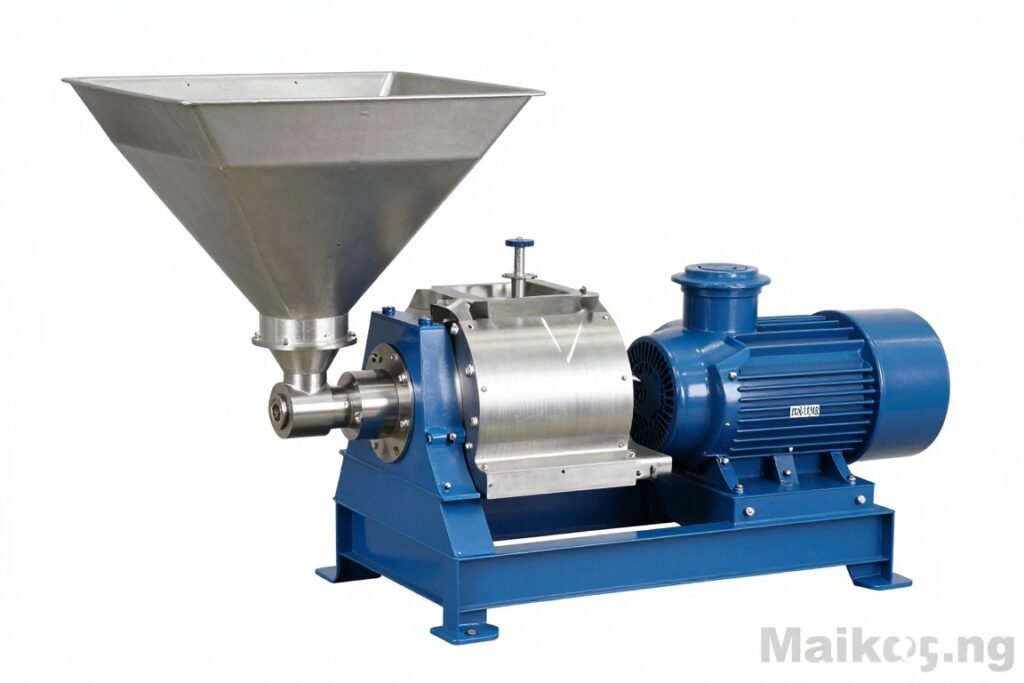
MK-150 Starter Model
- Capacity: 100-150 kg/hour
- Power: 15 kW motor
- Pellet size: 2-6 mm
- Best for: 5-15 pond farms
- Space needed: 3×3 meters
Price: ₦2.8M – ₦3.5M
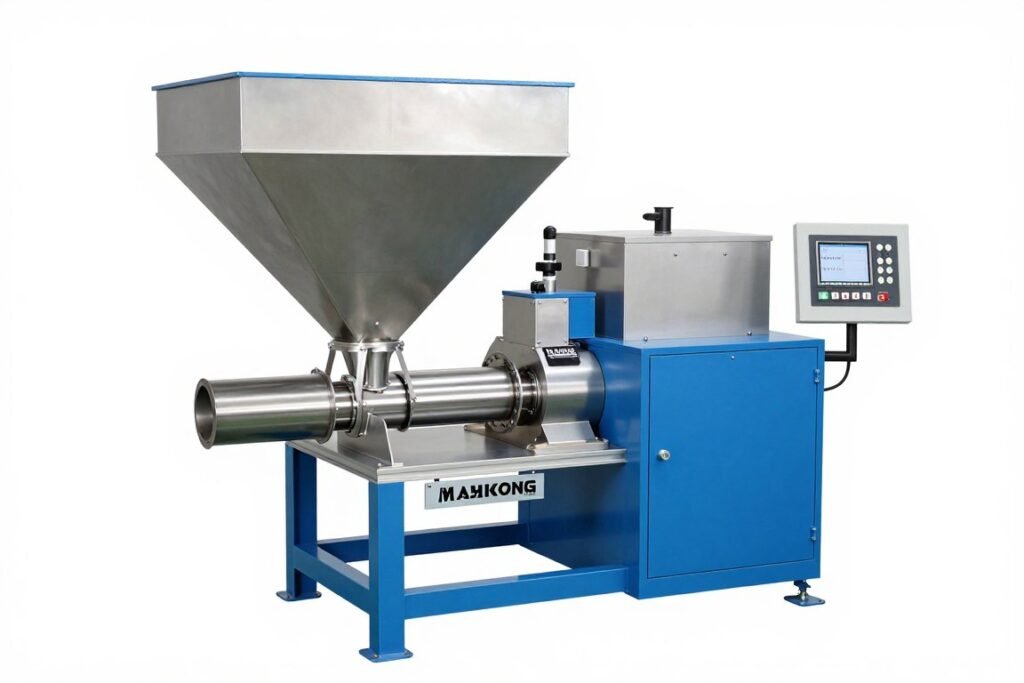
MK-300 Commercial Model
- Capacity: 250-300 kg/hour
- Power: 22 kW motor
- Pellet size: 2-8 mm
- Best for: 20-50 pond operations
- Space needed: 4×5 meters
Price: ₦5.2M – ₦6.8M
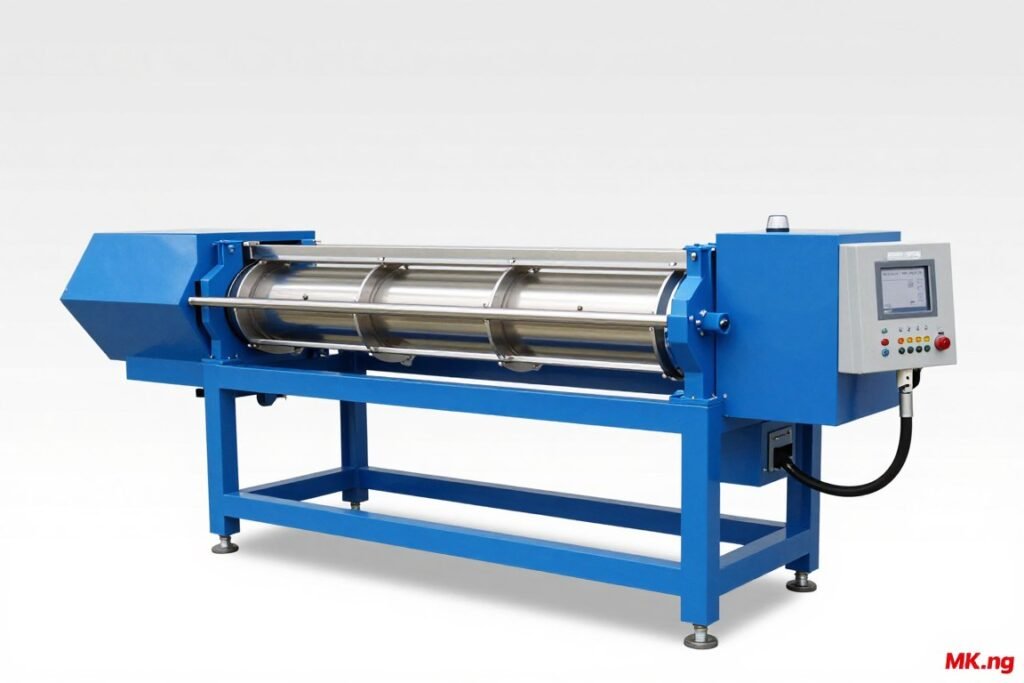
MK-500 Floating Feed Extruder
- Capacity: 400-500 kg/hour
- Power: 37 kW motor
- Pellet size: 1.5-10 mm
- Best for: Feed mills, large farms
- Space needed: 6×8 meters
Price: ₦8.5M – ₦11M
Cost Analysis and ROI Calculations for Nigerian Fish Farmers
Understanding the true cost of a pellet machine for fish feed requires looking beyond the purchase price. Smart farmers calculate total investment and compare it against monthly savings.
Initial Investment Breakdown
The machine itself represents 60 to 70 percent of your initial investment. Installation and setup add another 10 to 15 percent. This includes electrical work, foundation preparation, and initial training.
Working capital for raw materials inventory needs consideration. You should maintain a two-week supply of key ingredients. This ensures uninterrupted production even when suppliers face temporary shortages.
Spare parts inventory matters for minimizing downtime. Keep one set of dies, bearings, and belts on hand. This small investment prevents costly production stoppages.
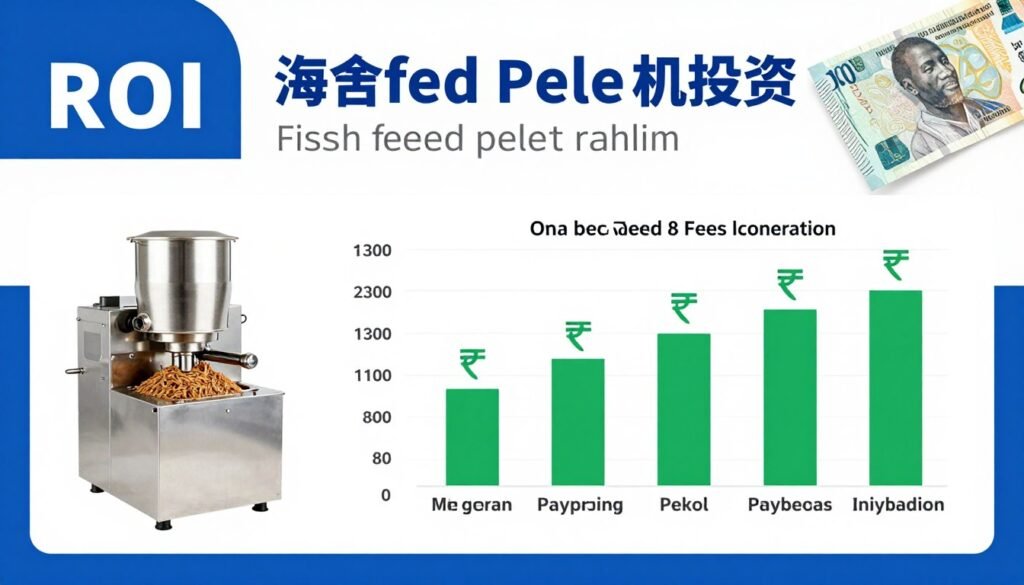
Monthly Operating Costs vs Savings
Electricity consumption for a 300 kilogram per hour machine averages 22 kilowatts. Running 6 hours daily costs approximately ₦25,000 to ₦35,000 monthly depending on your state’s electricity rates.
Labor costs stay minimal. One operator handles production. This same person likely already works on your farm. Additional labor time amounts to 3 to 4 hours daily for most operations.
Maintenance costs run about 2 to 3 percent of machine value annually. A ₦6 million machine requires roughly ₦120,000 to ₦180,000 yearly for routine servicing and part replacements.
| Cost Item | Imported Feed | Own Production | Monthly Savings |
| Feed cost per kg | ₦450 | ₦180 | ₦270/kg |
| Monthly feed (2000 kg) | ₦900,000 | ₦360,000 | ₦540,000 |
| Electricity | – | ₦30,000 | -₦30,000 |
| Labor | – | ₦40,000 | -₦40,000 |
| Maintenance | – | ₦15,000 | -₦15,000 |
| Net Savings | – | – | ₦455,000 |
With ₦455,000 in monthly savings, a ₦6 million machine investment pays back in just 13 months. Most Nigerian farmers achieve full payback within 12 to 18 months based on their specific circumstances.
Installation, Training, and Technical Support Services
MAIKONG provides comprehensive support from delivery through years of operation. Our Nigerian team ensures you succeed from day one.
Complete Installation and Commissioning
Our technicians arrive at your location with the machine. We handle all aspects of installation. This includes leveling the equipment, connecting power supplies, and testing all functions.
Commissioning involves running the machine with your actual raw materials. We adjust settings to produce optimal pellet quality for your specific ingredients. You see results before our team leaves.
Documentation provided includes operation manual, maintenance schedule, and troubleshooting guide. We translate key sections into local languages when needed.
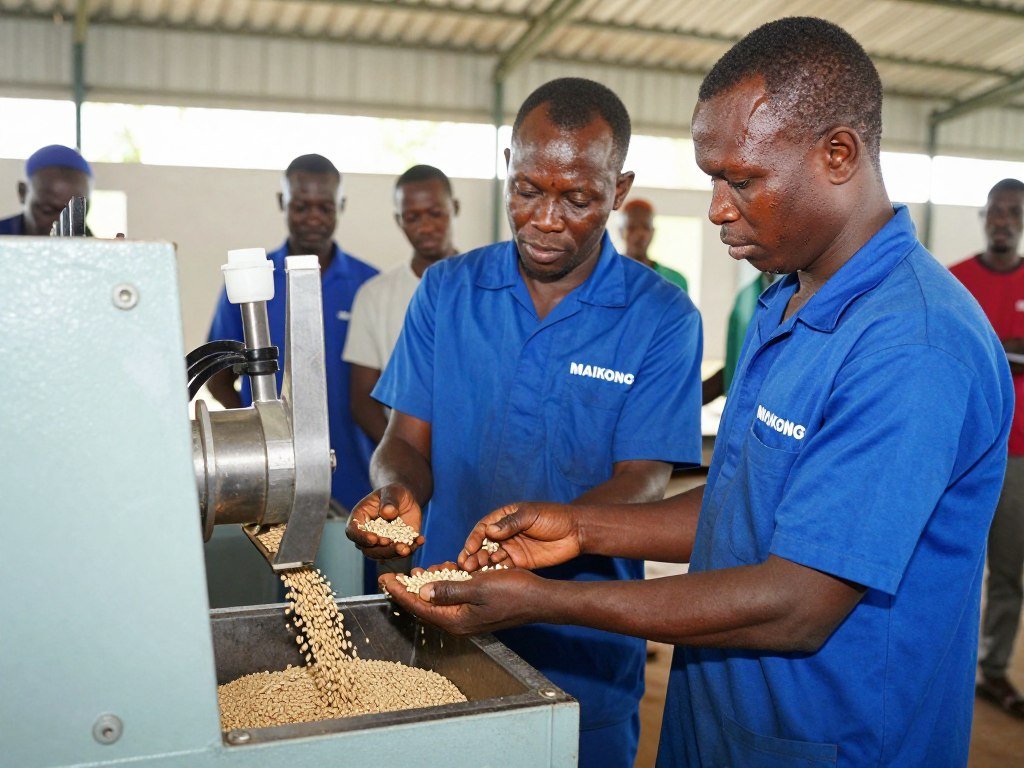
Operator Training Programs
Initial training takes 3 to 5 days. We teach proper startup and shutdown procedures. Your operators learn to adjust settings for different pellet sizes. Safety protocols receive thorough coverage.
Advanced training covers troubleshooting common issues. Operators learn to recognize problems early. This prevents minor issues from becoming major breakdowns.
We offer refresher training quarterly for the first year. This ensures your team maintains best practices. Additional staff can attend these sessions at no extra cost.
Ongoing Technical Support Access
WhatsApp technical support connects you to our engineers instantly. Send a video of any problem. Our team responds within 2 hours during business hours. Emergency support is available 24/7 for critical issues.
Remote diagnostics solve many problems quickly. Our engineers can guide you through adjustments via video call. This saves the cost and time of service visits for minor issues.
Annual maintenance visits ensure optimal performance. Our technicians inspect critical components. They replace wear parts before they fail. This preventive approach maximizes uptime.
Technical Support Available Now
Beyond Fish Feed: Other Applications for Your Pellet Machine
A fish feed pellet machine offers versatile production capabilities. Many Nigerian farmers diversify into additional product lines using the same equipment.
Poultry and Livestock Feed Production
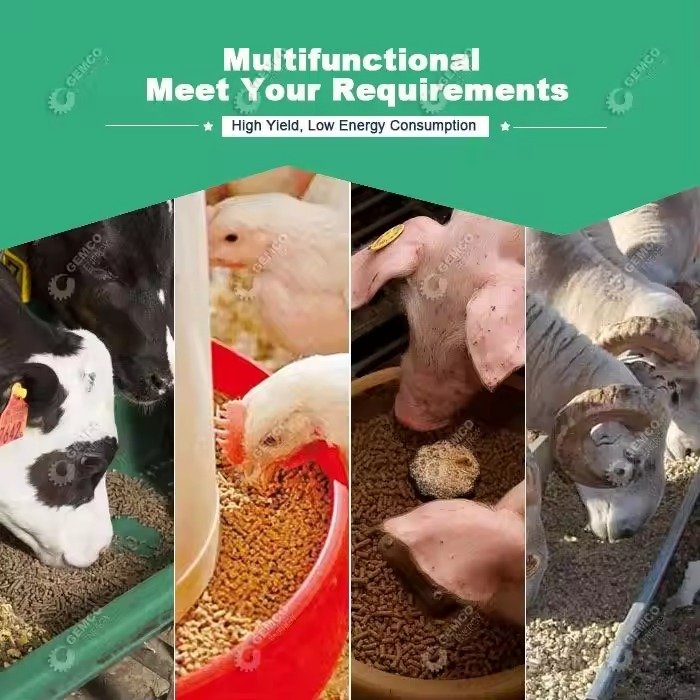
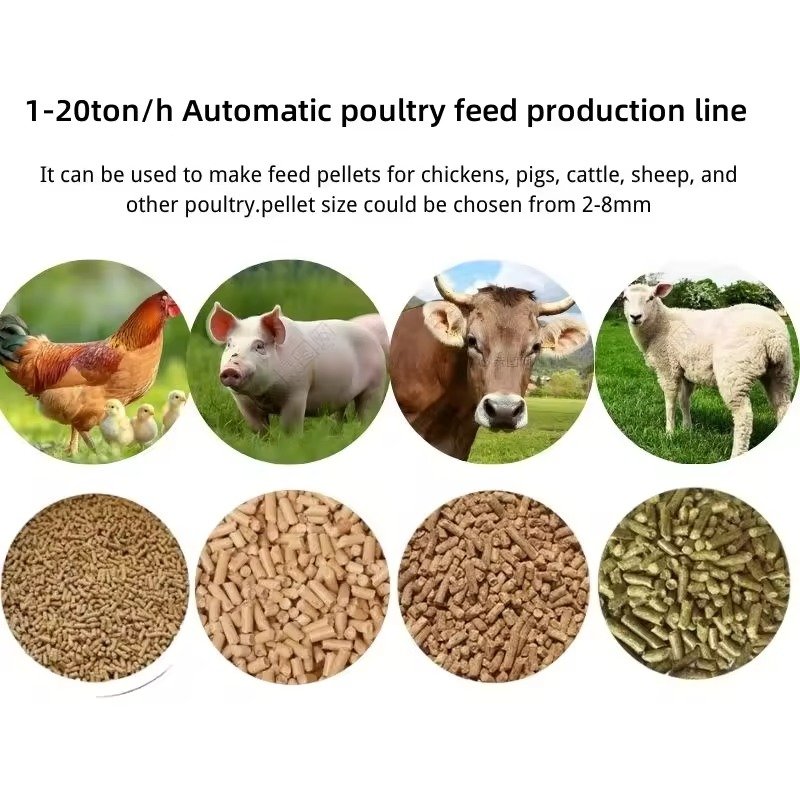
The same machine that makes fish feed produces poultry feed pellet machine output with formula adjustments. Chicken, turkey, and duck feed use similar ingredients. You simply change pellet size and adjust raw material ratios.
Pig and cattle feed production adds another revenue stream. Livestock farmers face the same high imported feed costs. They eagerly buy quality locally-produced alternatives.
Starting a feed distribution business becomes feasible. Produce more than your farm needs. Sell the excess to neighboring farms. Many MAIKONG customers evolved into successful feed suppliers this way.
Pet Food and Specialty Feed Markets
The growing Nigerian pet food market offers opportunities. Dog and cat feed pellets command premium prices. Your machine can produce these with appropriate formulations.
Ornamental fish feed for aquaculture hobbyists represents another niche. These specialized pellets sell at 2 to 3 times standard fish feed prices. Small production batches meet local demand profitably.
Some farmers produce organic certified feed. This caters to premium market segments. The same machine handles organic ingredients. You just maintain separate production runs to preserve certification.
Partnership Opportunities with MAIKONG in Nigeria
MAIKONG actively seeks qualified partners across Nigeria. We offer multiple collaboration models to match your business goals and capabilities.
Authorized Distributor Benefits
Distributors receive exclusive territory rights. No other MAIKONG distributor operates in your designated area. This protection allows you to build market share without internal competition.
Margin structure provides 25 to 35 percent commission on all sales. Volume bonuses reward strong performance. Top distributors earn additional 5 to 10 percent quarterly bonuses.
Marketing support includes branded materials, demo machines, and co-op advertising funds. We provide technical training for your sales team. Customer leads from national campaigns get shared with local distributors.
OEM and White-Label Opportunities
Established feed companies can source machines under their own brand. We manufacture to your specifications. Your company name and colors appear on the equipment.
Minimum order quantities start at just 5 units for OEM arrangements. This makes private labeling accessible even for medium-sized operations. Larger commitments unlock better pricing tiers.
Complete production line customization available. We engineer systems matching your exact requirements. From capacity to automation level to physical footprint, everything adapts to your needs.

Become a MAIKONG Distributor – Earn Up to 35% Commission
Join Nigeria’s fastest-growing pellet machine brand. Get territory protection, technical training, marketing support, and demo equipment. Perfect for agricultural equipment dealers, feed mills, and farm supply businesses looking to expand their product line.
Success Stories from Nigerian Fish Feed Pellet Machine Users
Real results from real Nigerian customers demonstrate the transformative power of owning your feed production. These case studies represent typical experiences across different operation types.
Small Farm Transformation in Ogun State
Mr. Adeleke operates a 15-pond catfish farm in Ogun State. His monthly feed expenses exceeded ₦600,000 before purchasing a MAIKONG MK-150 model. Quality inconsistency from suppliers caused frustration and irregular growth rates.
After installing his machine in January 2023, his costs dropped to ₦280,000 monthly including electricity and raw materials. That is ₦320,000 in monthly savings. His ₦3.2 million investment paid back in exactly 10 months.
More importantly, his fish now reach market size in 5 months instead of 6 months. This 20 percent faster growth means more production cycles annually. His annual revenue increased from ₦8 million to ₦11.5 million without adding ponds.
“The MAIKONG machine changed everything for my farm. I control my costs now. My fish grow faster and healthier. I wish I bought it two years earlier.”
Cooperative Success in Enugu
Five women farmers in Enugu pooled resources to buy a MAIKONG MK-300 model. They formed a cooperative that shares the machine. Each member produces feed on their assigned days.
Collective purchasing power reduced raw material costs further. They buy in bulk directly from suppliers. Individual members save ₦180,000 to ₦250,000 monthly depending on farm size.
The cooperative now sells excess feed to other local farmers. This additional revenue covers all operating costs. Each member effectively produces their own feed free while building a profitable side business.
Commercial Feed Mill Expansion in Kano
Alhaji Musa owned a traditional feed distribution business in Kano. He imported products from major manufacturers. Margins stayed thin at 12 to 15 percent. Supply disruptions frustrated customers.
He invested in a complete MAIKONG production line with 500 kilogram per hour capacity. Initial investment was ₦18 million including building modifications. His business transformed from distributor to manufacturer.
Now he produces 3 tons daily of various feed types. His margins increased to 35 to 40 percent. He controls quality and supply reliability. Sales volume tripled within 18 months. The production line paid for itself in 14 months.
Maintenance Best Practices for Long Machine Life
Proper maintenance extends machine life to 15 years or more. Following these practices minimizes downtime and repair costs.
Daily and Weekly Maintenance Tasks
Daily cleaning prevents ingredient buildup that reduces efficiency. Brush out the mixing chamber after each production run. This takes only 10 minutes but prevents many problems.
Lubrication points need attention every 8 hours of operation. The bearing assemblies require proper grease. Running dry causes premature wear and expensive replacements.
Belt tension checks should occur weekly. Loose belts waste power and cause uneven operation. Overtight belts stress bearings. Proper tension allows 10 to 15 millimeter deflection with moderate finger pressure.
Monthly and Quarterly Service Requirements
Die inspection every month identifies wear patterns early. Small die holes elongate with use. Replace dies when hole size increases by 10 percent. This maintains pellet quality and density.
Electrical connections need quarterly checking. Loose connections cause heat buildup. This can damage control systems. Tighten all terminals and inspect wire insulation condition.
Complete disassembly and deep cleaning should happen quarterly. This reveals hidden wear points. Replace small parts before they fail during production runs.
Critical Spare Parts to Keep On Hand
Minimize downtime by maintaining these items in inventory:
- One complete die set for your pellet size
- Two sets of bearing assemblies
- Spare drive belts (2-3 sets)
- Electrical fuses and contactors
- Cutting blades (3-4 pieces)
These parts represent about 8-10% of machine cost. They prevent 90% of extended downtime situations.
Getting Started with Your MAIKONG Fish Feed Pellet Machine
Starting your feed production journey involves several straightforward steps. MAIKONG guides you through each phase.
Consultation and Needs Assessment
Your first step is contacting our team via WhatsApp, phone, or email. We ask about your current operation. How many ponds do you maintain? What fish species do you raise? What is your monthly feed consumption?
We calculate potential savings based on your specific situation. Our engineers recommend the optimal machine model. You receive a detailed proposal including equipment specifications, pricing, and ROI projections.
Site assessment happens next. We evaluate your available space. Electrical supply capacity gets confirmed. We identify any modifications needed before installation.
Ordering and Delivery Process
Order placement requires 30 to 40 percent deposit. We begin manufacturing your machine immediately. Standard models ship within 2 to 3 weeks. Custom configurations take 4 to 6 weeks.
Delivery to your location anywhere in Nigeria takes 3 to 7 days after shipping. Our logistics partners handle all transportation. Insurance covers the machine until it is installed at your site.
Installation and commissioning occur within 48 hours of delivery. Our technicians complete all setup work. You produce your first batch of feed with our team present.
Payment Options and Financing
Multiple payment methods accommodate different preferences. Bank transfer, cash, and installment arrangements all available. We work with several agricultural finance providers.
Financing options allow 12 to 36 month payment plans. Interest rates start at 12 percent annually for qualified buyers. Your machine pays for itself while you make installments.
Trade-in programs accept your old equipment toward new purchases. This reduces your initial cash requirement. We fairly evaluate trade-in value based on condition and model.

Contact MAIKONG for Your Fish Feed Pellet Machine Solution
Ready to reduce your feed costs and take control of your fish farm profitability? MAIKONG makes the process simple and risk-free.
Nigeria Contact Information
Reach our Nigerian team through any of these methods. We respond to all inquiries within 24 hours, typically much faster.
WhatsApp Sales & Consultation:
WhatsApp Technical Support:
Phone:
Email:
Website:
Office Hours:
Monday – Saturday: 8:00 AM – 6:00 PM WAT
Sunday: Emergency support only
Service Centers
- Lagos – Ikeja GRA
- Abuja – Wuse District
- Kano – Sabon Gari
- Port Harcourt – Trans Amadi
Quick Inquiry Form
Visit Our Website for More Information
Explore our complete product range and resources:
- Complete Pellet Machine Catalog
- Current Pelleting Machine Prices in Nigeria
- Animal Feed Pellet Machines
- Feed Pellet Machine Options
- Poultry Feed Pellet Machines
- Fish Feed Pellet Machine Details
- Distributor Partnership Information
- OEM Manufacturing Services
- How to Order
- About MAIKONG Company
Take Control of Your Fish Farm Profitability Today
The choice facing Nigerian fish farmers could not be clearer. Continue paying inflated prices for imported feed. Watch your profits disappear month after month. Or invest in your own fish feed pellet machine and cut costs by 50 percent or more.
Hundreds of Nigerian farmers already made this decision. They produce their own high-quality floating fish feed. Their fish grow faster and healthier. Their businesses thrive while competitors struggle with rising feed costs.
MAIKONG brings 20 years of manufacturing experience to your farm. Our machines work reliably in Nigerian conditions. Local technical support responds quickly when you need assistance. Thousands of installations across Africa prove our commitment to customer success.
The investment pays for itself in 12 to 18 months for most farmers. After that, your savings go straight to profit. Your machine continues producing value for 15 years or longer with proper maintenance.
Start your journey to lower feed costs today. Contact MAIKONG for a free consultation. We calculate your potential savings. We recommend the perfect machine for your operation. We support you every step from order through years of successful production.
Your more profitable fish farm starts with a single conversation. Reach out now.
Your Free Consultation Includes:
- Custom ROI calculation for your specific farm size
- Recommended machine model and specifications
- Complete pricing with installation and training
- Financing options if needed
- Sample feed formulations for your fish species