
The solution sits in on-site feed production. A feed pellet machine designed for wildlife nutrition changes everything. You control ingredients. You reduce costs. You ensure fresh feed reaches your animals daily.
MAIKONG brings twenty years of pellet machine manufacturing to Nigerian wildlife operations. Our South African factory understands African conditions. We design equipment that works in your climate. Our pelletizing machines handle local raw materials efficiently.
Partner with MAIKONG – Authorized Distributors Wanted Across Nigeria
Join Africa’s leading pellet machine manufacturer. We offer exclusive territorial rights, comprehensive technical training, and attractive dealer margins. Build a profitable business supporting Nigeria’s growing wildlife and livestock sectors.

Feed (Wildlife) Pellet Machine Requirements for Nigerian Reserves
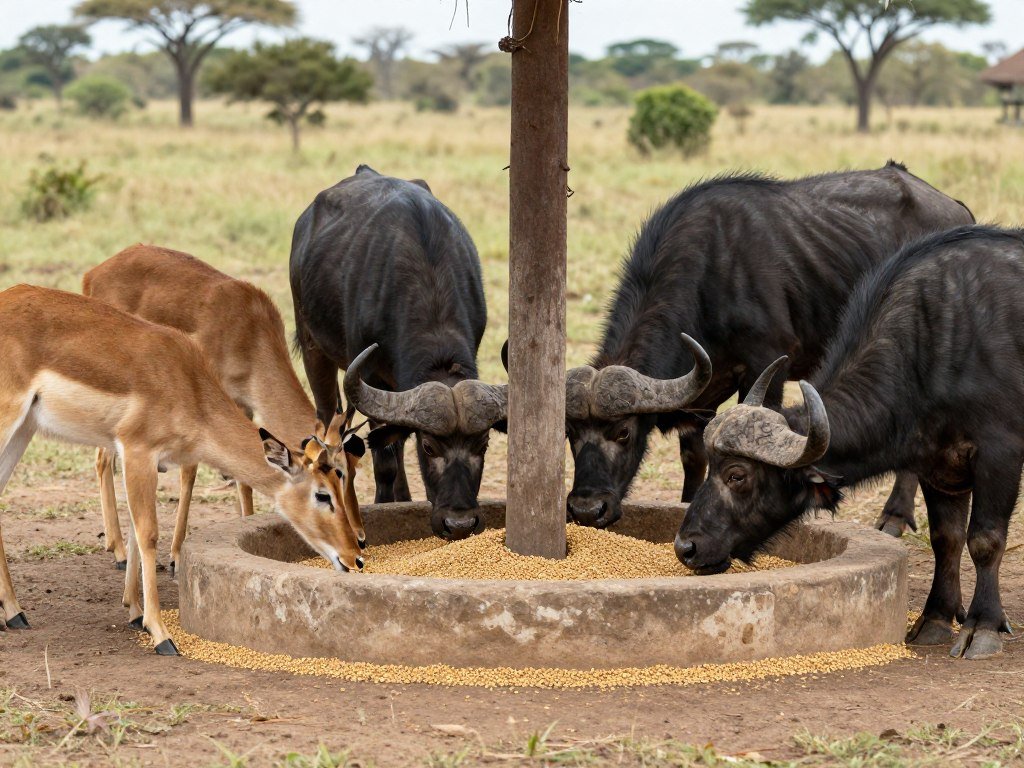
Nigerian wildlife reserves host diverse species. Each animal requires specific nutrition. Antelope need different feed than buffalo. Safari parks manage mixed populations with varying dietary needs.
Traditional feeding methods create waste. Loose grains scatter in wind. Animals select preferred ingredients and leave others. You lose money on uneaten feed.
Pelleted feed solves these problems. Every pellet contains balanced nutrition. Animals consume complete meals. Your feed costs drop significantly.
What Makes Wildlife Feed Different
Game feed differs from livestock nutrition. Wild animals have evolved digestive systems. They process roughage efficiently. Your pellets must contain higher fiber content.
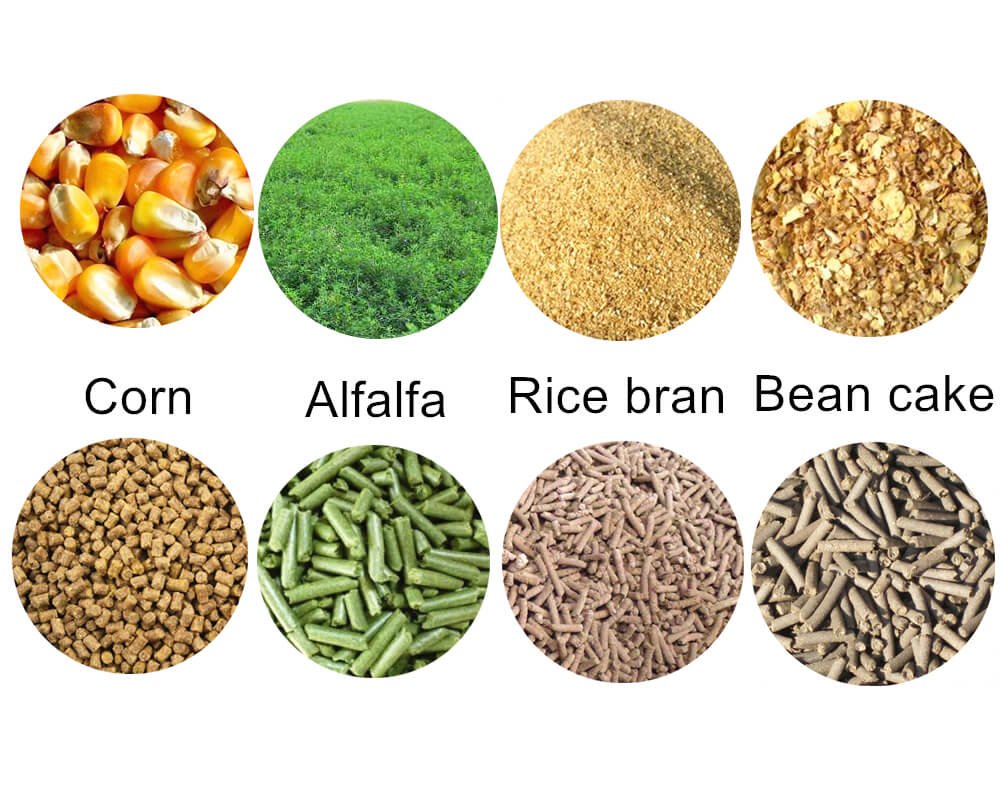
A quality feed pellet making machine handles various ingredients. Browse plants form the base. You add grains for energy. Mineral supplements ensure complete nutrition.
Nigerian reserves often use local materials. Groundnut shells provide roughage. Rice bran adds nutrition. Cassava peel reduces costs. Your pelletizing machine must process these diverse inputs.
Capacity Planning for Reserve Operations
Reserve size determines machine capacity. A small sanctuary needs different equipment than a large safari park. MAIKONG offers models from 150 kg per hour to over 1000 kg per hour.
Calculate your daily feed requirements. Count animal populations. Factor growth rates. Allow for seasonal variations. Choose a machine that meets peak demand.
Small Reserve Requirements
- 50-200 animals total population
- 150-300 kg daily feed production needed
- Manual or semi-automatic operation suitable
- Single-shift production adequate
- Lower initial investment priority
Large Safari Park Needs
- 500+ animals across multiple species
- 800-2000 kg daily feed production required
- Fully automatic continuous operation essential
- Multi-shift capacity planning necessary
- Production efficiency maximization focus
Not sure which capacity fits your operation? Our technical team analyzes your specific requirements. We calculate exact production needs based on animal populations and feeding schedules.
MAIKONG Feed Pelletizer Machine Range for Nigerian Wildlife Applications
MAIKONG manufactures complete pellet machine solutions. Our South African factory produces equipment for African conditions. Each model addresses specific operational requirements.
We design machines that work in Nigerian climates. High temperatures do not stop production. Dust environments receive special sealing. Power fluctuations are handled through protective circuits.
Poultry and Livestock Feed Pellet Machine Models
While specializing in wildlife feed, many reserves also maintain poultry or livestock. MAIKONG equipment serves multiple purposes. Your investment works harder.
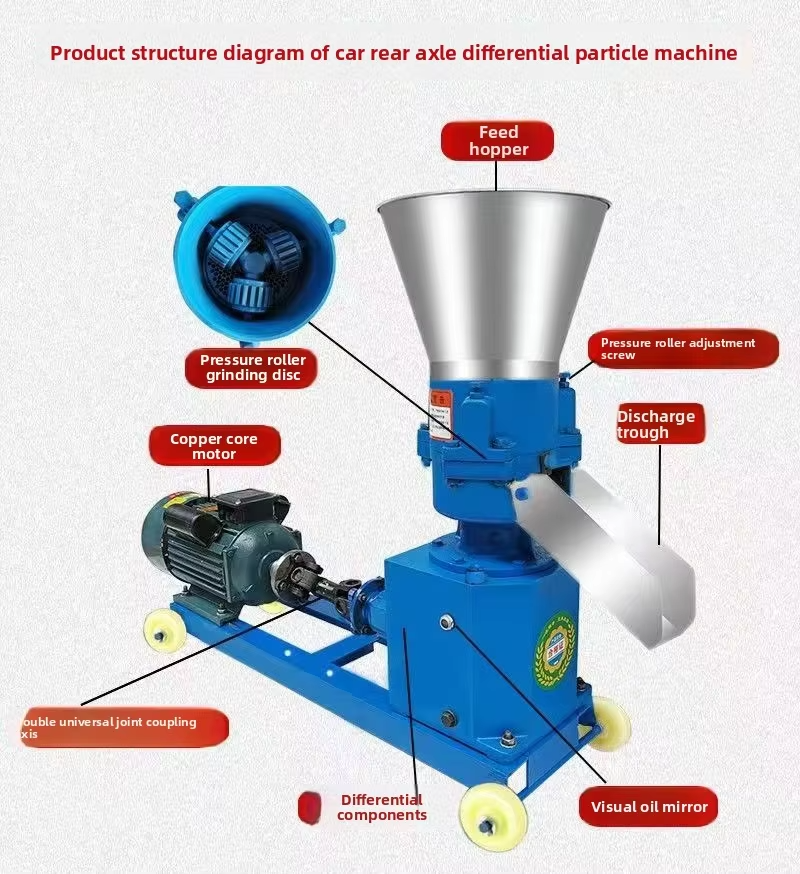
Manual Feed Pellet Machine – 150 kg/hr
Perfect for small wildlife sanctuaries and educational farms. Simple operation requires minimal training. Handles diverse feed ingredients including browse plants and grain mixtures. Ideal for operations under 100 animals.
- Power: 7.5 kW motor
- Output: 150 kg/hour
- Pellet diameter: 3-8 mm adjustable
- Suitable for: Small reserves, research stations
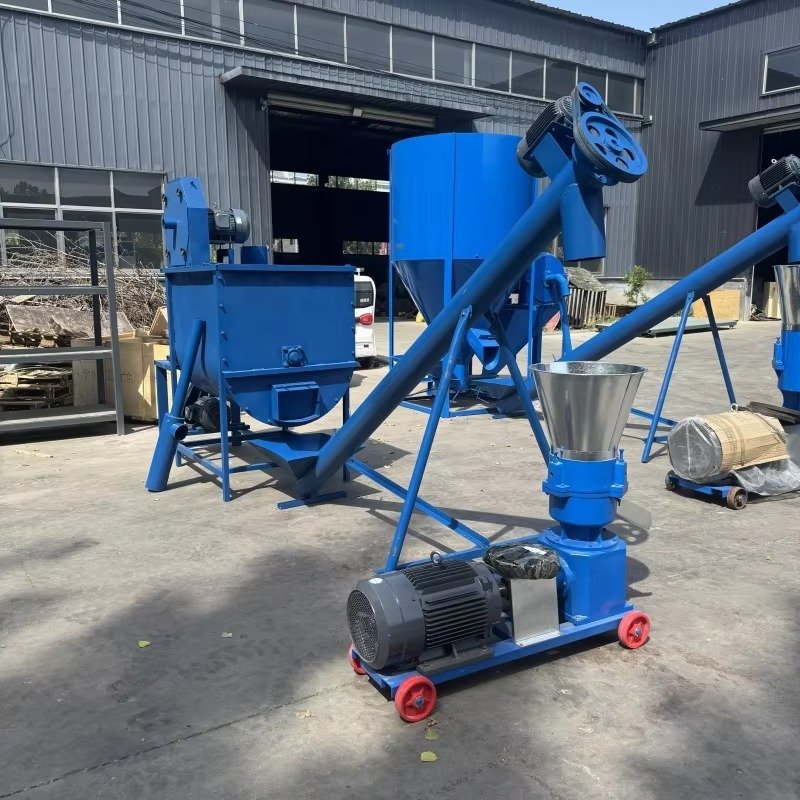
Semi-Automatic Feed Pelletizing Machine – 400 kg/hr
Balances automation with affordability. Serves medium-sized reserves and mixed livestock operations. Produces uniform pellets for wildlife and domestic animals. Popular choice for Nigerian safari lodges.
- Power: 22 kW main motor
- Output: 350-400 kg/hour
- Automation: Semi-automatic feeding
- Suitable for: Medium reserves, mixed operations
Automatic Feed Pellet Machine – 800 kg/hr
Full automation for large safari parks and commercial game farms. Continuous production meets high-volume demands. Integrated process control ensures consistent quality. Minimal labor requirement reduces operational costs.
- Power: 45 kW complete system
- Output: 750-800 kg/hour
- Automation: Fully automatic operation
- Suitable for: Large safari parks, commercial farms
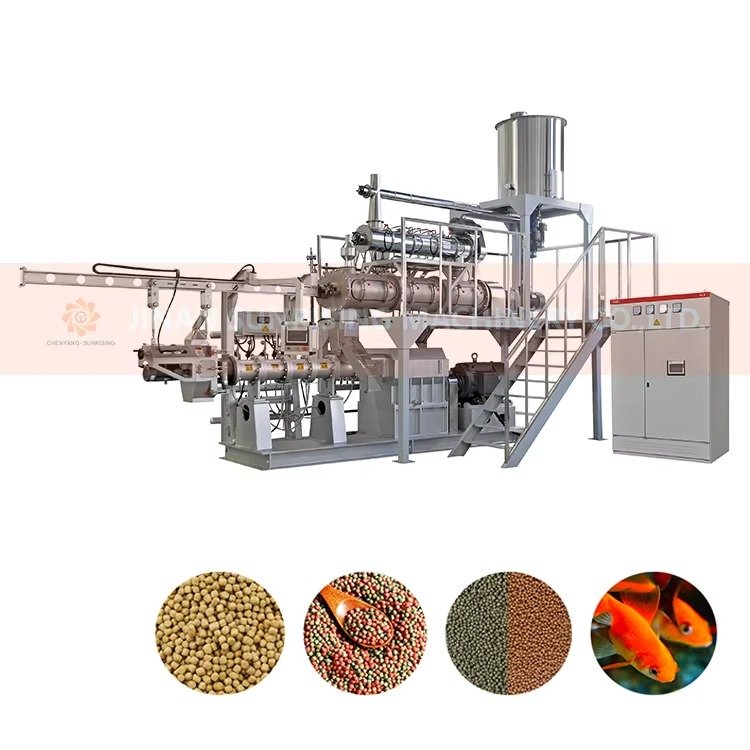
Floating Fish Feed Pellet Extruder – 500 kg/hr
Many reserves include fishing tourism. This specialized machine produces floating fish feed pellets. Water stability prevents waste. Adjustable density suits different fish species from tilapia to catfish.
- Technology: Wet extrusion process
- Output: 450-500 kg/hour
- Pellet type: Floating (adjustable density)
- Suitable for: Reserves with fishing, commercial fish farms
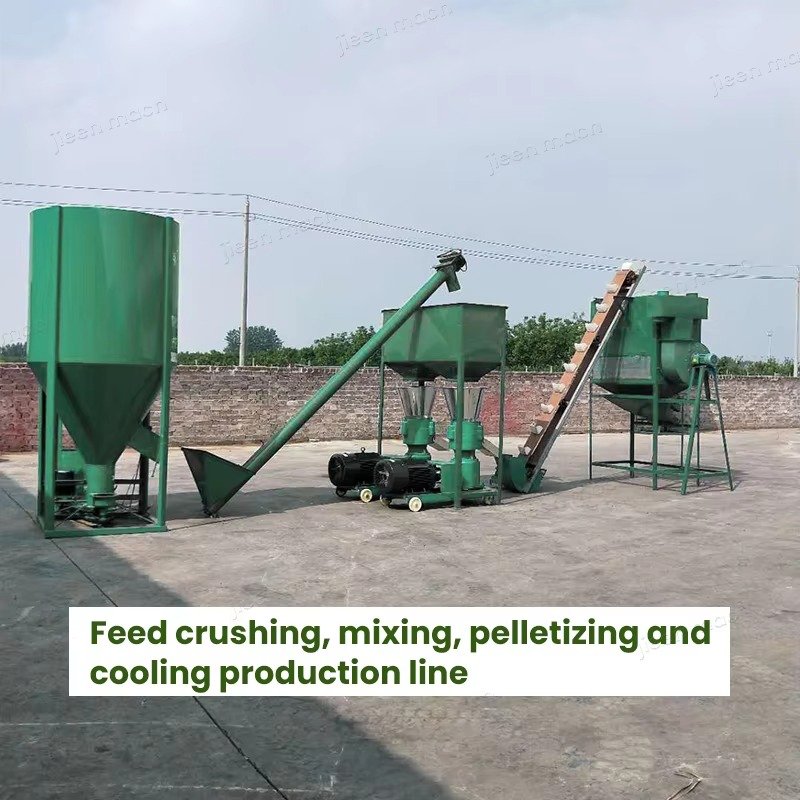
Cattle & Ruminant Feed Pellet Machine – 600 kg/hr
Optimized for fibrous materials that ruminants require. Handles hay, straw, and browse plants efficiently. Many reserves breed buffalo or maintain cattle alongside wildlife. One machine serves multiple animal groups.
- Die specification: Heavy-duty for fibrous materials
- Output: 550-600 kg/hour
- Material range: High-fiber browse to grain mixes
- Suitable for: Buffalo reserves, mixed livestock-wildlife farms
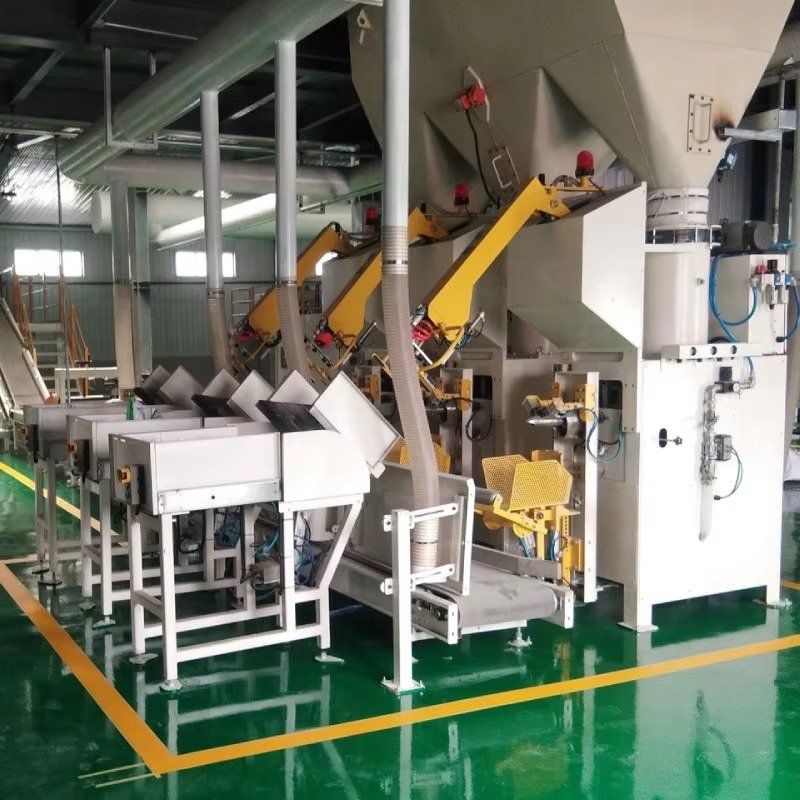
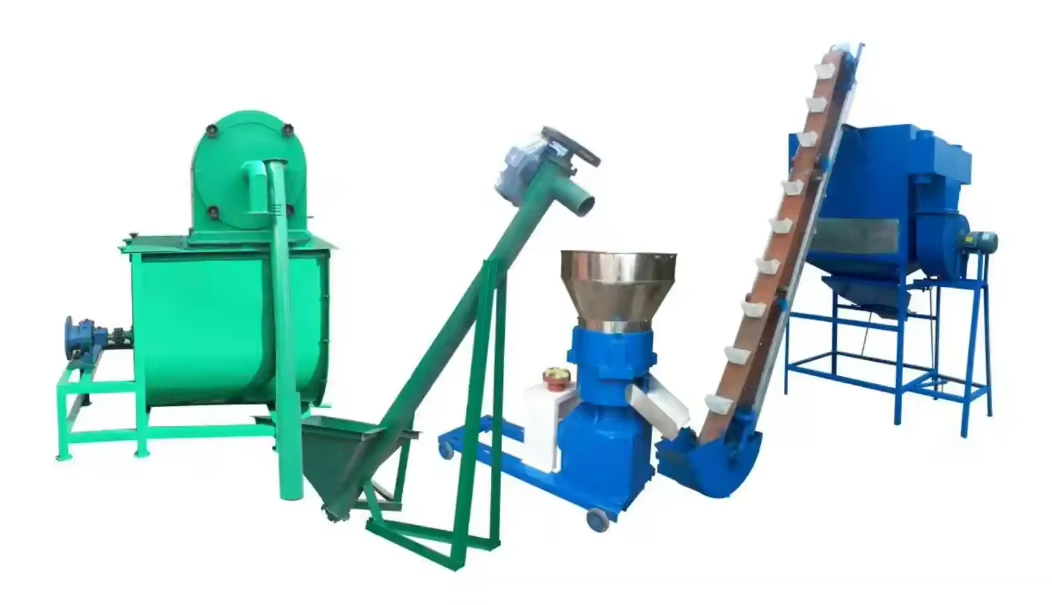
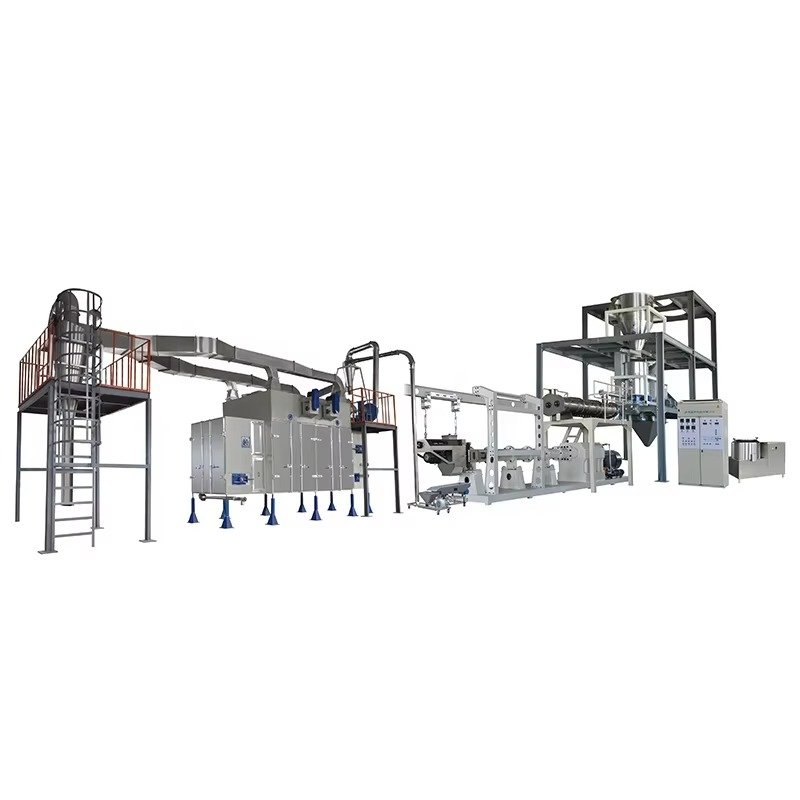
Complete Animal Feed Production Line – 1000+ kg/hr
Turnkey solution for large-scale operations. Includes grinding, mixing, pelleting, cooling, and packaging. Perfect for reserves planning commercial feed sales to neighboring farms. Maximizes operational efficiency and profit potential.
- Components: Grinder, mixer, pellet mill, cooler, packaging
- Output: 1000-2000 kg/hour customizable
- Automation: Full PLC control system
- Suitable for: Large commercial operations, feed distributors
Each machine comes with comprehensive support. MAIKONG provides installation assistance. We train your operators. Spare parts ship from our South African warehouse. Technical support reaches you through WhatsApp.
Technical Specifications and Performance Features
Understanding machine specifications helps you make informed decisions. MAIKONG designs equipment with Nigerian operational conditions in mind. Every component serves a specific purpose.
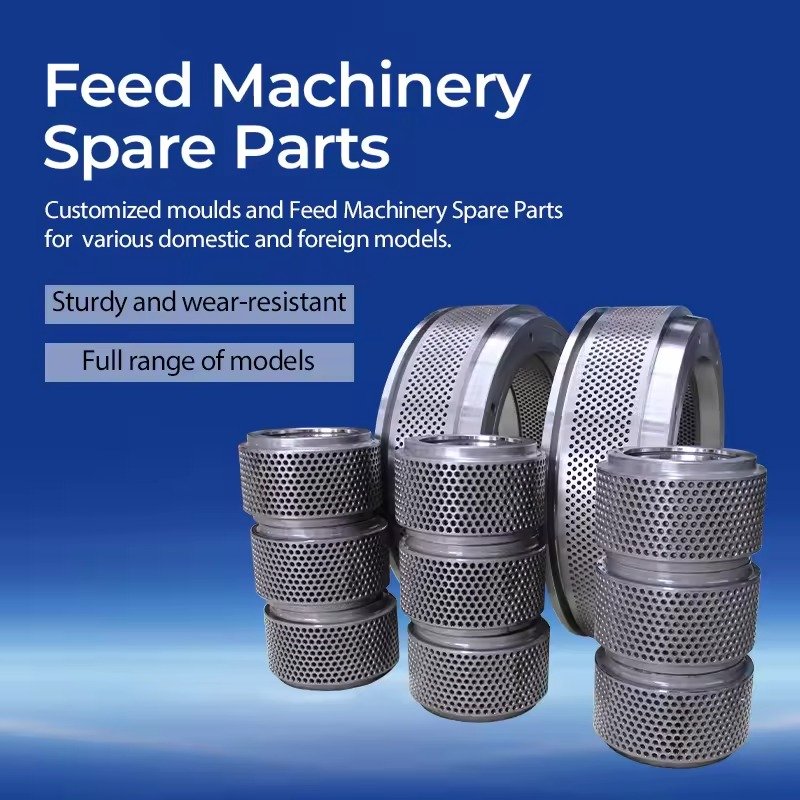
Core Components Explanation
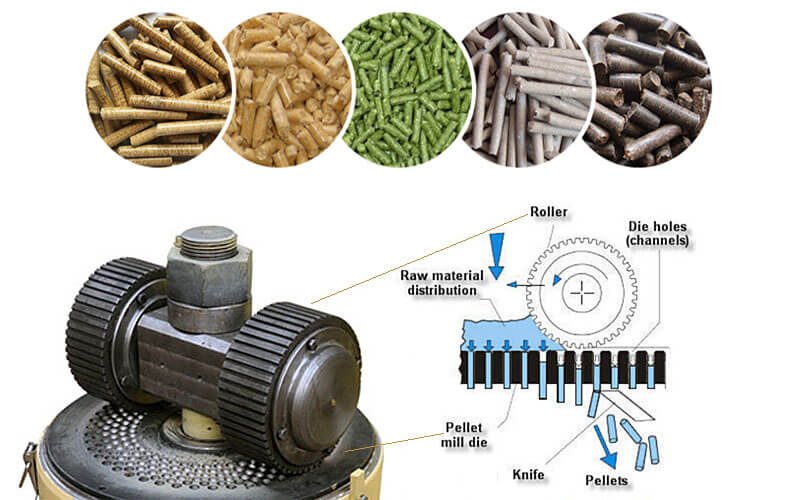
The heart of any pelletizing machine is the die and roller assembly. Raw materials pass through this section. Pressure and friction create heat. Starches gelatinize. Pellets form and exit through die holes.
MAIKONG uses hardened alloy steel for dies. This material withstands abrasive ingredients. Die life extends significantly. You replace parts less frequently.
Motor quality determines reliability. We install premium motors rated for tropical conditions. Overload protection prevents damage. Voltage fluctuations do not halt production.
| Specification | Manual 150kg/hr | Semi-Auto 400kg/hr | Automatic 800kg/hr | Production Line 1000kg/hr |
| Main Motor Power | 7.5 kW | 22 kW | 45 kW | 90 kW total |
| Pellet Diameter Options | 3-8 mm | 3-12 mm | 3-12 mm | 2-12 mm |
| Die Material | Alloy steel | Hardened alloy | Hardened alloy | Premium hardened alloy |
| Moisture Requirement | 12-15% | 12-15% | 12-18% | Automatic control |
| Operator Training Time | 1-2 days | 3-4 days | 5-7 days | 10-14 days |
| Floor Space Required | 2 x 1.5 m | 3 x 2 m | 5 x 3 m | 15 x 8 m |
| Power Supply | Single phase | Three phase | Three phase | Three phase industrial |
| Warranty Period | 12 months | 18 months | 24 months | 24 months comprehensive |
Performance Under Nigerian Conditions
Nigerian climate challenges equipment. High temperatures affect motor performance. Dust infiltrates mechanical systems. Power quality varies across regions.
MAIKONG addresses these challenges systematically. Cooling systems exceed standard specifications. Sealed bearings prevent dust contamination. Voltage stabilizers protect sensitive electronics.
We test every machine before shipping. Production runs verify performance. You receive equipment ready for immediate operation.
Return on Investment: Why Nigerian Reserves Choose Feed Pellet Machines
Reserve managers watch budgets carefully. Every naira spent must deliver value. A feed pellet machine investment pays back quickly through multiple channels.
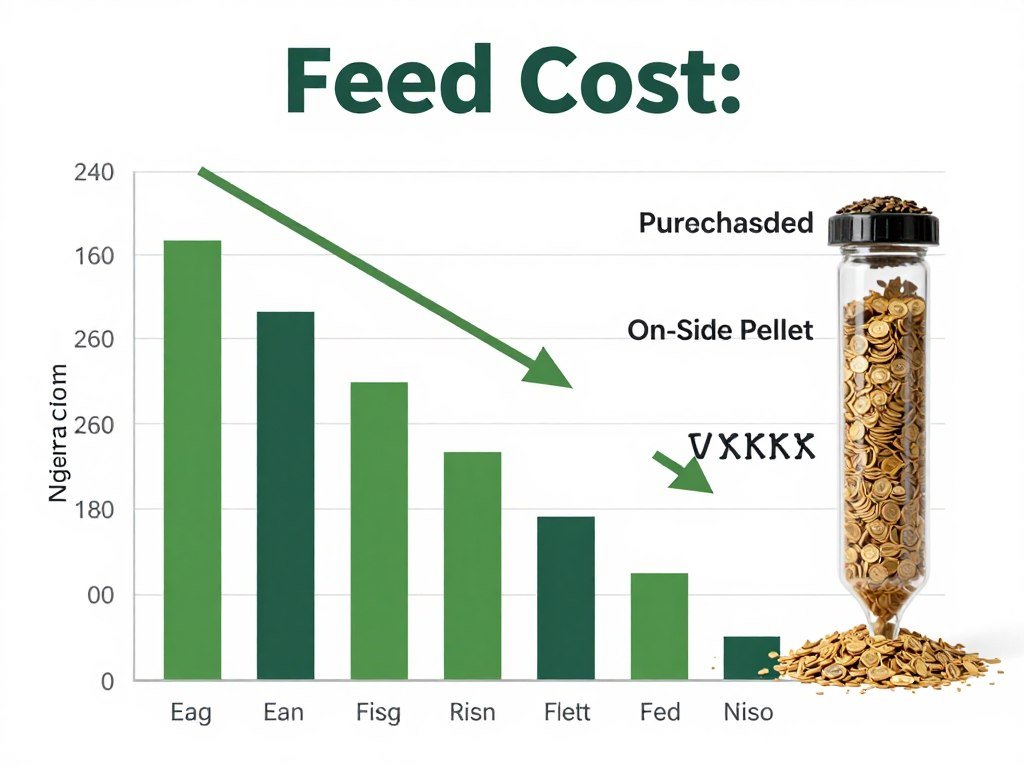
Direct Cost Savings Breakdown
Purchased commercial wildlife feed costs between ₦150-250 per kilogram in Nigeria. Transportation adds another ₦30-50 per kg for remote reserves. Your monthly feed budget strains resources.
Raw materials for pellet production cost significantly less. Maize costs ₦80-100 per kg. Groundnut shells run ₦20-30 per kg. Cassava peel often costs nothing. Your ingredient cost averages ₦60-80 per kg.
Traditional Purchased Feed Costs
- Commercial feed: ₦180/kg average
- Transportation: ₦40/kg to reserve
- Storage losses: 10-15% waste
- Total effective cost: ₦250/kg
- Monthly cost (500kg/day): ₦3,750,000
On-Site Pellet Production Costs
- Raw materials: ₦70/kg average
- Power consumption: ₦8/kg
- Labor: ₦5/kg
- Total production cost: ₦83/kg
- Monthly cost (500kg/day): ₦1,245,000
Monthly savings reach ₦2,505,000 for a medium reserve. Annual savings exceed ₦30 million. Your machine investment typically pays back in 8-14 months.
Hidden Benefits Beyond Direct Savings
Cost reduction tells only part of the story. Feed quality improves dramatically. You control ingredients. Nutrition matches animal requirements precisely.
Animal health improves with consistent quality feed. Veterinary costs decrease. Mortality rates drop. Breeding success increases. These benefits compound over years.
Feed waste reduction saves substantial money. Loose grains scatter. Wind blows away fine materials. Animals select preferred components and leave others. Pellets eliminate selective feeding. Your utilization rate climbs from 60-70% to 95%+.
Real Example: A 250-hectare safari park in Plateau State installed a MAIKONG 400 kg/hr pelletizing machine in 2022. Their feed costs dropped from ₦4.2 million to ₦1.6 million monthly. The machine paid for itself in 11 months. They now sell excess pellet production to neighboring farms, generating additional revenue.
Ready to Transform Your Feed Production Efficiency?
Calculate your exact savings potential. Our team prepares customized ROI projections based on your reserve size, animal population, and current feed costs. See real numbers for your specific operation.
Processing Nigerian Feed Ingredients Successfully
Raw material availability varies across Nigeria. Northern regions offer different resources than southern areas. Your pellet machine must handle locally available ingredients.
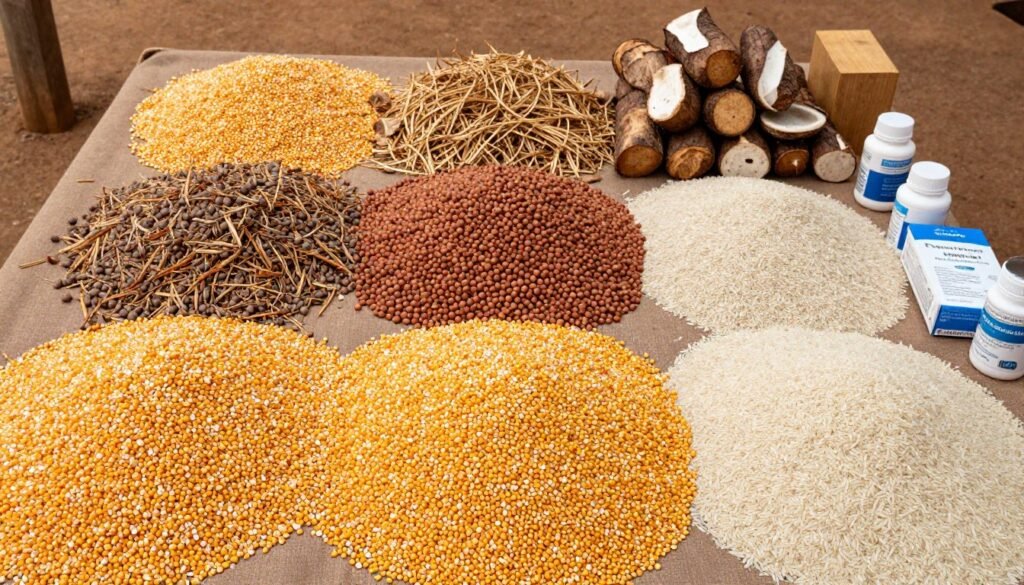
Common Nigerian Wildlife Feed Ingredients
Game animals thrive on varied nutrition. Browse plants form the foundation. You supplement with energy sources and minerals. Local agricultural byproducts reduce costs significantly.
Fiber Sources
Essential for ruminant digestion and wildlife health:
- Groundnut shells (widely available, low cost)
- Rice husks (processing byproduct)
- Cassava peels (nearly free in processing areas)
- Hay and dried grasses (seasonal availability)
- Browse plant trimmings (reserve maintenance byproduct)
Energy Components
Provide calories for activity and body condition:
- Maize (primary energy source)
- Sorghum (drought-resistant alternative)
- Millet (northern region availability)
- Rice bran (processing industry byproduct)
- Palm kernel cake (southern Nigeria abundant)
Protein Sources
Support growth, reproduction, and antler development:
- Groundnut cake (excellent protein content)
- Soybean meal (premium protein source)
- Cotton seed cake (western region availability)
- Moringa leaf powder (local superfood ingredient)
- Fish meal (for omnivorous species)
Minerals & Supplements
Complete nutrition requires trace elements:
- Bone meal (calcium and phosphorus)
- Salt (essential mineral)
- Limestone (calcium supplement)
- Vitamin premixes (commercial supplements)
- Selenium and trace minerals (prevent deficiencies)
Material Preparation Requirements
Your pelletizing machine performs best with properly prepared materials. Particle size matters significantly. Too coarse and pellets break apart. Too fine creates dust problems.
MAIKONG recommends grinding ingredients to 3-5 mm particle size. This range works for most feed formulations. Our complete production lines include hammer mills sized appropriately.
Moisture content requires careful control. Too dry and binding fails. Too wet and pellets emerge mushy. Target 12-15% moisture for most ingredients. Add water during mixing if needed.
Technical Tip: Store raw materials in dry conditions. Nigeria’s humidity affects grain quality. Proper storage prevents mold growth. Your feed quality depends on ingredient freshness.
Operating Your Feed Pellet Machine: Training and Maintenance
Equipment longevity depends on proper operation. MAIKONG provides comprehensive training with every machine purchase. Your team learns correct procedures from day one.
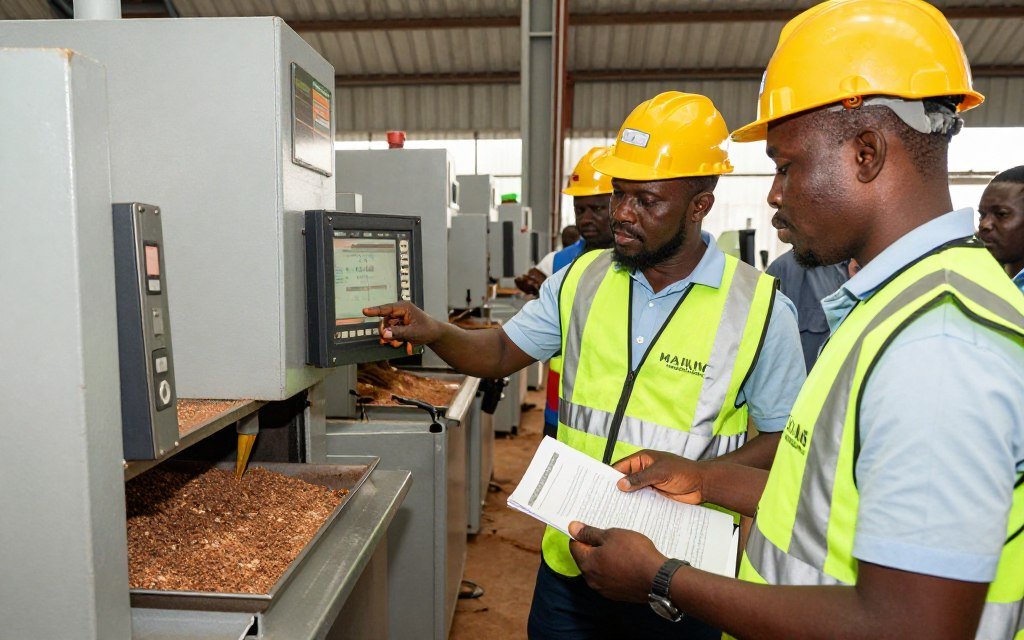
Operator Training Program
We train your staff thoroughly. Basic operations take 1-2 days for simple machines. Complex automated lines require 10-14 days. Training covers startup procedures, operation monitoring, and shutdown protocols.
Safety receives priority attention. Moving parts require respect. Proper procedures prevent accidents. Your operators learn emergency shutdown procedures.
Troubleshooting skills develop through hands-on practice. Common issues get addressed during training. Your team gains confidence through supervised operation.
Maintenance Schedule and Procedures
Regular maintenance prevents unexpected breakdowns. MAIKONG provides detailed maintenance schedules. Follow these guidelines and your machine operates reliably for decades.
Daily Maintenance Tasks
- Check lubrication levels before startup
- Inspect feed inlet for blockages
- Monitor bearing temperatures during operation
- Clean pellet discharge area after shutdown
- Remove dust accumulation from motor housing
- Verify all safety guards remain in place
Weekly Maintenance Tasks
- Thorough cleaning of die and roller assembly
- Belt tension inspection and adjustment
- Electrical connection tightness check
- Lubrication point service (grease fittings)
- Screen and filter cleaning or replacement
- Production log review and analysis
Monthly Maintenance Tasks
- Complete disassembly and inspection of pellet chamber
- Die hole condition assessment (wear measurement)
- Bearing replacement if excessive play detected
- Motor winding insulation resistance testing
- Control system calibration verification
- Spare parts inventory review and restocking
MAIKONG supplies complete maintenance kits. These include common wear parts. Order spare components before you need them. Avoid production delays waiting for shipping.
Technical support reaches you quickly. WhatsApp connects you directly to our engineers. Send photos or videos of any issues. We diagnose problems remotely and guide solutions.
Technical Support Available:
Customization and OEM Opportunities for Nigerian Partners
MAIKONG recognizes that standard equipment does not fit every situation. We offer extensive customization options. Your specific requirements shape our manufacturing.
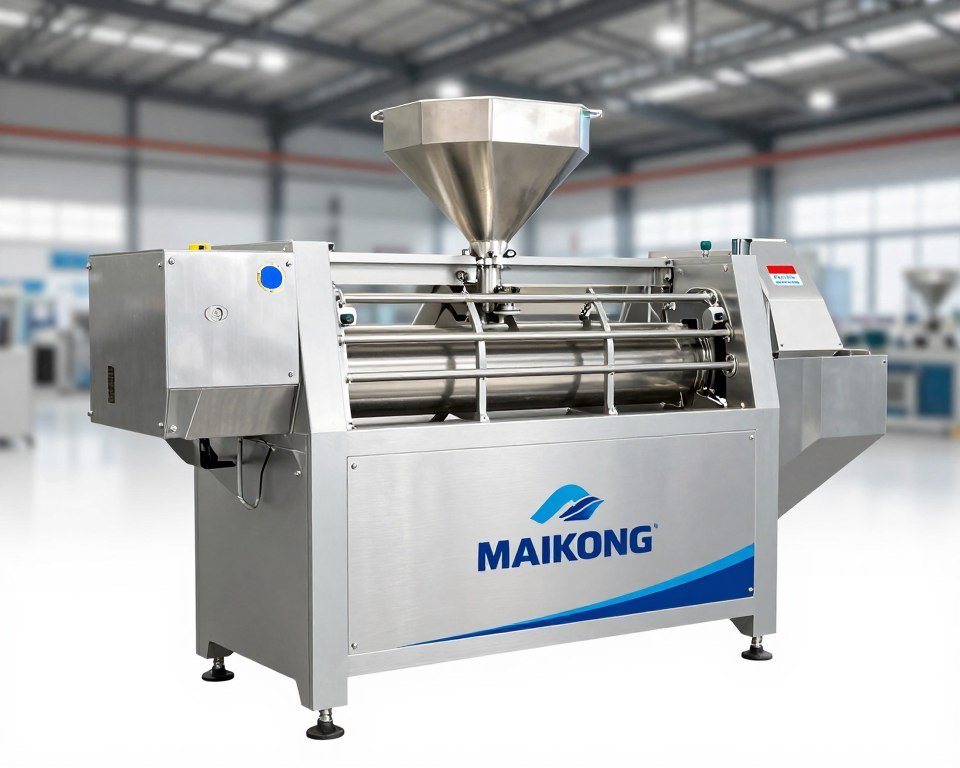
Appearance Customization
Build your brand identity with customized equipment. Choose colors that match your corporate identity. Add your logo to machine panels. Create visual consistency across your operation.
This option appeals particularly to customers planning products visibility. Safari lodges hosting tours want attractive equipment. Agricultural training centers need branded teaching tools.
Technical Specification Customization
Capacity adjustments suit your exact requirements. Need 320 kg/hr instead of standard 300 or 400? We configure motors and dies accordingly. Your investment matches needs precisely.
Die hole configuration adapts to your pellet size requirements. Wildlife feed often uses larger pellets than poultry feed. We manufacture dies with appropriate specifications.
Power supply variations accommodate Nigerian electrical infrastructure. Single-phase or three-phase configurations available. Voltage stabilization integrates if required. Your local grid conditions inform our design.
OEM Manufacturing for Equipment Dealers
MAIKONG partners with agricultural equipment dealers across Africa. Our OEM program allows you to sell under your brand name. We manufacture to your specifications.
Minimum order quantities remain reasonable. Start with just 5-10 units for initial market testing. Scale up as your sales grow. We support your business development.
Money advantages make OEM attractive. Your profit margins improve significantly. Customer loyalty builds around your brand. MAIKONG provides the manufacturing expertise. You provide local market knowledge and distribution.
Explore OEM Partnership Opportunities
Agricultural equipment dealers and distributors: MAIKONG’s OEM program offers competitive pricing, flexible customization, and reliable manufacturing. Build your brand with proven technology backed by 20 years of African market experience.
Nigerian Success Stories: Reserves Using MAIKONG Pellet Machines
Real-world results demonstrate equipment value better than technical specifications. Nigerian customers achieve impressive outcomes with MAIKONG pelletizing machines.
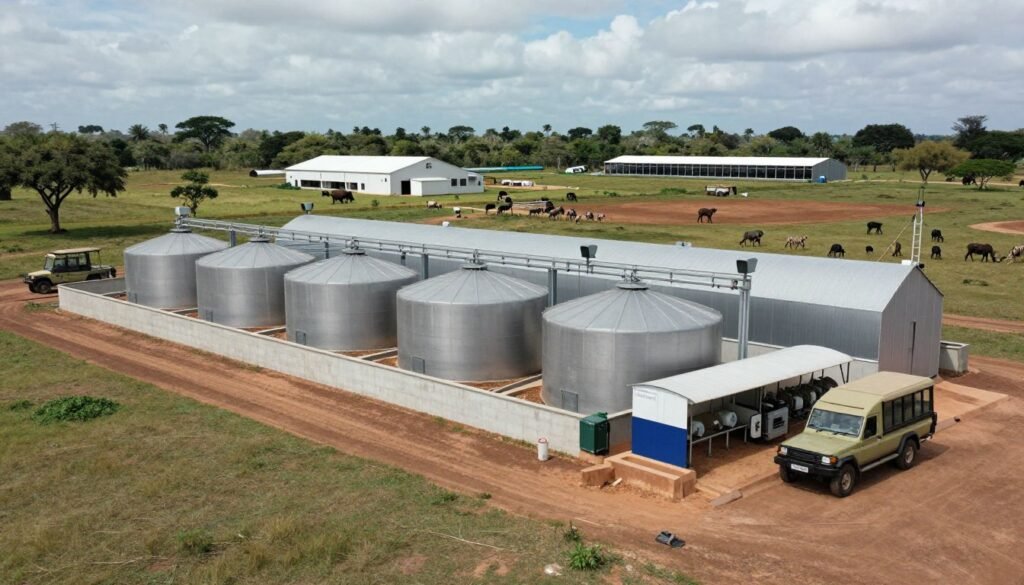
Yankari Game Reserve Feed Production Expansion
Yankari Game Reserve in Bauchi State faced escalating feed costs. Their 2,244 square kilometer reserve hosts elephants, lions, and numerous antelope species. Purchased feed expenses exceeded ₦8 million monthly.
In 2021, they installed a MAIKONG 600 kg/hr feed pellet machine. Local ingredients from surrounding farms provided raw materials. Groundnut shells and maize formed the base formulation.
Results exceeded expectations. Monthly feed costs dropped to ₦2.8 million. Animal body condition improved noticeably. The reserve now sells surplus pellet production to local livestock farmers, generating ₦600,000 additional monthly revenue.
Cross River State Community Reserve Network
Seven community reserves in Cross River State formed a cooperative. They pooled resources to purchase a MAIKONG complete feed production line rated at 1,000 kg/hr.
The centralized facility serves all seven reserves. Each contributes raw materials from their areas. Palm kernel cake from local processing provides abundant protein. Rice bran from nearby mills adds energy.
Cooperative members save 65% on feed costs compared to purchased commercial products. The facility also produces livestock feed for community farmers. This diversification strengthens economic sustainability.
Private Safari Park in Ogun State
A 180-hectare private safari park near Lagos needed reliable feed supply. Tourist operations required consistent animal nutrition. Supply chain disruptions risked animal health and visitor experiences.
They selected a MAIKONG 400 kg/hr semi-automatic system. The compact installation fits their limited space. Local raw material sourcing provides supply security.
Park management reports complete supply chain independence. Feed quality remains consistent year-round. Tourist satisfaction increased as animal viewing reliability improved. The machine investment paid back in just 9 months through cost savings and improved revenue.
Customer Testimonial: “MAIKONG’s technical support made the difference. Their team guided our formulation development through WhatsApp. We now produce pellets that our animals prefer over commercial alternatives. The investment transformed our operation.” – Reserve Manager, Plateau State Wildlife Sanctuary
See how MAIKONG transformed feed production for operations like yours. Speak with our team about your specific needs:
Installation, Training, and After-Sales Support
Equipment purchase represents just the beginning. MAIKONG provides comprehensive support throughout your machine lifetime. We ensure successful operation from day one.
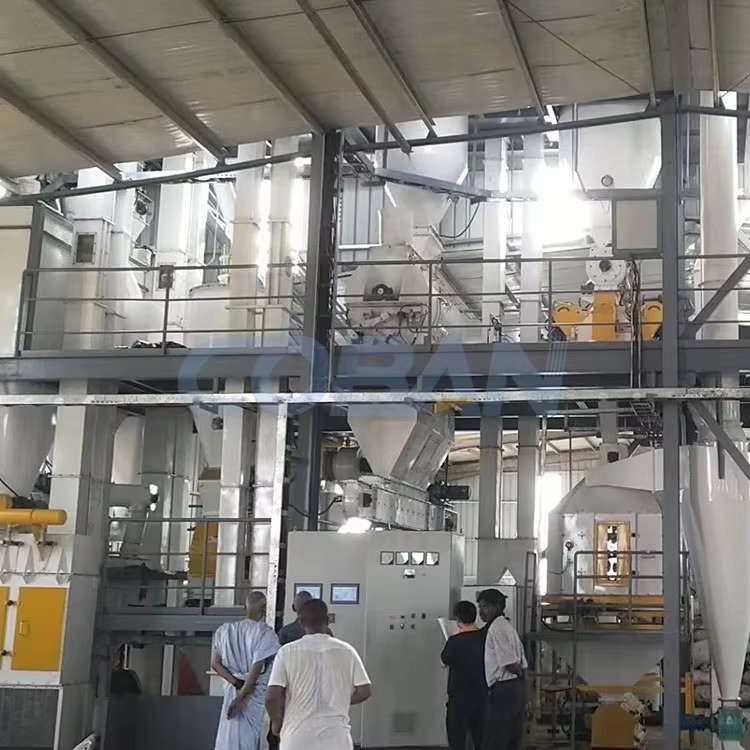
Shipping and Delivery to Nigeria
MAIKONG manages complete logistics. Our South African facility ships efficiently to Nigerian ports. We handle export documentation. You receive equipment ready for installation.
Shipping timeframes vary by equipment size. Standard machines typically arrive within 3-4 weeks. Complete production lines require 6-8 weeks for manufacturing and shipping. Rush options exist for urgent requirements.
Port clearance assistance helps avoid delays. We provide complete documentation packages. Our experience with Nigerian customs procedures prevents common problems.
Delivery extends to your facility. We arrange inland transportation from port to your location. Equipment arrives ready for installation.
Installation and Commissioning Services
Complex equipment benefits from professional installation. MAIKONG sends technicians for larger systems. They ensure correct setup and initial operation.
Installation timeframes depend on system complexity. A single machine takes 1-2 days. Complete production lines require 5-10 days. Our technicians work efficiently to minimize downtime.
Commissioning includes test runs with your raw materials. We verify pellet quality meets specifications. Adjustments optimize performance for your specific ingredients.
Comprehensive Training Programs
Every installation includes operator training. Your staff learns correct procedures directly from factory technicians. Hands-on practice builds confidence.
Training covers all operational aspects. Startup procedures ensure safe beginning. Operation monitoring teaches quality control. Shutdown protocols protect equipment. Basic troubleshooting empowers your team.
Maintenance training prevents problems. Your technicians learn lubrication points. Wear parts replacement procedures become routine. Regular maintenance schedules extend machine life significantly.
After-Sales Technical Support
MAIKONG support continues long after installation. Multiple channels keep you connected to our technical team. Help arrives quickly when needed.
WhatsApp provides instant communication. Send photos or videos of any issues. Our engineers diagnose remotely. Many problems resolve through guided procedures. This saves time and money.
Email handles detailed technical discussions. Attach log files or error reports. We analyze thoroughly and provide comprehensive solutions. Complex issues receive priority attention.
Phone support connects you directly to senior technicians. Urgent problems get immediate response. Our team understands Nigerian operations and responds accordingly.
Spare Parts Availability
MAIKONG maintains South African inventory. Common wear parts ship quickly to Nigeria. Dies, rollers, belts, and bearings stock continuously.
Order spare components proactively. Avoid production delays waiting for shipping. We recommend keeping critical parts in local inventory.
Part quality matches original equipment standards. We manufacture all components in-house. Compatibility and performance remain consistent.
Warranty Coverage
All MAIKONG equipment includes comprehensive warranty. Coverage periods range from 12-24 months depending on model. Manufacturing defects receive immediate attention.
Warranty service includes replacement parts. Shipping costs to Nigeria are covered. We stand behind our manufacturing quality completely.
Extended warranty options provide additional peace of mind. Discuss these during purchase. Protection continues beyond standard terms.
Comparing Feed Pellet Machine Options: Making the Right Choice
Multiple pellet machine suppliers operate in Nigeria. How do you choose wisely? Several factors determine long-term satisfaction beyond initial price.
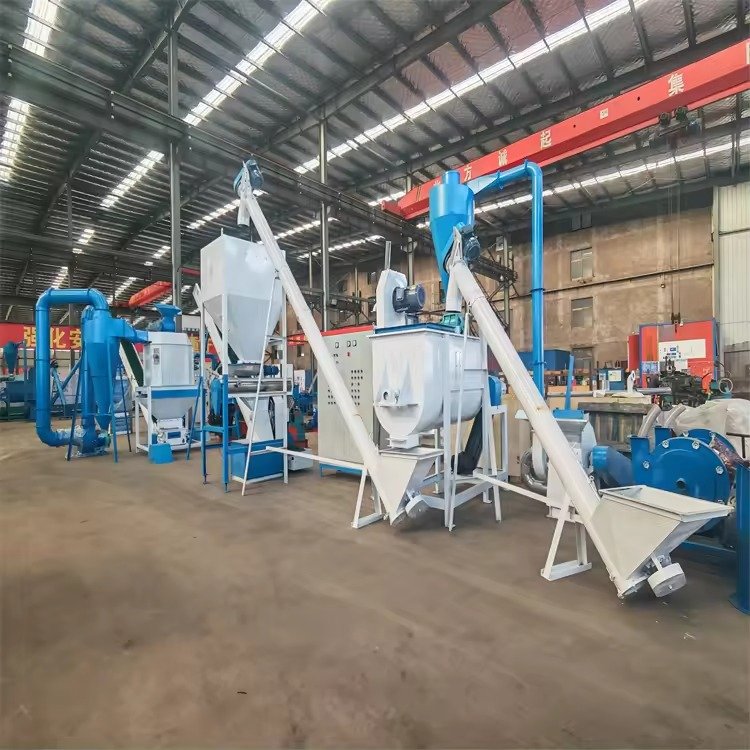
Key Selection Criteria
Price attracts initial attention. However, total cost of ownership matters more. Cheap machines often use inferior components. Replacement parts costs accumulate quickly. Downtime destroys profitability.
MAIKONG balances initial investment with operational costs. Our equipment costs more than bottom-tier imports. However, superior components and local support justify the difference.
MAIKONG Advantages
- 20+ years manufacturing experience
- South African presence for regional support
- Premium component quality (hardened dies, branded motors)
- Comprehensive training programs included
- WhatsApp technical support in English
- Customization flexibility for OEM partners
- Spare parts availability from SA warehouse
- Proven African market track record
Alternative Supplier Limitations
- Distance support from Asia or Europe
- Language barriers in technical communication
- Long spare parts shipping times (6-8 weeks typical)
- Limited customization options
- Minimal after-sales presence in Africa
- Lower component quality to reduce costs
- Generic training without local context
- Warranty claims require expensive return shipping
Total Cost of Ownership Analysis
Look beyond purchase price. Calculate five-year ownership costs. Include spare parts, maintenance, power consumption, and downtime.
MAIKONG equipment typically operates 15-20% more efficiently. Premium motors consume less electricity. Better die materials last longer before replacement. These factors compound savings over years.
Downtime represents hidden cost. When your machine stops, feed production halts. Animals still need nutrition. You purchase expensive emergency supplies. MAIKONG reliability prevents these situations.
Five-Year Cost Comparison: A typical MAIKONG 400 kg/hr machine costs ₦12.5 million initially. Total five-year ownership cost (including parts, maintenance, power) reaches ₦18.2 million. Comparable budget import costs ₦8.5 million initially but total five-year ownership exceeds ₦22.8 million due to repairs, downtime, and inefficiency.
Getting Started: How to Order Your MAIKONG Feed Pellet Machine
Ready to transform your wildlife reserve feed production? MAIKONG makes the process straightforward. We guide you through each step.

Step-by-Step Ordering Process
Initial contact establishes your requirements. Describe your operation size. Specify animal populations and current feed consumption. Our team analyzes this information and recommends appropriate equipment.
- Initial Consultation: Contact via WhatsApp, email, or phone. Discuss your operation, capacity needs, and budget range. Our team asks detailed questions to understand requirements fully.
- Proposal Development: We prepare customized equipment proposals. These include detailed specifications, pricing, payment terms, and delivery schedules. Multiple options address different budget levels.
- Technical Discussion: Review proposals with our engineers. Ask detailed questions about operation and maintenance. We explain every aspect thoroughly until you feel completely confident.
- Order Confirmation: Select your preferred configuration. Sign purchase agreement. Payment terms typically include 30% deposit with balance before shipping.
- Manufacturing: Production begins immediately after deposit receipt. Standard machines manufacture in 2-3 weeks. Custom configurations require 4-6 weeks. We provide progress updates regularly.
- Quality Testing: Every machine undergoes comprehensive testing before shipping. We send test run videos for your approval. This ensures equipment meets specifications.
- Shipping and Logistics: Complete export documentation preparation. Coordinate with freight forwarders. Arrange port clearance assistance. Schedule inland delivery to your location.
- Installation and Training: Our technicians install and commission equipment. Comprehensive operator training ensures successful startup. You begin production confidently.
- Ongoing Support: After-sales support continues indefinitely. Technical questions receive prompt responses. Spare parts orders process quickly. Your success becomes our priority.
Investment and Financing Information
MAIKONG understands equipment investment represents significant commitment. We offer flexible payment terms to ease financial planning.
Standard payment terms require 30% deposit with 70% balance before shipping. Alternative arrangements consider your specific situation. Discuss financing needs during initial consultation.
Nigerian agricultural development banks sometimes fund equipment purchases. We provide complete documentation supporting loan applications. Our established reputation assists approval processes.
Contact Information for Inquiries
Multiple channels connect you to MAIKONG team. Choose your preferred communication method. We respond promptly to all inquiries.
WhatsApp Contact
Fastest response for quick questions. Send photos, videos, or voice messages. Our team responds within hours during business days.
Email Contact
Best for detailed inquiries and documentation. Attach photos, specifications, or technical questions. Responses typically within 24 hours.
Email: Lucy@pelletmachine.co.za
Phone Contact
Direct conversation for complex discussions. Speak with senior sales engineers. Technical consultations available on scheduled calls.
Website Resources
Explore complete product information online. View specifications, photos, and technical documentation. Download brochures and catalogs.
Website: pelletmachine.co.za
Request Your Customized Quote
Serious about improving your feed production? Complete this inquiry form. Our team prepares detailed proposals tailored to your specific requirements. You receive customized equipment recommendations with accurate pricing within 24 hours.
Frequently Asked Questions About Feed (Wildlife) Pellet Machines
Nigerian wildlife managers ask similar questions. We compiled comprehensive answers addressing common concerns.
What capacity pelletizing machine do I need for my reserve?
Calculate your daily feed requirements first. Count total animal population. Multiply by average daily consumption per animal (varies by species, typically 2-4 kg for antelope, 8-12 kg for buffalo). Add 20% buffer for growth and seasonal variations.
Choose a machine that produces this amount in 4-6 hours. This allows maintenance time and prevents operator fatigue. For example, if you need 600 kg daily, select a 150 kg/hr machine (600 kg ÷ 4 hours = 150 kg/hr).
Can one machine produce feed for different animal species?
Yes, absolutely. Change formulations between batches. Clean the machine thoroughly between different feed types. Most reserves produce multiple formulations using the same equipment.
Adjust pellet size by changing dies. Smaller animals require smaller pellets. Larger game handles bigger pellets efficiently. MAIKONG supplies multiple die sizes with each machine purchase.
What is the actual price range for MAIKONG feed pellet machines?
Pricing varies by capacity and configuration. Manual 150 kg/hr models start around ₦4.5-6 million. Semi-automatic 400 kg/hr systems range ₦9-12 million. Fully automatic 800 kg/hr units cost ₦18-24 million. Complete production lines exceed ₦35 million depending on capacity.
These estimates include basic configuration. Customization, additional components, and shipping affect final price. Contact us for precise quotes based on your exact specifications.
How long does a manual feed pellet machine die last before replacement?
Die life depends on materials processed and maintenance quality. With proper care and non-abrasive ingredients, expect 800-1200 hours of operation. Abrasive materials like rice husks reduce this to 500-700 hours.
MAIKONG dies use hardened alloy steel. They last 30-50% longer than standard dies. Replacement dies cost approximately 8-12% of original machine price. Order spare dies proactively to avoid production delays.
Do MAIKONG machines work with Nigerian power supply?
Yes, we configure equipment for Nigerian electrical specifications. Voltage stabilizers integrate as needed. Power fluctuations do not damage properly configured machines.
Smaller units operate on single-phase power. Larger machines require three-phase supply. If three-phase power is unavailable, generator operation works perfectly. Discuss your power situation during consultation. We recommend appropriate configuration.
Can I produce floating fish feed with wildlife pellet machines?
Standard compression pellet machines produce sinking pellets. Floating fish feed requires specialized extrusion equipment. MAIKONG manufactures dedicated floating fish feed extruders.
Many reserves operate fishing tourism alongside wildlife viewing. Our floating fish feed machines complement wildlife feed production. Consider a complete solution addressing all your nutrition needs.
What training do operators need before running equipment?
No special qualifications required. Basic mechanical aptitude suffices. MAIKONG provides complete training with every installation. Simple machines require 1-2 days training. Complex automated lines need 10-14 days.
Training covers operation, basic maintenance, troubleshooting, and safety. Your team practices under supervision until confident. Written manuals supplement hands-on training. WhatsApp support continues after installation.
How quickly can spare parts reach Nigeria if needed?
MAIKONG maintains inventory in South Africa. Common wear parts ship to Nigeria within 5-7 days typically. Express shipping reduces this to 3-4 days for urgent situations.
We recommend maintaining local spare parts inventory. Dies, rollers, belts, and bearings should stock on-site. This prevents production delays. We provide recommended spare parts lists with purchase.
How to make a feed pellet machine work with inconsistent power supply?
Generator operation works perfectly. Calculate power requirements (listed in specifications). Size generator accordingly with 20% overhead capacity. Automatic voltage regulators protect sensitive electronics.
Solar power integration is possible for smaller machines. A 150 kg/hr unit requires approximately 10 kW solar array with battery backup. This option suits remote reserves without grid access.
What makes MAIKONG different from Chinese budget imports?
MAIKONG manufactures in South Africa specifically for African markets. We understand local conditions, power challenges, and climate factors. Support reaches you quickly from regional warehouse.
Component quality exceeds budget alternatives. Hardened dies last longer. Branded motors operate more efficiently. Robust construction withstands demanding conditions. Most importantly, when you need help, we answer immediately through WhatsApp. Chinese suppliers often disappear after sale.
Transform Your Wildlife Reserve Feed Production with MAIKONG
Nigerian wildlife reserves face unique challenges. Feed costs strain budgets. Supply chain reliability concerns managers constantly. Animal nutrition quality affects visitor experiences and conservation success.
On-site pellet production solves these challenges comprehensively. A MAIKONG Feed (Wildlife) Pellet Machine delivers independence, cost savings, and quality control. Your investment pays back quickly while improving animal welfare.
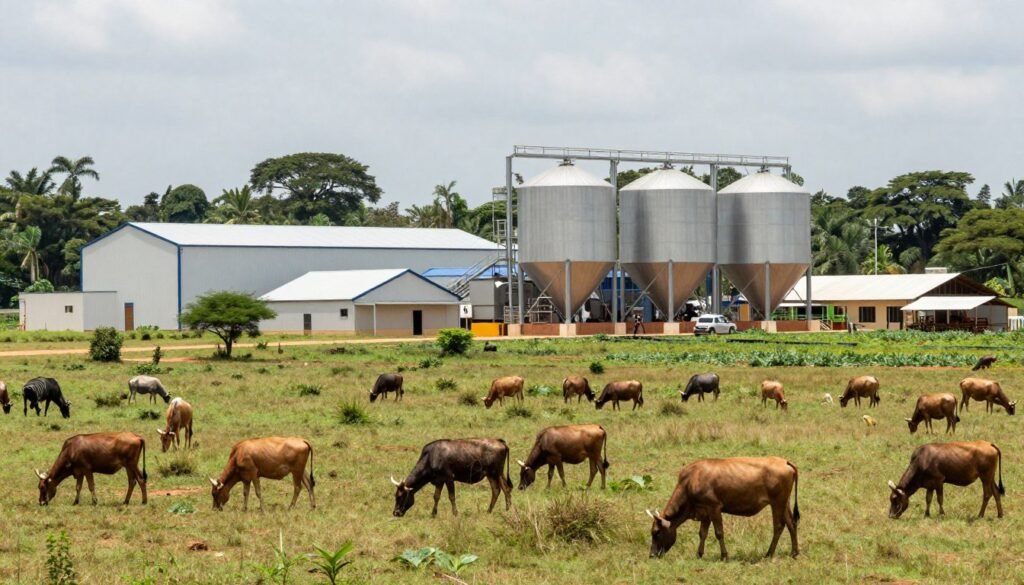
Twenty years of African market experience guide MAIKONG manufacturing. We design equipment for your conditions. Our South African presence ensures reliable support. Technical assistance reaches you through WhatsApp instantly.
From compact 150 kg/hr manual units to complete 1000+ kg/hr production lines, MAIKONG offers solutions fitting every reserve size. Customization addresses your specific requirements. OEM opportunities welcome agricultural equipment dealers.
The question is not whether to invest in pellet production. The question is when to start saving money and improving feed quality. Delays cost thousands of naira monthly through unnecessary commercial feed purchases.
Contact MAIKONG today. Our team analyzes your situation and recommends optimal solutions. You receive detailed proposals with accurate ROI projections. No obligation consultations help you make informed decisions.
Start Your Feed Production Transformation Today
Join successful Nigerian reserves already saving millions with MAIKONG pellet machines. Our team is ready to discuss your specific requirements, prepare customized proposals, and answer every question. Take the first step toward feed independence and improved profitability.
MAIKONG Contact Information
WhatsApp/Phone: +86-135-1090-7401
Email: Lucy@pelletmachine.co.za
Website: pelletmachine.co.za
About Us: Company Information
Contact Page: Get in Touch
MAIKONG – Your trusted partner for wildlife feed production solutions across Nigeria and Southern Africa. Excellence backed by two decades of manufacturing expertise.