
 This comprehensive guide reveals proven strategies to identify legitimate Chinese feed pellet machine suppliers. You will discover red flags that expose fraudulent operations and learn verification techniques used by successful Nigerian distributors. Our research includes insights from 20 years of manufacturing experience serving the Nigerian market.Protecting your investment starts with understanding the supplier landscape. Genuine manufacturers demonstrate specific characteristics that scammers cannot replicate. You deserve equipment that delivers consistent performance and long-term value for your agricultural operations.
the Feed Machine Scam Landscape in Nigeria
The Nigerian animal feed industry imports substantial equipment volumes annually. Scammers exploit this demand through sophisticated fraud schemes. They create professional websites that mimic legitimate manufacturers while delivering inferior products or vanishing after payment.
Common fraud patterns include advance payment scams where suppliers disappear after deposit receipt. Some operators ship used equipment marketed as new machinery. Others provide pellet machines with incompatible electrical specifications for Nigerian power systems.
Quality fraud represents another major concern. Substandard materials reduce equipment lifespan significantly. A genuine feed pellet machine operates reliably for years, while counterfeit versions fail within months. This costs Nigerian businesses through production downtime and replacement expenses.
Industry Insight: Legitimate manufacturers like MAIKONG maintain verifiable Nigerian operations with local technical support. Our 20+ years of manufacturing experience demonstrates the stability fraudulent operators cannot provide.
Payment security issues plague cross-border transactions. Scammers pressure buyers into wire transfers without purchase protection. They create urgency through limited-time offers and artificial scarcity. Genuine suppliers accommodate reasonable payment terms and verification periods.
Regional Fraud Concentration Areas
Certain geographical regions show higher fraud concentrations. Online marketplaces with minimal seller verification enable scammer proliferation. Social media platforms host fake manufacturer pages with stolen credentials and fabricated testimonials.
Trade shows attract fraudulent exhibitors using borrowed equipment and false company representations. They collect contact information and deposits before disappearing. Authentic manufacturers maintain consistent exhibition history with verifiable booth locations and attendee references.
Essential Verification Criteria for Feed Machine Suppliers
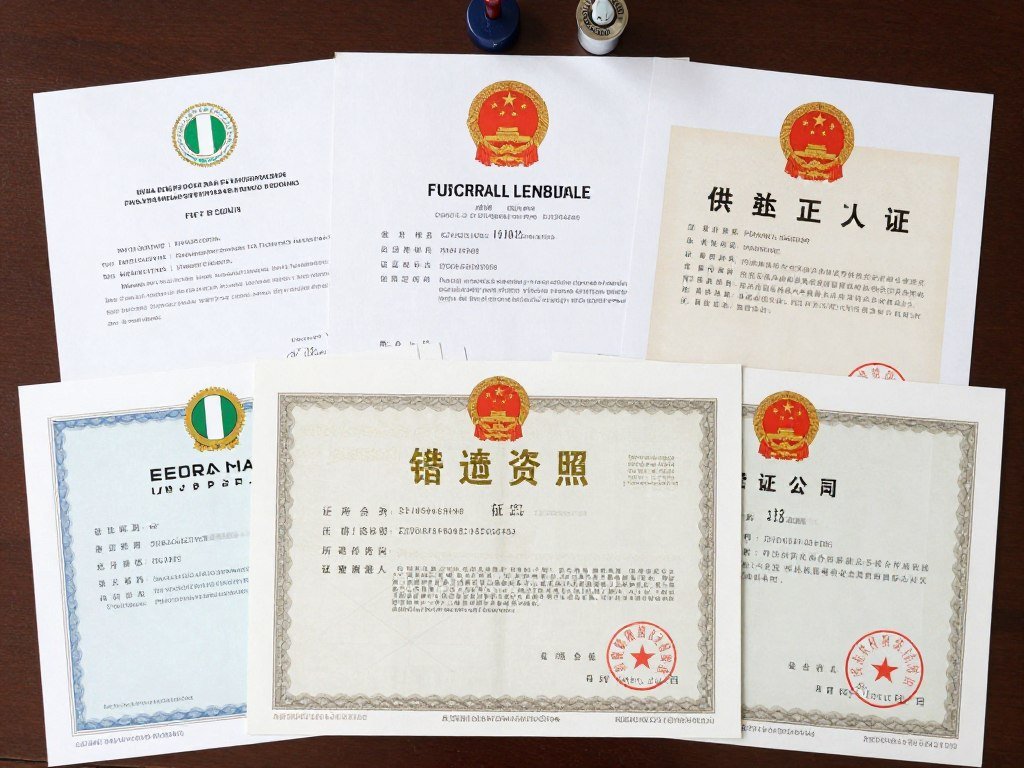
Successful verification requires systematic evaluation across multiple criteria. Manufacturing credentials form the foundation of supplier legitimacy. You should verify business registration, manufacturing licenses, and export certifications through official government databases.
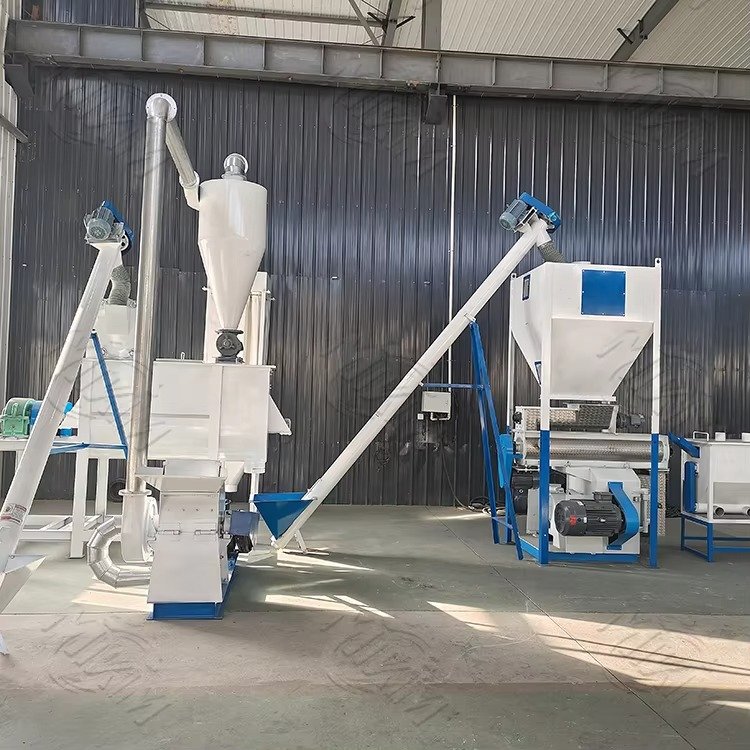
Production facility verification confirms operational capacity. Request detailed factory photographs showing pellet production lines and quality control stations. Legitimate manufacturers provide video tours demonstrating active manufacturing processes. Scammers typically offer stock images from other facilities.
Documentation Requirements
- Valid business registration certificates with verification numbers
- Manufacturing licenses from appropriate regulatory authorities
- Export permits demonstrating international trade authorization
- Quality management system certifications (ISO 9001 or equivalent)
- Product safety certifications for electrical and mechanical components
Technical specification verification ensures equipment compatibility. Nigerian power systems operate at 230V/50Hz requiring compatible feed pellet machines. Confirm electrical specifications match local standards. Request detailed technical drawings showing component specifications and assembly instructions.
Production Capacity Assessment
Manufacturing capacity indicates supplier reliability and scale. Large-scale producers maintain inventory for faster delivery and competitive pricing. Request monthly production volumes and current order backlogs. Genuine manufacturers provide specific figures rather than vague estimates.
Quality control procedures reveal manufacturing standards. Inquire about testing protocols for raw materials and finished animal feed pellet machines. Professional manufacturers conduct load testing, durability assessments, and performance verification before shipment. They provide test reports and certification documentation.
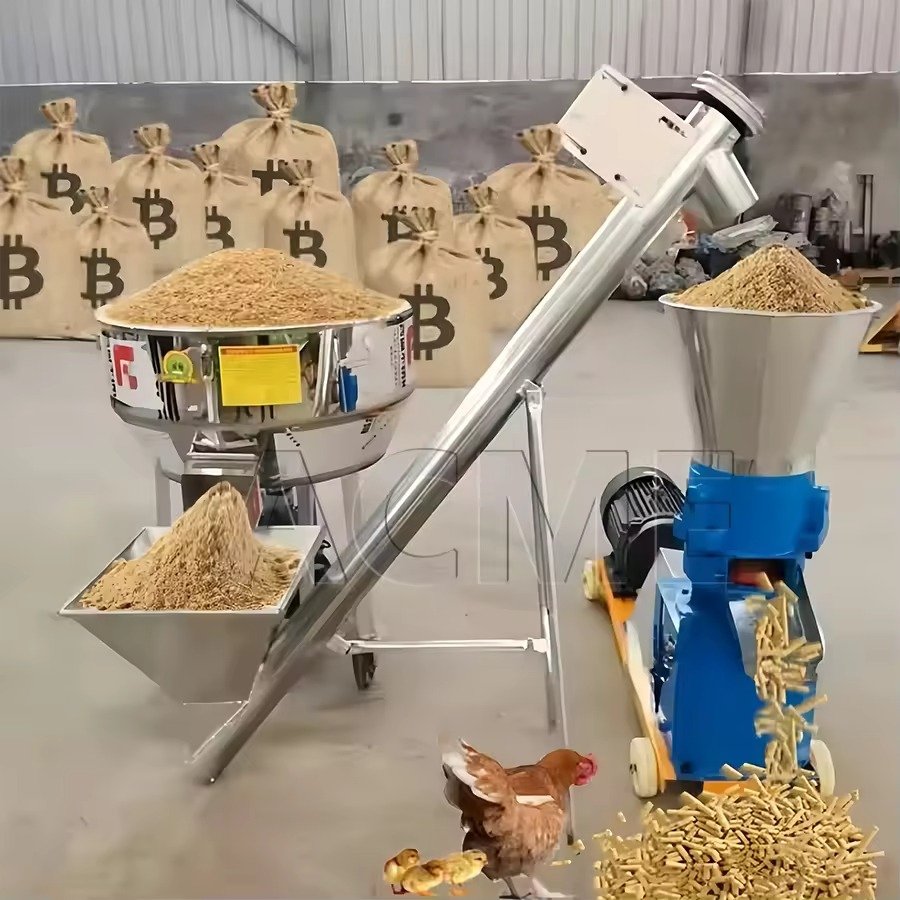
After-sales support infrastructure demonstrates long-term commitment. Verify spare parts availability and technical support channels. MAIKONG maintains Nigerian-based technical teams providing WhatsApp support at +86-135-1090-7401. Local presence ensures rapid response to operational issues.
Work with a Verified Manufacturer
MAIKONG has served Nigerian agricultural businesses for over 20 years. Our local presence guarantees genuine products and reliable technical support. Contact our Nigerian team to discuss your feed machine requirements.
Critical Red Flags Identifying Fraudulent Suppliers
Recognizing warning signs prevents costly mistakes. Unusually low pricing compared to market rates indicates potential fraud. Quality poultry feed pellet machines require substantial materials and engineering. Prices significantly below competitors suggest compromised quality or outright scams.
Communication inconsistencies reveal operational irregularities. Professional manufacturers respond promptly with detailed technical information. Scammers provide vague answers and avoid specific technical questions. They may use multiple contact persons with contradictory information about products and policies.
Website and Digital Presence Analysis
Professional websites demonstrate investment and legitimacy. Examine website age using domain registration databases. Established manufacturers maintain websites for years while scammers frequently create new domains. Check for professional content quality and technical accuracy in product descriptions.
Legitimate Supplier Indicators
- Detailed product specifications with technical drawings
- Multiple communication channels including office phone lines
- Established website with years of archived content
- Verifiable customer testimonials with contact information
- Physical address with visible factory operations on maps
- Professional email domain matching company name
- Responsive technical support answering specific questions
Fraudulent Supplier Warning Signs
- Generic product images without manufacturing details
- Only mobile phone contacts without office numbers
- Recently created website with minimal content
- Anonymous testimonials without verification options
- Vague address or location inconsistent with operations
- Free email services instead of company domain
- Delayed or evasive responses to technical inquiries
Payment method preferences indicate risk levels. Scammers insist on irreversible payment methods like wire transfers or cryptocurrency. They create urgency claiming limited inventory or expiring discounts. Legitimate suppliers accept trade assurance platforms and letters of credit protecting buyer interests.

Reference and Testimonial Verification
Customer references require independent verification. Contact provided references directly using contact information you find independently. Scammers provide fake references or accomplices posing as satisfied customers. Request specific details about equipment performance and supplier responsiveness.
Social proof examination reveals authentic reputation. Search for independent reviews on B2B platforms and industry forums. Genuine manufacturers accumulate reviews over years across multiple platforms. Recent accounts with exclusively positive reviews may indicate manipulation.
Trade association memberships demonstrate industry standing. Verify memberships with relevant agricultural equipment associations. MAIKONG maintains verified memberships providing additional credibility assurance. Contact associations directly to confirm member status rather than relying on supplier claims.
Protection Tip: Always verify supplier claims through independent sources. Contact registration authorities, certification bodies, and trade associations directly. MAIKONG provides all verification details transparently at pelletmachine.ng/about-maikong.
Step-by-Step Documentation Verification Process
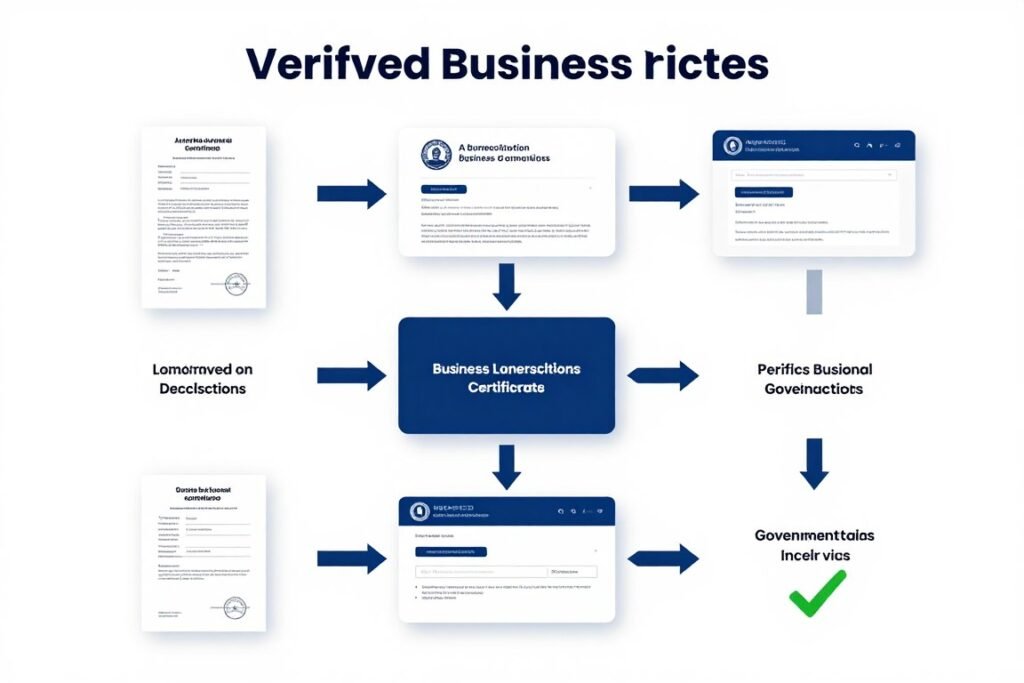
Systematic documentation review establishes supplier authenticity. Begin with business registration verification through official government databases. Chinese manufacturers register with the State Administration for Market Regulation. Request registration numbers and verify them through official channels.
Manufacturing licenses confirm production authorization. China requires specific licenses for feed pellet production equipment manufacturing. Verify license numbers with issuing authorities. Cross-reference license scope with claimed production capabilities to identify misrepresentations.
- Obtain official registration certificate – Request current business license showing legal entity name, registration number, and operational scope.
- Verify registration authenticity – Contact registration authority using official website and phone numbers to confirm certificate validity.
- Check manufacturing authorization – Confirm production license covers claimed equipment types and manufacturing processes.
- Validate quality certifications – Contact certification bodies to verify ISO 9001 and product safety certificates.
- Review export documentation – Examine customs registration and export licenses demonstrating international trade capability.
- Confirm tax compliance – Request tax registration certificates indicating legitimate business operations and financial transparency.
Quality Certification Authentication
Quality management certifications require careful scrutiny. ISO 9001 certification demonstrates standardized manufacturing processes. Verify certificates through issuing bodies rather than accepting supplier copies. Legitimate certifications include unique registration numbers traceable through certifier databases.
Product safety certifications protect end users. European CE marking and other international standards indicate compliance with safety regulations. Request test reports supporting certification claims. Genuine manufacturers provide comprehensive testing documentation from accredited laboratories.
| Certification Type | Issuing Authority | Verification Method | Validity Period |
| ISO 9001 Quality Management | Accredited Certification Bodies | Online registry search with certificate number | 3 years with annual surveillance |
| CE Safety Marking | Notified Bodies (EU) | Notified body database verification | Ongoing with product changes |
| Business Registration | State Administration Market Regulation | Official government database query | Annual renewal required |
| Export License | Ministry of Commerce (China) | Customs verification system | Varies by product category |
Patent documentation reveals innovation capabilities. Established manufacturers hold patents for proprietary technologies. Request patent numbers and verify them through national patent databases. This confirms genuine engineering expertise rather than copied designs.
Financial Stability Verification
Financial documentation indicates business sustainability. Request audited financial statements for recent years. Substantial revenue and assets suggest established operations. Scammers avoid financial disclosure or provide fabricated documents.
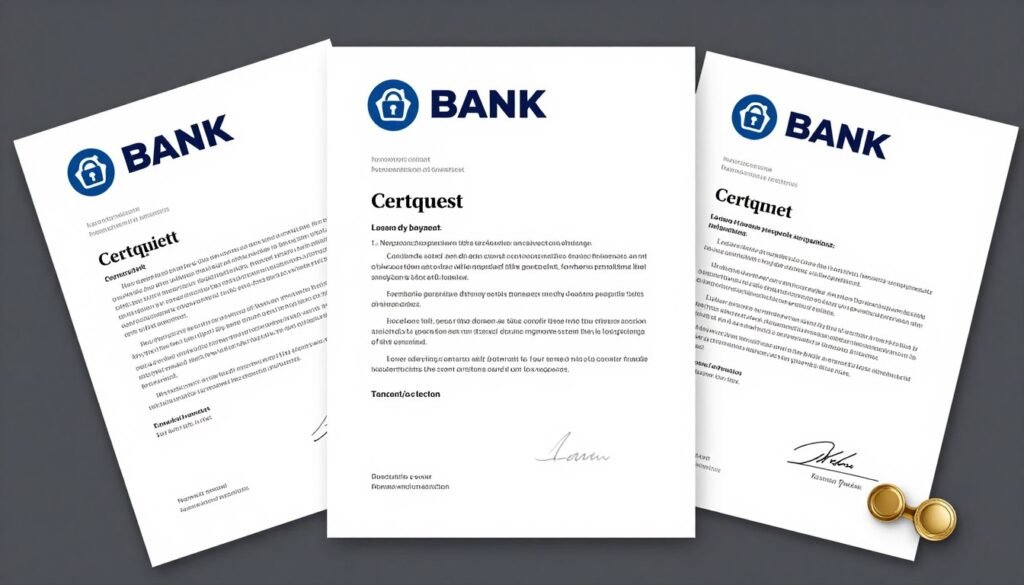
Bank references confirm financial relationships. Legitimate manufacturers maintain accounts with recognized banks. Request bank reference letters on official letterhead. Verify these directly with banks using publicly available contact information.

Trade credit ratings provide independent assessments. Services like Dun & Bradstreet offer credit reports on Chinese manufacturers. These reports aggregate financial data, payment history, and business relationships. Investment in comprehensive verification pays dividends through risk reduction.
Physical Verification and Factory Inspection Strategies
Remote verification has limitations requiring physical inspection when possible. Factory visits provide definitive authentication of manufacturing capabilities. Plan comprehensive inspections covering production facilities, quality control systems, and inventory management.
Virtual factory tours offer preliminary assessment options. Request live video tours showing active pellet machine production rather than pre-recorded footage. Ask operators to demonstrate specific equipment and answer impromptu technical questions. This reveals genuine operational knowledge.
Inspection Planning and Execution
Thorough preparation maximizes inspection effectiveness. Develop detailed checklists covering all verification criteria. Bring technical experts familiar with livestock feed equipment manufacturing. Their expertise identifies quality issues and production shortcuts invisible to non-specialists.
Production Facility Inspection Points
- Manufacturing floor layout and equipment organization
- Raw material storage and inventory management systems
- Production line capacity and throughput capabilities
- Quality control station equipment and procedures
- Employee training and safety protocol adherence
- Finished product storage and shipping preparations
Documentation Review During Visit
- Production logs showing actual manufacturing volumes
- Quality test records for recent product batches
- Supplier agreements for component procurement
- Customer order records and shipping documentation
- Employee records indicating workforce stability
- Maintenance logs for production equipment
Component quality assessment requires detailed examination. Inspect materials used in feed pellet machine construction. High-grade steel and precision components indicate quality manufacturing. Compare specifications against industry standards and supplier claims.
Third-Party Inspection Services
Professional inspection companies provide independent verification. Services like SGS and Bureau Veritas conduct comprehensive factory audits. They verify production capabilities, quality systems, and compliance with international standards. Reports provide objective assessments reducing verification burden.
Pre-shipment inspections confirm order specifications before delivery. Inspectors verify equipment matches agreed specifications and quality standards. They conduct performance testing and document any discrepancies. This prevents costly disputes after shipment arrival.
MAIKONG welcomes customer facility visits and third-party inspections. Our transparent operations demonstrate manufacturing excellence. Nigerian buyers regularly visit our facilities to verify capabilities before placing orders. Contact our team to schedule factory tours.
Caution: Some suppliers stage temporary factory setups for inspections using borrowed equipment and temporary workers. Verify employee familiarity with equipment and production processes through technical questioning. Request access to areas not included in standard tours.
Evaluating Advance Feed Pelletizing Machine Technology
Modern advance feed pelletizing machine technology delivers superior performance and efficiency. Evaluate technological capabilities when selecting suppliers. Advanced features improve pellet quality, reduce energy consumption, and minimize maintenance requirements.
Die design represents critical technology differentials. High-quality manufacturers use precision-machined dies with optimal hole configurations. These produce uniform pellets with consistent density. Inferior dies create irregular pellets affecting animal feed quality and equipment efficiency.
Advanced Technology Features
Variable frequency drive (VFD) systems optimize motor performance. These adjust motor speed based on load conditions, reducing energy consumption significantly. Nigerian businesses benefit from lower operational costs and extended equipment lifespan through reduced mechanical stress.

Automated lubrication systems ensure consistent maintenance. These distribute lubricant to critical components at programmed intervals. Manual lubrication risks inconsistent application leading to premature wear. Automation improves reliability particularly important for Nigerian operations with varying technical expertise levels.
Control System Sophistication
Programmable logic controllers (PLCs) enable precise process management. These monitor temperature, pressure, and feed rates continuously. Automatic adjustments maintain optimal operating conditions producing consistent pellet quality. Simple manual controls lack this precision affecting product uniformity.
Safety interlocks protect operators and equipment. Advanced systems include emergency stops, overload protection, and fault detection. These prevent accidents and equipment damage from operational errors. Nigerian safety regulations increasingly require these features making technology selection crucial for compliance.
MAIKONG incorporates latest advance pig feed pelletizing machine technologies across our product range. Our engineering team continuously researches innovations improving performance and reliability. This commitment ensures Nigerian customers receive world-class equipment comparable to any global manufacturer.
Securing Payments and Establishing Protected Contracts
Payment security requires careful structuring and protective mechanisms. International transactions carry inherent risks requiring mitigation strategies. Understanding payment options and contract protections prevents financial losses from fraudulent suppliers.
Letters of credit provide robust payment protection. These guarantee payment only upon delivery of conforming goods and documentation. Banks verify documents before releasing funds to suppliers. This structure protects buyers while assuring legitimate sellers of payment upon compliance.
Payment Method Comparison
| Payment Method | Buyer Protection | Cost | Processing Time | Recommended For |
| Letter of Credit | High – Bank verification required | 1-3% of transaction | 5-10 business days | Large orders, new suppliers |
| Trade Assurance | Medium-High – Platform mediation | Varies by platform | Immediate to 3 days | Medium orders, B2B platforms |
| Escrow Services | High – Third party holds funds | 2-5% of transaction | Varies by service | First-time transactions |
| Wire Transfer | Low – No reversal option | Flat bank fees | 1-3 business days | Established relationships only |
Trade assurance programs on B2B platforms offer accessible protection. Alibaba’s trade assurance holds payment until buyer confirms satisfactory delivery. Disputes trigger mediation processes protecting both parties. These platforms suit smaller transactions where letter of credit costs seem disproportionate.
Contract Essential Elements
Comprehensive contracts establish clear expectations and remedies. Specify exact equipment models, technical specifications, and performance standards. Include detailed delivery terms covering shipping methods, insurance, and customs clearance responsibilities. Ambiguous contracts enable disputes and complicate enforcement.
Quality standards and inspection rights require explicit definition. State acceptable tolerance ranges for specifications and performance metrics. Reserve rights to conduct pre-shipment inspections and reject non-conforming goods. Include remedy procedures for quality issues discovered after delivery.
Critical Contract Clauses
- Complete technical specifications matching provided documentation
- Delivery timeline with penalties for delays
- Payment schedule tied to delivery milestones
- Warranty terms covering parts and labor duration
- Dispute resolution procedures and jurisdiction
- Force majeure provisions and limitations
- After-sales support and spare parts availability
Warranty Verification Points
- Warranty period start date calculation method
- Covered components and exclusions specification
- Response time commitments for service requests
- Spare parts availability and pricing guarantees
- Technical support channel details and availability
- Replacement part shipping cost responsibilities
- On-site service availability and cost terms
Warranty provisions protect long-term interests. Standard warranties should cover at least one year for major components. Verify warranty claims procedures and response timeframes. MAIKONG provides comprehensive warranties with Nigerian-based support ensuring rapid issue resolution.
Dispute resolution clauses prevent costly international litigation. Specify arbitration procedures and jurisdiction for disputes. International arbitration provides neutral venues for conflict resolution. Clear procedures reduce resolution time and expenses compared to court proceedings.
+86 135-1090-7401Call MAIKONG Nigerian Office for Contract Guidance
Guide to Buy Pet Pellet Feed Processing Machine in Nigeria
Nigerian pet food production represents growing market opportunities. Entrepreneurs seek reliable equipment to buy pet pellet feed processing machine in Nigeria for commercial operations. Selecting appropriate equipment requires understanding pet food specifications and production requirements.
Pet food pellets demand different characteristics than livestock feed pellets. Smaller pellet sizes suit various pet species. Enhanced nutritional formulations require precise ingredient mixing. Equipment must handle diverse raw materials including meat meals, grains, and vitamin supplements.
Pet Food Equipment Specifications
Die configurations differ significantly from standard animal feed applications. Pet food requires smaller die holes producing pellets appropriate for dogs, cats, and other pets. Multi-size die compatibility enables production flexibility across different pet food product lines.
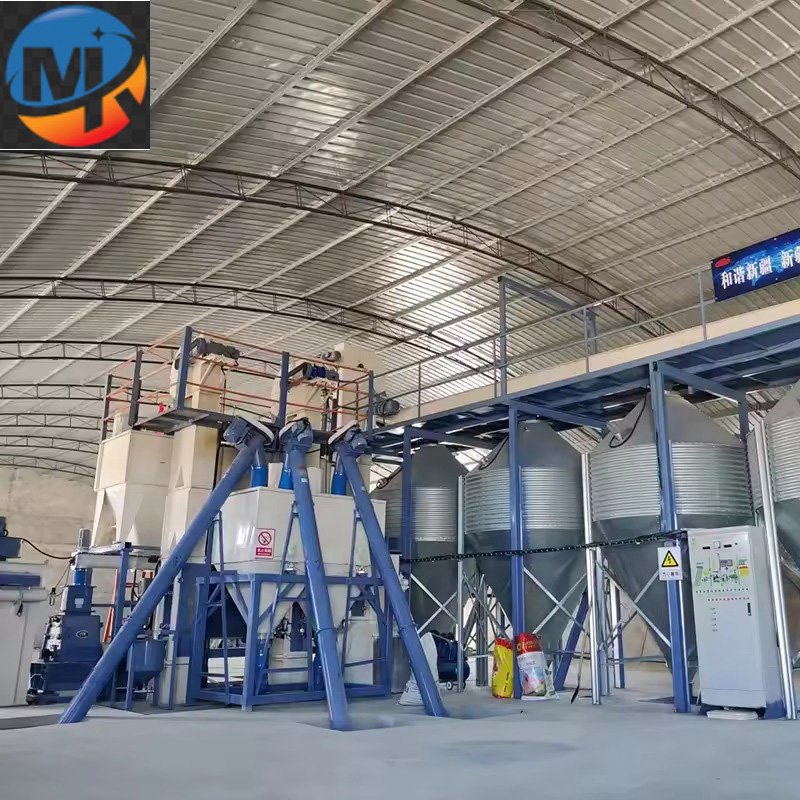
Temperature control assumes greater importance in pet food production. Excessive heat degrades vitamins and proteins essential for pet nutrition. Advanced cooling systems maintain nutritional integrity while achieving necessary pellet hardness. This balance requires sophisticated engineering unavailable in basic equipment.
Small-Scale Pet Feed Machine
Ideal for boutique pet food producers and small-scale operations. Produces 50-100 kg per hour with flexible die options. Compact design suits limited production spaces.
- Capacity: 50-100 kg/hour
- Power: 7.5-11 kW
- Die sizes: 2mm-8mm
- Floor space: 2m × 1.5m
Medium-Scale Pet Feed Line

Complete production line for growing pet food businesses. Includes mixing, pelleting, cooling, and packaging stages. Produces consistent quality at commercial volumes.
- Capacity: 300-500 kg/hour
- Power: 45-75 kW total
- Automation: Semi-automatic
- Floor space: 15m × 8m
Industrial Pet Feed System

Fully automated system for large-scale pet food manufacturers. PLC controls ensure consistent quality. Integrated quality monitoring throughout production process.
- Capacity: 1000-2000 kg/hour
- Power: 150-250 kW total
- Automation: Fully automatic
- Floor space: 40m × 20m
Nigerian Market Considerations
Local ingredient availability influences equipment selection. Nigerian pet food producers utilize locally sourced grains and protein sources. Equipment must process these materials efficiently. MAIKONG engineers customize equipment specifications for Nigerian raw material characteristics.
Power reliability challenges require robust electrical design. Voltage fluctuations damage sensitive control systems. Quality manufacturers incorporate voltage stabilizers and surge protection. These features prevent equipment damage during power irregularities common in Nigerian industrial areas.
Technical support accessibility proves crucial for pet food operations. Production downtime directly impacts profitability and customer relationships. MAIKONG maintains Nigerian technical support staff providing rapid response through WhatsApp at +86-135-1090-7401. Local parts inventory minimizes repair downtime.
“MAIKONG’s pet feed equipment transformed our production capabilities. The technical support team resolved our initial setup questions within hours via WhatsApp. Our pellet quality meets international standards enabling export opportunities.”
Fish Feed Pellet Machine Selection for Nigerian Aquaculture
Nigeria’s aquaculture sector drives substantial demand for fish feed production equipment. Floating fish feed machines enable profitable fish farming operations. Equipment selection requires understanding aquaculture species requirements and production economics.
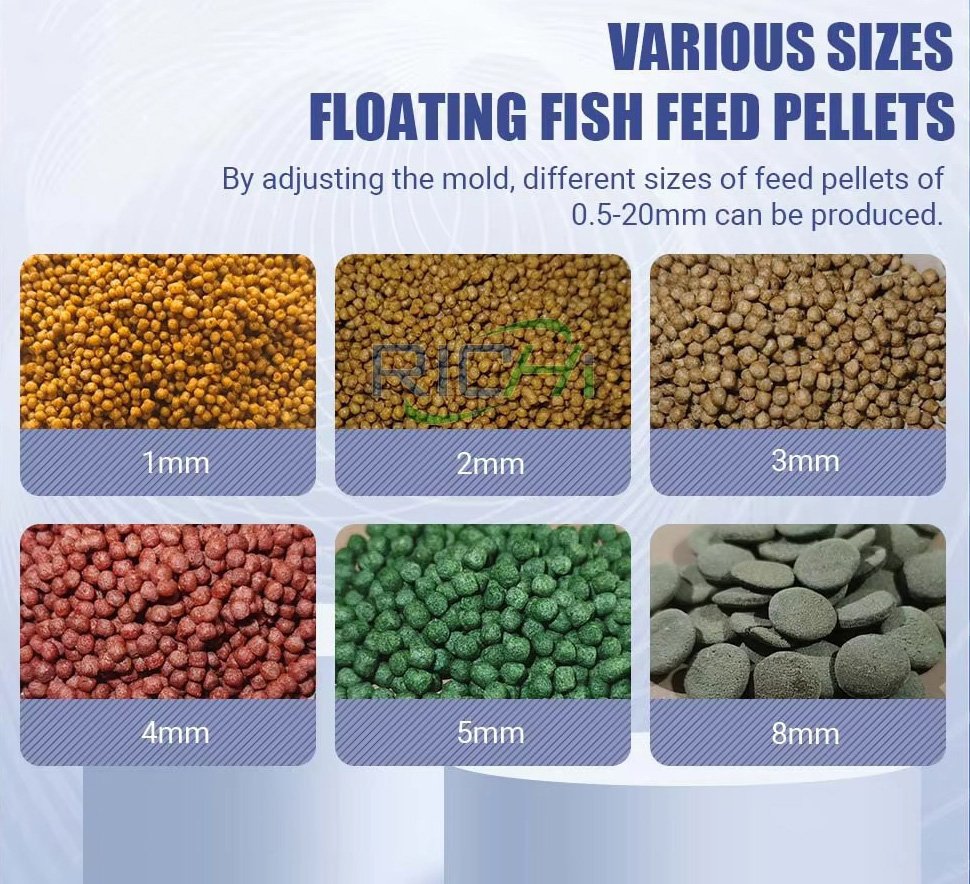
Pellet buoyancy represents the critical differentiator in fish feed pellet machines. Floating pellets remain accessible to surface-feeding species while reducing waste. Sinking pellets suit bottom-feeding species. Advanced equipment produces both types through die and extrusion parameter modifications.
Floating versus Sinking Feed Technology
Extrusion technology creates floating fish feed through high temperature and pressure processing. This expands pellet structure creating buoyancy. The process also improves digestibility and nutrient availability. Nigerian catfish and tilapia operations particularly benefit from floating feed reducing water quality issues.
Floating Fish Feed Advantages
- Reduced feed waste through visibility
- Easier feeding observation and adjustment
- Improved water quality maintenance
- Better digestibility from extrusion process
- Lower disease risk from unconsumed feed
- Suitable for surface-feeding species
Sinking Fish Feed Benefits
- Lower equipment investment costs
- Simpler production process requirements
- Appropriate for bottom-feeding species
- Reduced nutrient loss from extrusion
- Traditional formulation compatibility
- Lower energy consumption production
Wet type fish feed extruder machine technology suits Nigerian conditions particularly well. These process moisture-rich ingredients directly without pre-drying. This reduces energy costs significantly compared to dry extrusion. Nigerian fish farmers benefit from lower operational expenses improving competitiveness.
Production Capacity Planning
Fish farm size determines appropriate equipment capacity. Small farms operating 5-10 ponds require 100-300 kg/hour capacity. Medium operations with 20-50 ponds need 500-1000 kg/hour. Large commercial farms demand 2000+ kg/hour production rates.
Batch production versus continuous operation affects equipment selection. Continuous systems suit large farms with constant demand. Batch production offers flexibility for farms producing multiple feed formulations. MAIKONG provides both configurations addressing diverse Nigerian aquaculture needs.
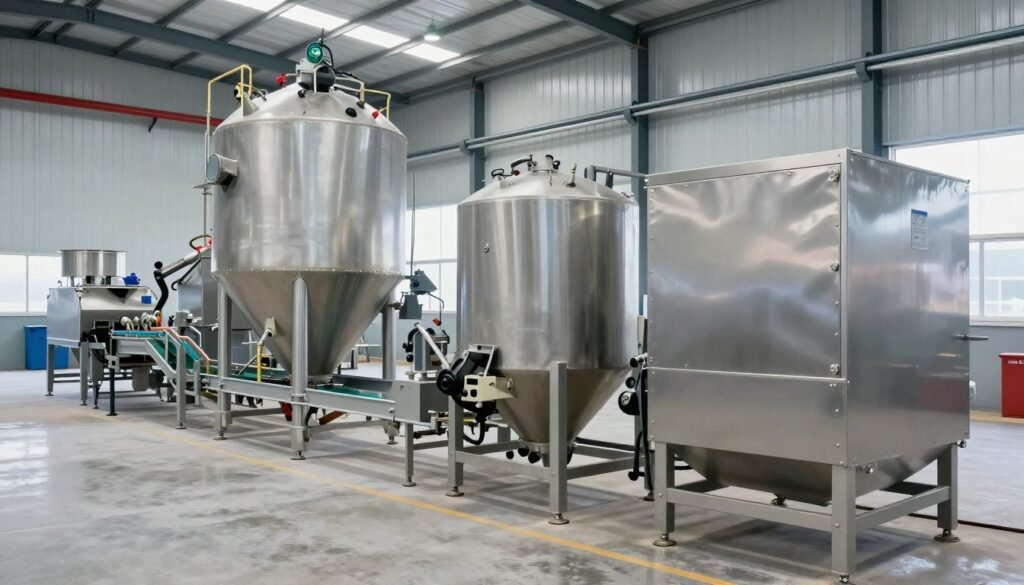
Species-Specific Feed Requirements
Catfish dominates Nigerian aquaculture requiring specific pellet characteristics. Pellet sizes range from 2mm for fingerlings to 8mm for table-size fish. Protein content varies by growth stage. Equipment must accommodate formulation changes without extensive reconfiguration.
Tilapia production grows rapidly requiring different feed specifications. Smaller pellet sizes suit tilapia feeding behavior. Vegetable protein sources increase in tilapia feeds compared to catfish. Processing equipment must handle diverse ingredient types efficiently.
MAIKONG Fish Feed Solutions for Nigerian Aquaculture
Our fish feed pellet machine range serves Nigerian catfish and tilapia farmers nationwide. Local technical support and spare parts availability ensure operational reliability. Discuss your aquaculture feed requirements with our Nigerian team.
Wood Pellet Machine Technology and Applications
Biomass energy solutions attract increasing Nigerian interest. Wood pellet machines convert agricultural and forestry waste into valuable fuel pellets. This technology addresses energy needs while managing waste disposal challenges.
Sawdust and wood waste abundance in Nigerian timber operations creates pellet production opportunities. Furniture manufacturers and sawmills generate substantial waste volumes. Converting this material into fuel pellets generates revenue from previously discarded resources.
Raw Material Processing Requirements
Moisture content critically affects pelleting success. Wood materials require moisture levels between 10-15% for optimal pelleting. Nigerian tropical climate conditions necessitate drying equipment for most raw materials. Integrated drying systems ensure consistent moisture regardless of seasonal variations.

Particle size uniformity improves pellet quality and equipment efficiency. Hammer mills reduce raw materials to appropriate sizes before pelleting. Uniform particles pelletize consistently producing standardized pellets. Size variation causes production problems and quality inconsistencies.
Suitable Raw Materials
- Sawdust from timber processing operations
- Wood chips and shavings from furniture manufacturing
- Agricultural residues including rice husks and corn stalks
- Palm kernel shells and coconut waste materials
- Paper and cardboard processing waste
- Bamboo processing residues and grass clippings
Processing Stages
- Raw material collection and storage management
- Size reduction through hammer milling or chipping
- Moisture adjustment via drying or water addition
- Pelleting through ring die or flat die machines
- Cooling to solidify pellet structure and reduce moisture
- Screening to remove fines and ensure quality uniformity
Economic Viability Analysis
Production costs determine pellet business profitability. Raw material costs in Nigeria remain low due to waste material utilization. Energy consumption represents the major operational expense. Efficient wood pellet mill equipment reduces production costs through lower power consumption.
Market demand for biomass pellets grows across multiple sectors. Industrial boilers increasingly adopt pellet fuel reducing dependence on diesel and gas. Residential heating markets emerge particularly in cooler Nigerian regions. Export opportunities exist for quality pellets meeting international standards.
MAIKONG wood pellet machines feature energy-efficient designs reducing operational costs. Our engineering optimizes power consumption while maintaining production capacity. Nigerian biomass entrepreneurs achieve competitive production costs enabling market success.
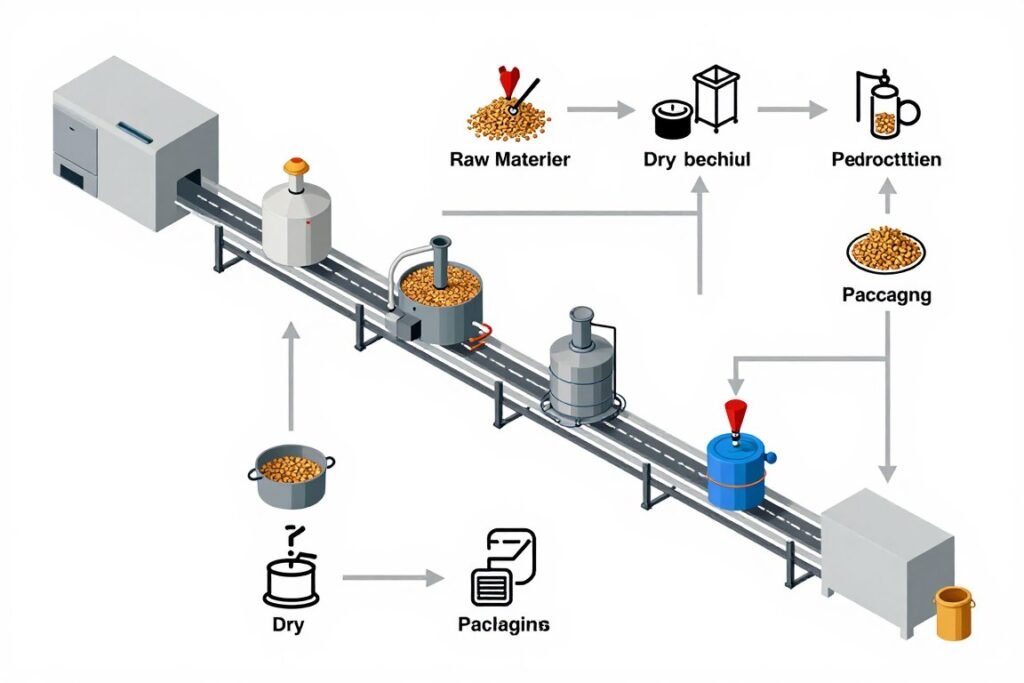
Critical Importance of After-Sales Support and Training
Equipment purchase represents the beginning of supplier relationship rather than conclusion. Comprehensive after-sales support determines long-term operational success. Nigerian businesses require accessible technical assistance addressing operational challenges promptly.
Installation support ensures correct equipment setup. Improper installation causes operational problems and premature wear. Experienced technicians configure equipment optimally for local conditions. MAIKONG provides installation supervision either remotely or through on-site visits for major systems.
Operator Training Programs
Thorough operator training prevents operational errors and safety incidents. Training covers equipment operation, routine maintenance, and troubleshooting procedures. Nigerian operators gain confidence operating sophisticated equipment through comprehensive instruction.
What training does MAIKONG provide with equipment purchase?
MAIKONG includes comprehensive operator training covering equipment operation, maintenance procedures, troubleshooting, and safety protocols. Training delivery options include on-site instruction, remote video training, and detailed documentation in English. We provide ongoing technical support via WhatsApp ensuring operators can resolve issues quickly.
How quickly can MAIKONG provide technical support for equipment issues?
Our Nigerian technical team responds to WhatsApp inquiries within 2 hours during business hours. Emergency issues receive immediate attention. We maintain spare parts inventory in Nigeria enabling rapid repair completion. Most technical issues resolve within 24 hours through remote support or parts replacement.
What warranty coverage does MAIKONG offer on pellet machines?
MAIKONG provides 12-month comprehensive warranty covering all manufacturing defects and component failures under normal operation. Extended warranty options available for additional coverage. Warranty includes parts replacement and technical support. We honor warranty commitments through our Nigerian office ensuring rapid claim processing.
Are spare parts readily available in Nigeria for MAIKONG equipment?
Yes, MAIKONG maintains Nigerian spare parts inventory for common wear components including dies, rollers, bearings, and belts. This ensures rapid repair completion without international shipping delays. We also provide spare parts lists enabling customers to maintain their own inventory for critical components.
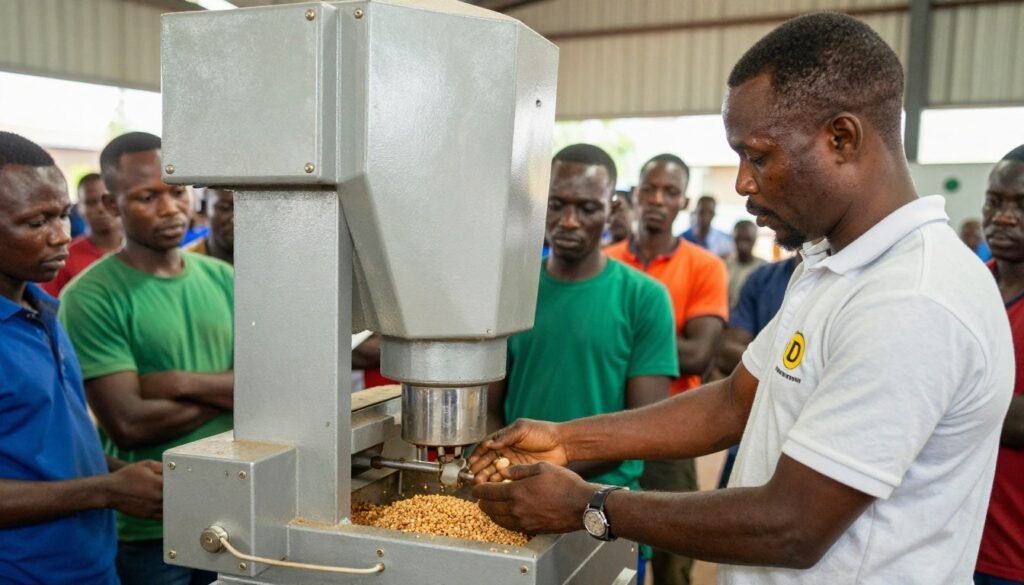
Maintenance Support and Parts Availability
Regular maintenance extends equipment lifespan significantly. Manufacturers should provide detailed maintenance schedules and procedures. Parts availability determines maintenance feasibility and downtime duration. Local parts inventory eliminates shipping delays affecting production schedules.
Technical documentation quality affects self-service maintenance capabilities. Clear manuals with diagrams enable operators to perform routine maintenance independently. Video tutorials supplement written documentation particularly valuable for visual learners. MAIKONG provides comprehensive documentation supporting Nigerian operator capabilities.
Remote diagnostics capabilities accelerate problem resolution. Modern equipment enables technicians to access control systems remotely. This identifies issues without site visits reducing resolution time. Nigerian businesses benefit from rapid support without waiting for technician travel.
MAIKONG Commitment: Our Nigerian technical support operates Monday-Saturday providing rapid assistance via WhatsApp (+86-135-1090-7401), phone, and email. We maintain spare parts inventory ensuring repairs complete within 24-48 hours. Your operational success remains our priority.
Becoming a MAIKONG Distributor in Nigeria
MAIKONG actively recruits qualified Nigerian distributors expanding our market presence. Distribution partnerships offer substantial business opportunities in Nigeria’s growing agricultural equipment sector. We provide comprehensive support enabling distributor success.
Distributor benefits include exclusive territory rights, preferential pricing, and marketing support. MAIKONG supplies technical training, promotional materials, and sales support. Our established brand reputation and product quality provide competitive advantages in the Nigerian market.
Distributor Requirements and Support
Successful distributors demonstrate commitment to customer service and technical support. Required capabilities include sales infrastructure, technical staff, and spare parts inventory management. MAIKONG provides training developing these capabilities for committed partners.

Distributor Partnership Benefits
- Exclusive territory rights protecting market investment
- Preferential pricing enabling competitive margins
- Technical training for sales and support staff
- Marketing materials and promotional support
- Regular product updates and new model access
- Co-op advertising opportunities and trade show support
- Ongoing business development consultation
Initial investment requirements vary by territory size and market potential. Distributors maintain demonstration equipment and initial parts inventory. MAIKONG provides flexible terms supporting distributor growth without excessive capital requirements.
Training programs prepare distributors for market success. Product knowledge training covers technical specifications, applications, and competitive advantages. Sales training develops effective customer engagement strategies. Service training enables distributors to provide local technical support.

Application Process
Interested parties submit distributor applications including business background, market knowledge, and growth plans. MAIKONG evaluates applications considering market coverage needs and applicant capabilities. Selected candidates undergo interviews and facility evaluations before partnership finalization.
Distributor agreements establish mutual expectations and responsibilities. Terms cover territory boundaries, sales targets, support requirements, and renewal conditions. Clear agreements prevent misunderstandings ensuring productive long-term relationships.
Join the MAIKONG Distributor Network
Expand your business with MAIKONG’s industry-leading pellet machine product line. Our established brand and comprehensive support enable distributor success. Contact our Nigerian office to discuss distributor opportunities in your region.
Why Nigerian Businesses Trust MAIKONG
MAIKONG has served Nigerian agricultural and industrial sectors for over two decades. Our commitment to quality, innovation, and customer support distinguishes us from competitors. Nigerian businesses choose MAIKONG for reliable equipment and accessible support.
Manufacturing excellence forms the foundation of our reputation. Advanced production facilities employ precision machining and quality control systems. Every pellet machine undergoes rigorous testing before shipment. This commitment ensures equipment performs reliably in Nigerian operating conditions.
Company Capabilities and Certifications
MAIKONG maintains comprehensive manufacturing capabilities across multiple product categories. Our production range includes feed pellet machines, wood pellet machines, fertilizer pelletizers, and complete production lines. This diversity enables us to serve varied Nigerian market needs efficiently.
International certifications validate our quality management systems. ISO 9001 certification confirms standardized manufacturing processes. CE marking demonstrates compliance with international safety standards. These certifications provide assurance to Nigerian buyers seeking verified suppliers.

Nigerian Market Commitment
MAIKONG recognizes Nigeria’s strategic importance in West African markets. We maintain local presence through Nigerian office and technical support teams. This commitment enables rapid response to customer needs distinguishing us from distant international suppliers.
Customization capabilities address unique Nigerian requirements. We modify equipment for local power specifications, raw material characteristics, and operational preferences. OEM services enable private labeling for distributors developing their own brands. Contact Lucy@pelletmachine.ng to discuss customization options.
Continuous innovation drives product development aligned with market evolution. Our engineering team researches emerging technologies and customer feedback. New product introductions address unmet needs in Nigerian markets. This innovation commitment keeps MAIKONG at the industry forefront.
“We evaluated multiple Chinese suppliers before selecting MAIKONG. Their transparent verification process, comprehensive documentation, and Nigerian support presence convinced us of their legitimacy. Five years later, our equipment operates reliably with excellent technical support whenever needed.”
Comprehensive Manufacturer Verification Checklist
Systematic verification prevents costly supplier selection errors. Use this comprehensive checklist when evaluating potential feed machine manufacturers. Thorough verification requires time investment but prevents substantial financial risks.
Documentation Verification Steps
- Business Registration Verification – Obtain registration certificate and verify with Chinese Administration for Market Regulation using official website. Confirm registration number, business scope, and active status.
- Manufacturing License Validation – Request manufacturing license specific to pellet equipment. Verify license number with issuing authority. Confirm license covers claimed production capabilities and product types.
- Quality Certification Authentication – Obtain ISO 9001 certificate and verify through issuing certification body. Check certificate validity period and scope coverage. Verify certifier accreditation status.
- Export Documentation Review – Request export license and customs registration proof. Verify documents with Chinese customs authorities. Confirm authorization for international equipment sales.
- Financial Stability Assessment – Request recent financial statements or bank references. Verify banking relationships through direct bank contact. Review credit reports from international rating agencies if available.
- Factory Existence Confirmation – Verify factory address through satellite imagery and local directories. Request recent facility photographs with date stamps. Consider third-party inspection service for definitive verification.
- Technical Capability Evaluation – Review engineering qualifications and patents. Request technical drawings and specifications. Assess response quality to detailed technical questions.
- Reference Verification – Contact provided customer references independently. Request contact information for multiple customers. Verify customer experiences regarding quality and support.
- Legal Status Confirmation – Search for litigation history or regulatory violations. Check business reputation through industry associations. Verify no pending legal issues affecting operations.
- Communication Consistency Check – Monitor consistency across multiple contact persons. Verify all representatives provide matching information. Professional organizations maintain consistent communication.

Red Flag Identification
Certain indicators demand heightened scrutiny or supplier rejection. Multiple red flags appearing together strongly suggest fraudulent operations. Trust your instincts when encountering concerning patterns during verification.
Critical Warning Signs – Proceed with Extreme Caution:
- Supplier refuses to provide verifiable business registration documentation
- Pricing substantially below market rates without reasonable explanation
- Pressure tactics demanding immediate payment or deposit without verification time
- Inconsistent information provided by different company representatives
- Inability to demonstrate active manufacturing operations through facility tours
- Vague or evasive responses to specific technical questions
- Recently created website with minimal content or obvious stock photography
- Only free email addresses provided instead of company domain emails
- Unwillingness to accept protective payment methods like letters of credit
- No verifiable customer references or only anonymous testimonials
Final Decision Framework
Synthesize verification results into informed supplier selection. Weight different criteria based on your specific priorities and risk tolerance. Quality and support typically outweigh minor price differences for long-term success.
MAIKONG welcomes thorough verification from potential customers. We provide complete documentation transparently facilitating your evaluation process. Our verifiable track record and Nigerian presence demonstrate the authenticity serious buyers require.
Request MAIKONG Verification Documentation Package
Receive comprehensive verification documentation including business registration, certifications, customer references, and technical specifications. Our transparent approach demonstrates confidence in our legitimacy and quality. Start your verification process today.
Protecting Your Investment Through Diligent Verification
Nigerian businesses deserve reliable feed machine suppliers delivering quality equipment and dependable support. Systematic verification processes protect your capital investment and operational success. The time invested in supplier evaluation prevents costly mistakes affecting your business for years.
Genuine manufacturers welcome verification and provide comprehensive documentation. They understand buyer concerns and facilitate thorough evaluation. Companies resisting verification or pressuring rapid decisions raise legitimate suspicion deserving rejection.
MAIKONG’s two-decade Nigerian market presence demonstrates our commitment to customer success. Our transparent operations, verifiable credentials, and local support presence distinguish us as the trusted choice. We invite your scrutiny knowing our track record confirms our legitimacy.

Your agricultural or industrial operation requires equipment performing reliably under Nigerian conditions. Partner with suppliers demonstrating proven capabilities and genuine commitment to your success. MAIKONG offers the verification transparency, product quality, and ongoing support your business deserves.
Start your supplier verification today using the comprehensive strategies outlined in this guide. Contact MAIKONG to experience the difference working with a verified, established manufacturer brings to your operations. Your success remains our priority.
Begin Your Partnership with MAIKONG Today
Experience the confidence of working with a verified manufacturer serving Nigerian businesses for over 20 years. Our comprehensive product range, local technical support, and transparent operations provide the foundation for your success. Contact our Nigerian team now.
Email: Lucy@pelletmachine.ng
Website: pelletmachine.ng
Explore: Distributor Opportunities | OEM Services | Place Your Order