
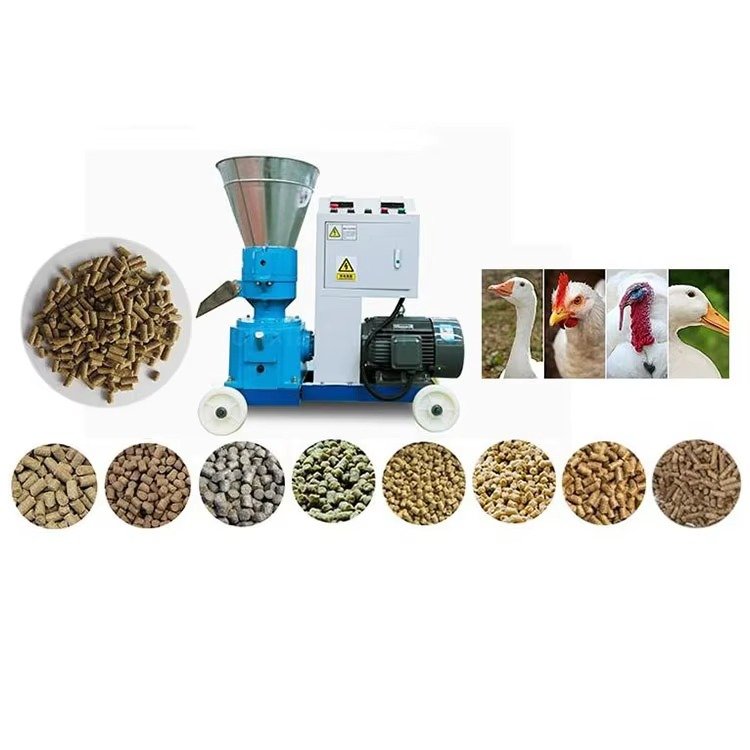
 A feed pellet machine offers a practical solution. This equipment transforms raw feed ingredients like maize, soybeans, and fish meal into compact, nutritious pellets. These uniform pellets reduce waste and improve animal growth rates significantly.
MAIKONG brings 20 years of pellet manufacturing experience to the Nigerian agricultural market. Our feed pelletizing machines serve small poultry farms, large commercial operations, and everything between. We understand the specific needs of Nigerian livestock and aquaculture producers.
This guide covers everything Nigerian farmers and agribusiness owners need to know. You will learn how pelletizing machines work, their benefits, technical specifications, and real African success stories. Whether you raise chickens, fish, pigs, or cattle, the right pellet machine can transform your feed operation and boost profitability.
What Is a Feed Pellet Machine and How Does It Work?
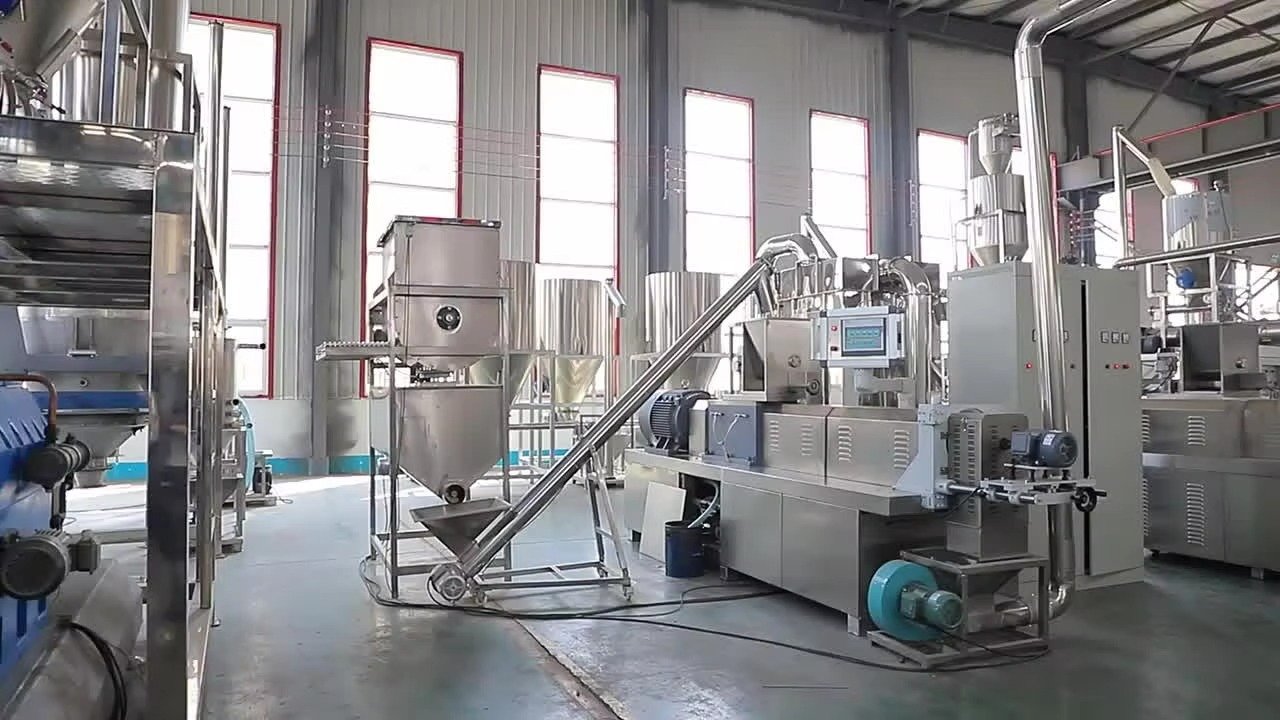
A feed pellet machine compresses loose feed ingredients into small, cylindrical pellets. The process combines grinding, mixing, conditioning, and pressing steps. Raw materials enter the machine as powder or small particles and exit as solid, compact pellets.
Core Components of a Feed Pelletizing Machine
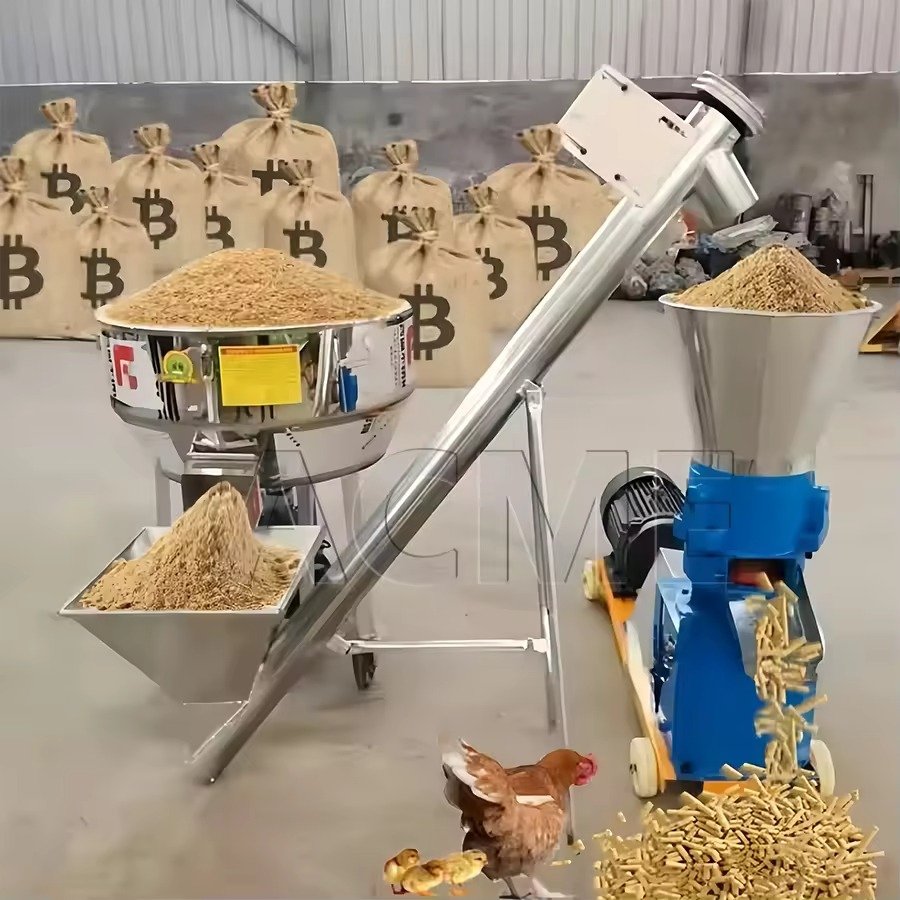
Every pelletizing machine contains essential parts that work together. The feeder hopper stores raw materials before processing. A conditioning chamber adds steam and heat to soften ingredients.
The pellet die and roller system creates the actual pellets. Dies contain small holes through which feed is forced. Rollers press the conditioned feed through these holes. A cutting blade slices the emerging pellets to the desired length.
Flat Die Pellet Machines
Flat die models work well for small operations. The die remains stationary while rollers rotate above it. These machines require less power and cost less initially.
- Production capacity: 50-500 kg per hour
- Lower initial investment
- Easier maintenance and cleaning
- Perfect for small poultry and fish farms
Ring Die Pellet Machines
Ring die systems suit larger commercial operations. The cylindrical die rotates while rollers press from inside. These produce higher volumes with better pellet density.
- Production capacity: 500-5000+ kg per hour
- Higher production efficiency
- Superior pellet quality and durability
- Ideal for feed mills and large farms
The Feed Pelletizing Process Step by Step
Understanding each stage helps operators achieve optimal results. Raw feed ingredients must be properly prepared before entering the machine.
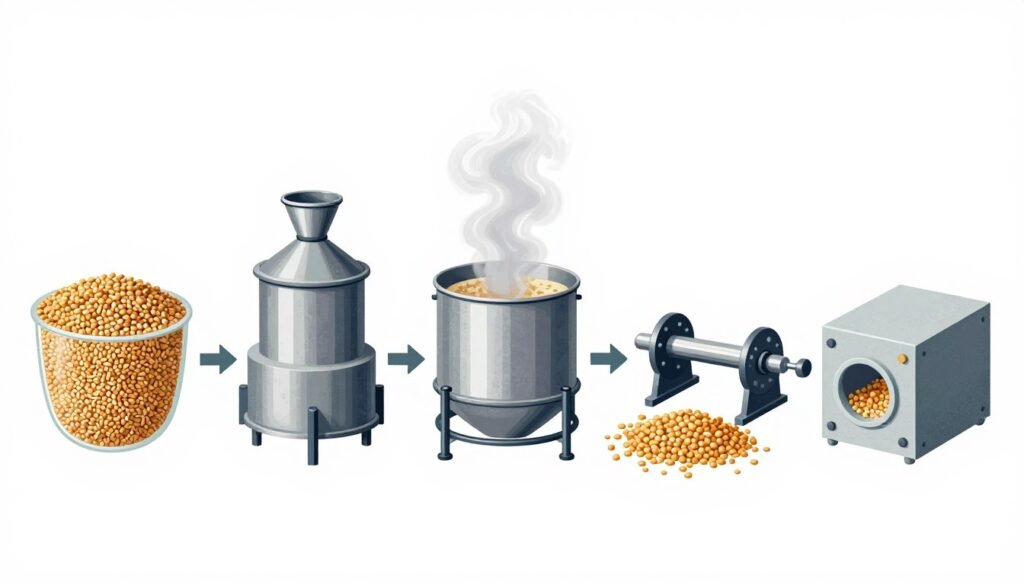
- Feed ingredients are ground into consistent particle size. Uniform particle size ensures even compression during pelletizing.
- Ground materials enter a mixer where vitamins, minerals, and binding agents blend thoroughly. Proper mixing prevents separation during storage.
- The conditioner adds steam and sometimes molasses. Heat and moisture activate natural starches that bind pellets together.
- Conditioned feed enters the die chamber. Rollers compress materials through die holes at high pressure.
- Hot pellets pass through a cooler. Cooling removes excess moisture and hardens pellets for storage.
Have immediate questions about feed pellet machines? Our technical team provides WhatsApp support at +86-135-1090-7401. We answer questions in clear English and help Nigerian farmers choose the right equipment.
Why Nigerian Farmers Choose Feed Pellet Machines
Switching from commercial feed to on-farm pellet production delivers multiple advantages. Nigerian farmers report significant money savings within the first year of operation.
Dramatic Feed Cost Reduction
Commercial feed price continues rising across Nigeria. A 25kg bag of quality poultry feed now costs between ₦8,000 and ₦12,000 in most regions. These costs squeeze profit margins for small and medium farms.
Producing your own pellets cuts feed costs by 40-60%. You purchase raw ingredients directly from local suppliers or grow them yourself. A small feed pellet machine pays for itself within 8-14 months for most operations.
Commercial Feed Costs (Monthly)
A 500-bird layer farm buying commercial feed spends approximately:
- 500 birds × 120g daily = 60kg per day
- 60kg × 30 days = 1,800kg monthly
- 1,800kg ÷ 25kg bags = 72 bags
- 72 bags × ₦10,000 = ₦720,000 monthly
On-Farm Pellet Production Costs
The same farm producing own feed pellets:
- Raw ingredients cost: ₦350,000
- Electricity/fuel: ₦30,000
- Labor (part-time): ₦40,000
- Total monthly cost: ₦420,000
- Monthly savings: ₦300,000
Improved Animal Health and Performance
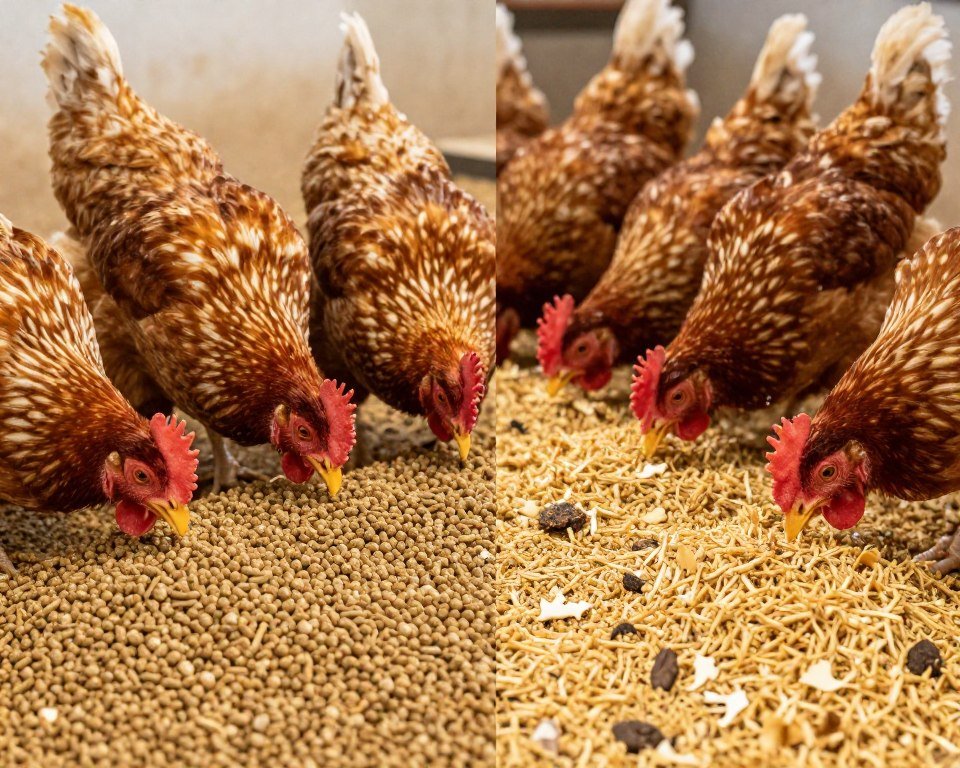
Uniform pellets eliminate selective feeding. Animals cannot pick out preferred ingredients and leave others. Every pellet contains balanced nutrition.
Heat during pelletizing reduces harmful bacteria in feed. This thermal processing improves digestibility of proteins and starches. Nigerian farmers report reduced disease incidents in flocks and herds fed pelleted feed.
Reduced Feed Waste and Storage Benefits
Mash feed creates significant waste through spillage and sorting. Birds and livestock scatter loose feed while searching for preferred particles. This waste adds 15-25% to actual feed costs.
Pellets maintain their structure during handling and feeding. Hard, compact pellets resist breaking during transportation. Animals consume pellets with minimal spillage.
Dense pellets require less storage space than equivalent mash feed. A ton of pellets occupies 30-40% less volume. This space efficiency matters for farms with limited storage facilities.
Pellets store longer without spoilage. The compression process removes excess moisture that promotes mold growth. Properly dried pellets remain fresh for 3-4 months in Nigerian conditions.
Get Your Custom Feed Pellet Machine Solution
MAIKONG provides tailored pelletizing machine solutions for Nigerian farms. Our 20 years of manufacturing experience ensures reliable equipment that matches your specific needs. We offer free consultation to discuss capacity requirements, feed types, and budget considerations.
Types of Feed Pellet Machines for Different Operations
Nigerian agricultural operations vary greatly in size and focus. MAIKONG manufactures specialized pelletizing machines for each application. Choosing the correct type ensures optimal performance and return on investment.
Poultry Feed Pellet Machines
Poultry operations represent the largest segment of Nigerian livestock farming. Layer farms, broiler operations, and hatcheries all benefit from on-site pellet production.
Chicken feed requires specific pellet sizes. Starter feed for chicks uses 2-3mm diameter pellets. Grower feed needs 3-4mm pellets. Layer feed works best at 4-5mm diameter.
Our poultry feed pellet machines produce consistent sizes across all categories. Die hole configurations customize pellet dimensions. The 150kg/hour model serves farms with 500-2000 birds. Larger operations choose 300-500kg/hour models.
Fish Feed Pellet Machines
Fish farming grows rapidly across Nigerian states. Catfish, tilapia, and other species require specialized floating or sinking feed.
Standard feed pellet machines produce sinking pellets suitable for bottom feeders. Floating fish feed requires an extruder-type machine. MAIKONG offers both technologies.
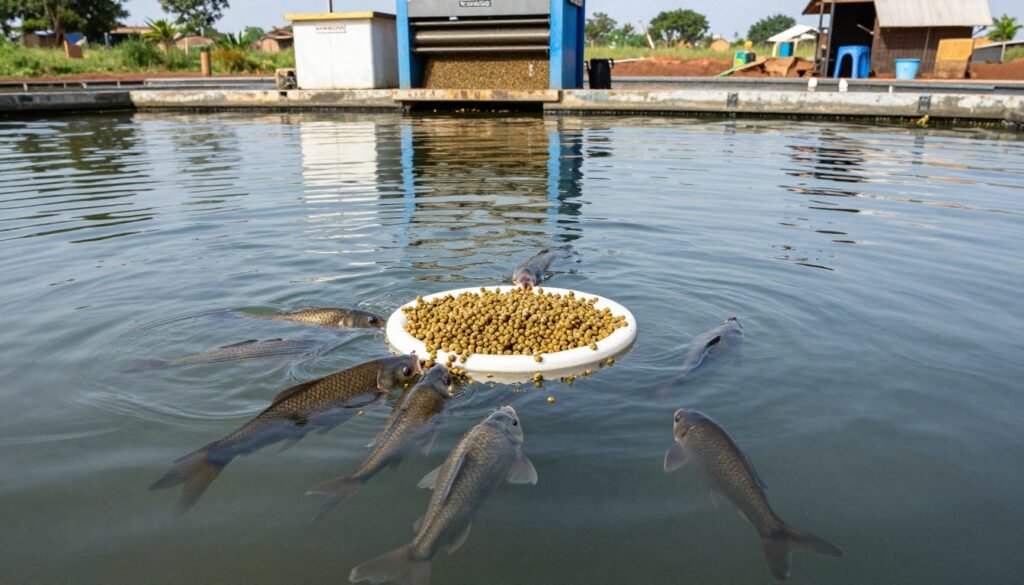
Our fish feed pelletizing machines handle high-protein formulas containing fish meal and soybean. Water stability matters for aquaculture feed. Properly formulated pellets maintain structure for 6-8 hours in water.
| Fish Species | Pellet Type | Diameter Range | Protein Content |
| Catfish fingerlings | Floating/Sinking | 2-3mm | 40-45% |
| Catfish growers | Floating | 4-6mm | 35-40% |
| Tilapia | Floating | 3-5mm | 28-32% |
| Carp | Sinking | 4-6mm | 25-30% |
Livestock Feed Pellet Machines for Cattle, Goats, and Pigs
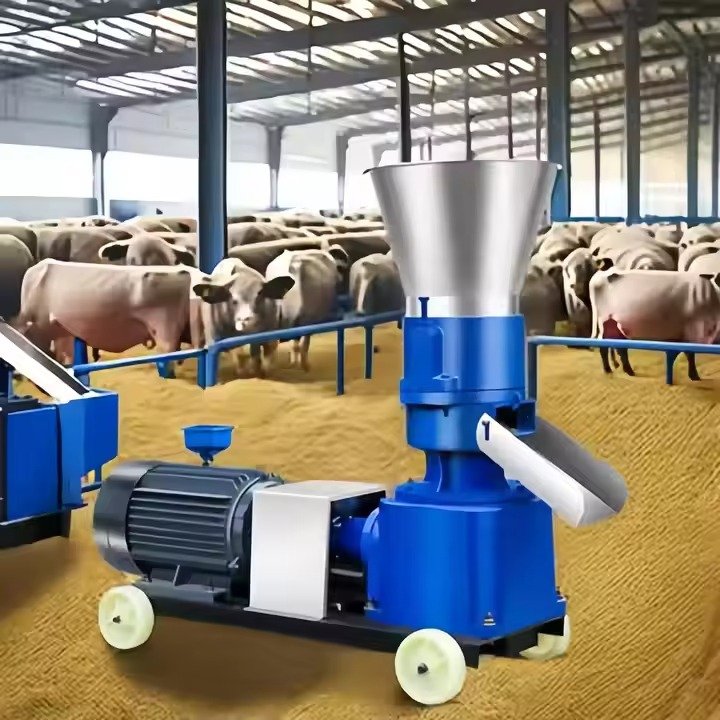
Ruminants and swine have different nutritional needs than poultry and fish. Livestock feed pellet machines accommodate coarser materials and larger pellet sizes.
Cattle and goat feed often includes roughage like grass, hay, and crop residues. These fibrous materials require robust pelletizing equipment. MAIKONG livestock machines handle materials with up to 18% fiber content.
Pig feed requires higher fat content than other livestock. Our machines process oil-rich ingredients without clogging. Die designs prevent heat damage to sensitive vitamins during compression.
Manual Feed Pellet Machines for Small Operations
Not every farm needs motorized equipment. Manual feed pellet machines serve small-scale farmers and rural cooperatives. These hand-operated units work without electricity.
A manual pellet machine produces 30-60kg per hour with two operators. Initial investment costs only 20-30% of motorized models. They suit farms with 50-200 birds or small backyard operations.
MAIKONG designs durable manual units using cast iron and hardened steel components. Simple construction allows local maintenance without specialized tools.
Feed Pellet Machine Technical Specifications and Capacity Guide
Selecting the right machine capacity prevents bottlenecks in your feed production. MAIKONG offers models from small farm units to commercial feed mill equipment.
Production Capacity Considerations
Calculate your daily feed requirements before selecting machine size. A 1000-bird layer farm needs approximately 120kg of feed daily. Adding 20% buffer capacity prevents operating at maximum load continuously.
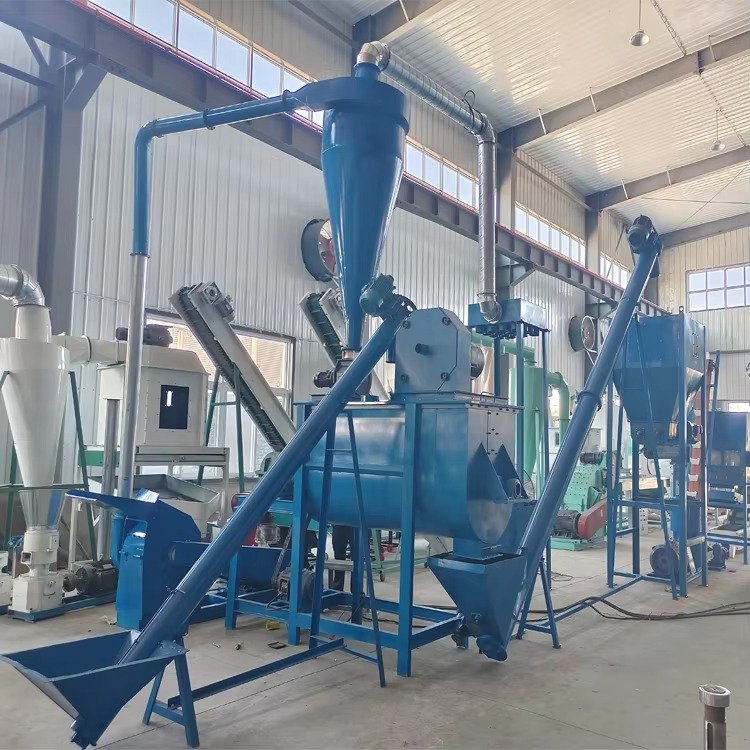
Small feed pellet machine models produce 50-150kg per hour. Medium capacity machines output 200-400kg hourly. Industrial pelletizing machines achieve 500-2000kg per hour.
| Model | Capacity (kg/hr) | Motor Power | Die Diameter | Suitable For |
| MAIKONG-120 | 80-120 | 4kW | 120mm | Small poultry farms (200-800 birds) |
| MAIKONG-150 | 120-150 | 7.5kW | 150mm | Medium farms (800-2000 birds) |
| MAIKONG-200 | 200-300 | 11kW | 200mm | Large farms (2000-5000 birds) |
| MAIKONG-300 | 400-500 | 22kW | 300mm | Commercial operations (5000+ birds) |
| MAIKONG-400 | 600-800 | 37kW | 400mm | Feed mills, large livestock farms |
Power Requirements and Energy Efficiency
Nigerian farmers must consider electricity costs when selecting pelletizing equipment. MAIKONG machines optimize energy consumption without sacrificing production quality.
A 150kg/hour pellet machine consumes approximately 7.5kW during operation. Running 4 hours daily uses 30kWh of electricity. At average Nigerian commercial rates, this adds ₦2,400-3,000 to daily operating costs.
Diesel-powered models serve areas with unreliable electricity. These units use 2-3 liters of fuel per hour of operation. Fuel costs run higher than grid electricity but eliminate downtime from power outages.
Die and Roller Specifications
Dies and rollers are the heart of any pellet machine. These components determine pellet quality, production speed, and maintenance requirements.
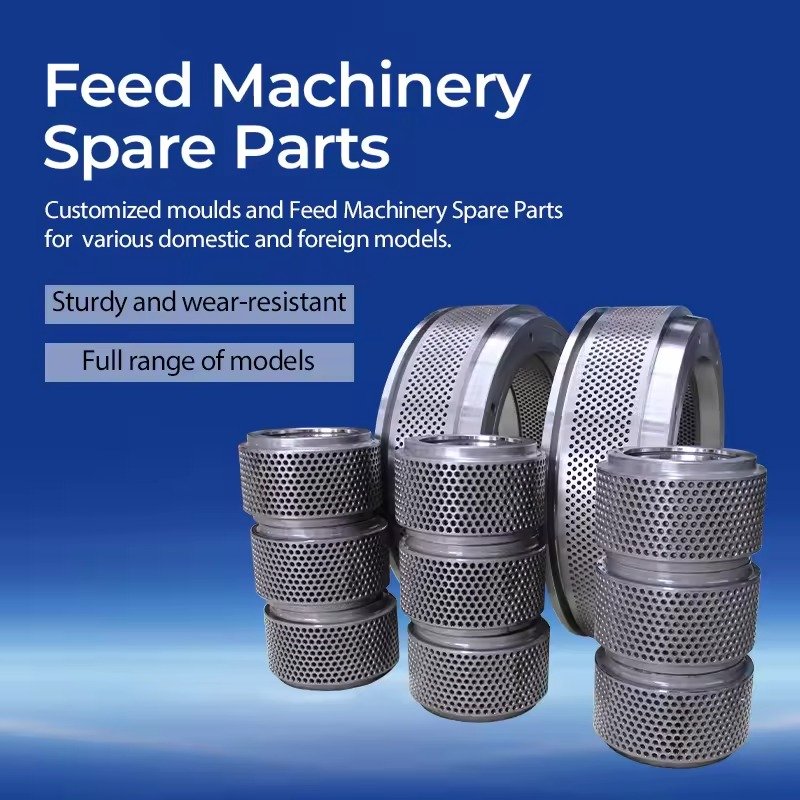
MAIKONG uses hardened alloy steel for all dies and rollers. This material withstands the high pressures and temperatures during pelletizing. Standard dies last 800-1200 hours of operation before requiring replacement.
Die hole diameter determines pellet size. We offer dies with 2mm to 8mm holes. Hole depth affects pellet density and durability. Custom die specifications accommodate special feed formulas.
How to Make a Feed Pellet Machine Work Efficiently
Proper operation extends machine life and ensures consistent pellet quality. Training and standard operating procedures prevent costly mistakes and production delays.
Feed Ingredients Preparation
Quality pellets start with properly prepared ingredients. All materials must reach correct moisture content before pelletizing. Ideal moisture range is 12-14% for most feed formulas.
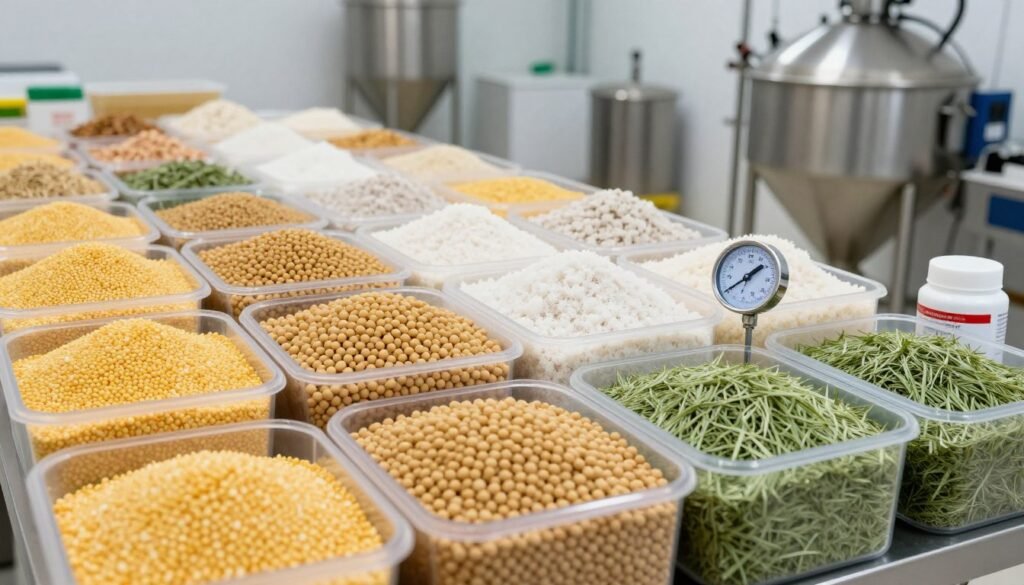
Grind ingredients to consistent particle size. Large particles prevent proper binding. Particles passing through a 3-4mm screen work best for standard pellets. Fish feed and fine poultry feed may require smaller particle sizes.
Mix ingredients thoroughly before conditioning. Uneven distribution creates pellets with varying nutritional content. Batch mixers ensure complete blending of all components.
Operating the Pelletizing Machine
Start the machine empty and allow it to reach operating temperature. Feed raw materials gradually as the machine warms up. Sudden overloading causes blockages and motor strain.
- Inspect die and roller condition before starting. Clean any residual feed from previous batches.
- Turn on the motor and let it run for 2-3 minutes without feed. Listen for unusual noises indicating mechanical problems.
- Begin feeding materials at 50% capacity. Monitor pellet quality as production stabilizes.
- Gradually increase feed rate to optimal production level. Watch motor current draw to prevent overload.
- Maintain steady materials flow throughout production. Interruptions stress the die and reduce pellet quality.
- Stop feeding materials 2-3 minutes before shutdown. Allow the machine to clear remaining feed.
Our technical team provides comprehensive training for all MAIKONG equipment. Contact us via WhatsApp: +86-135-1090-7401 to arrange operator training sessions.
Quality Control During Production
Regular quality checks prevent producing substandard pellets. Examine pellet appearance, size, and hardness throughout each production run.
Good Quality Pellets
- Uniform size and shape
- Smooth, shiny surface
- Break cleanly without crumbling
- No visible cracks or fissures
- Consistent color throughout batch
- Minimal fines (broken particles)
Poor Quality Indicators
- Irregular shapes and sizes
- Rough, dull surface texture
- Crumble easily when handled
- Visible cracks or splits
- Color variations within batch
- Excessive dust and fines
Maintenance and Troubleshooting
Regular maintenance prevents unexpected breakdowns during critical production periods. MAIKONG machines require minimal daily attention but benefit from scheduled servicing.
Lubricate bearings and moving parts every 8 hours of operation. Use food-grade lubricants suitable for agricultural equipment. Check belt tension weekly and adjust as needed.
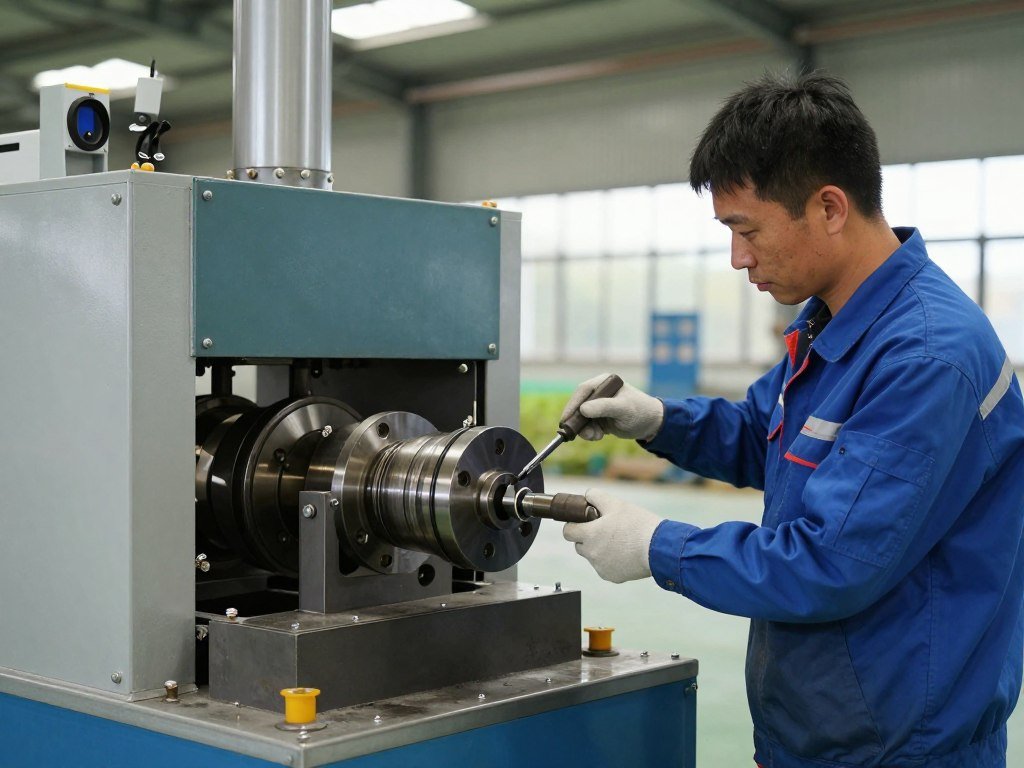
Clean the die thoroughly every 200 hours of operation. Remove built-up feed residue that reduces hole diameter. Inspect roller surfaces for excessive wear. Replace worn components before they damage other parts.
| Problem | Possible Cause | Solution |
| Low pellet production | Worn die or rollers | Inspect and replace worn components |
| Pellets crumbling | Insufficient moisture or steam | Increase conditioning temperature and time |
| Motor overheating | Overloading or poor ventilation | Reduce feed rate, clean cooling vents |
| Uneven pellet size | Inconsistent raw material size | Improve grinding and mixing process |
| Machine vibration | Loose bolts or worn bearings | Tighten all fasteners, replace bearings |
Feed Pellet Machine Price and Investment Analysis for Nigeria
Understanding total investment costs helps Nigerian farmers make informed purchasing decisions. The machine purchase price represents only part of the overall investment.
Machine Purchase Costs
Feed pellet machine for sale price varies based on capacity, features, and brand reputation. MAIKONG offers competitive pricing while maintaining superior build quality.
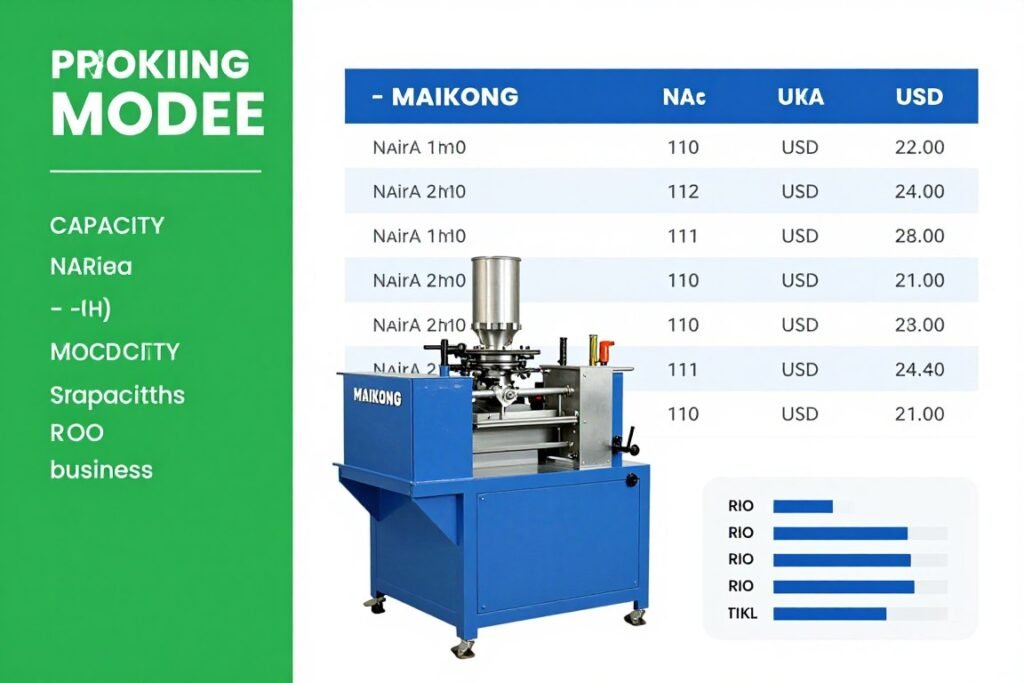
Small feed pellet machine price in Nigeria typically range from ₦450,000 to ₦1,200,000 for entry-level models. These serve farms with 200-1000 birds or equivalent livestock.
Medium capacity machines cost ₦1,500,000 to ₦3,500,000. Commercial-grade equipment for large operations range from ₦4,000,000 to ₦12,000,000 depending on automation level.
Basic Model Features
- Manual controls and operation
- Single die size included
- Standard motor (no VFD)
- Basic safety guards
- 1-year warranty
- Price range: ₦450,000-900,000
Standard Model Features
- Semi-automatic controls
- Two die sizes included
- Energy-efficient motor
- Enhanced safety features
- 2-year warranty
- Free operator training
- Price range: ₦1,200,000-2,500,000
Premium Model Features
- Fully automatic operation
- Multiple die options
- Variable frequency drive
- Advanced safety systems
- 3-year comprehensive warranty
- Free training + time support
- Custom branding available
- Price range: ₦3,000,000-6,000,000
Additional Setup and Operating Costs
Total investment includes more than the pelletizing machine itself. Nigerian farmers should budget for installation, training, and initial raw materials.
Shipping to Nigerian ports adds ₦80,000-200,000 depending on machine size. Customs clearance and inland transportation contribute another ₦50,000-150,000.
Installation and commissioning by MAIKONG technicians costs ₦100,000-250,000. This service includes operator training and initial production runs. The investment prevents costly mistakes during startup.
Working capital for raw materials inventory requires ₦200,000-500,000. Maintaining 2-3 weeks of ingredients ensures uninterrupted production.
Return on Investment Calculation
Most Nigerian farmers recover their pellet machine investment within 10-18 months. Actual payback period depends on farm size, feed price savings, and production efficiency.
Example: 1000-Bird Layer Farm
- Monthly commercial feed cost: ₦1,200,000
- Monthly pellet production cost: ₦650,000
- Monthly savings: ₦550,000
- Machine investment: ₦1,800,000
- Payback period: 3.3 months
- Annual profit increase: ₦6,600,000
Example: 500-Fish Pond Farm
- Monthly commercial feed cost: ₦800,000
- Monthly pellet production cost: ₦450,000
- Monthly savings: ₦350,000
- Machine investment: ₦2,200,000
- Payback period: 6.3 months
- Annual profit increase: ₦4,200,000
These calculations demonstrate why Nigerian farmers increasingly invest in pellet production equipment. The money saved on feed costs directly increases farm profitability.
African Success Stories: MAIKONG Feed Pellet Machines in Action
Real-world results from African farms demonstrate the practical benefits of MAIKONG equipment. These case studies show how different operations achieved their goals.
Case Study: Nigerian Poultry Cooperative
The Ogun State Women’s Poultry Cooperative serves 45 member farms totaling 12,000 layers. Rising feed costs threatened the cooperative’s viability in 2022.
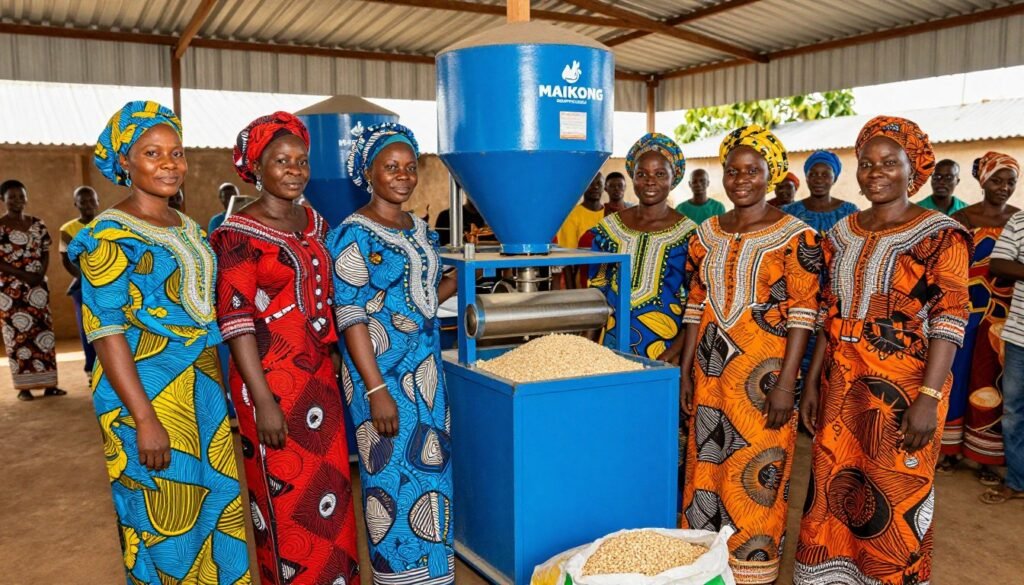
The cooperative purchased a MAIKONG-300 pelletizing machine with 400kg/hour capacity. Members pool raw ingredients purchases to negotiate better prices. The cooperative produces feed for all member farms twice weekly.
“Our feed costs dropped by 55% in the first six months. The machine paid for itself in just eight months. Now we’re expanding to serve neighboring cooperatives.”
The cooperative now generates additional income selling pellets to non-member farmers. This revenue funds other cooperative activities and member training programs.
Case Study: Kenyan Fish Farm Expansion
Lake Victoria Aquaculture operates 30 ponds producing tilapia and catfish. Commercial floating feed costs limited their expansion plans.
MAIKONG supplied a floating fish feed production line including extruder, dryer, and coating equipment. The installation processed 250kg per hour of floating pellets.
Production costs decreased from $1.20 to $0.48 per kilogram of feed. The farm doubled pond capacity using saved capital. Fish survival rates improved due to consistent pellet quality.
Case Study: South African Pig Farm Automation
Mpumalanga Premium Pork manages 800 breeding sows and their offspring. Manual feed mixing consumed excessive labor hours and produced inconsistent nutrition.
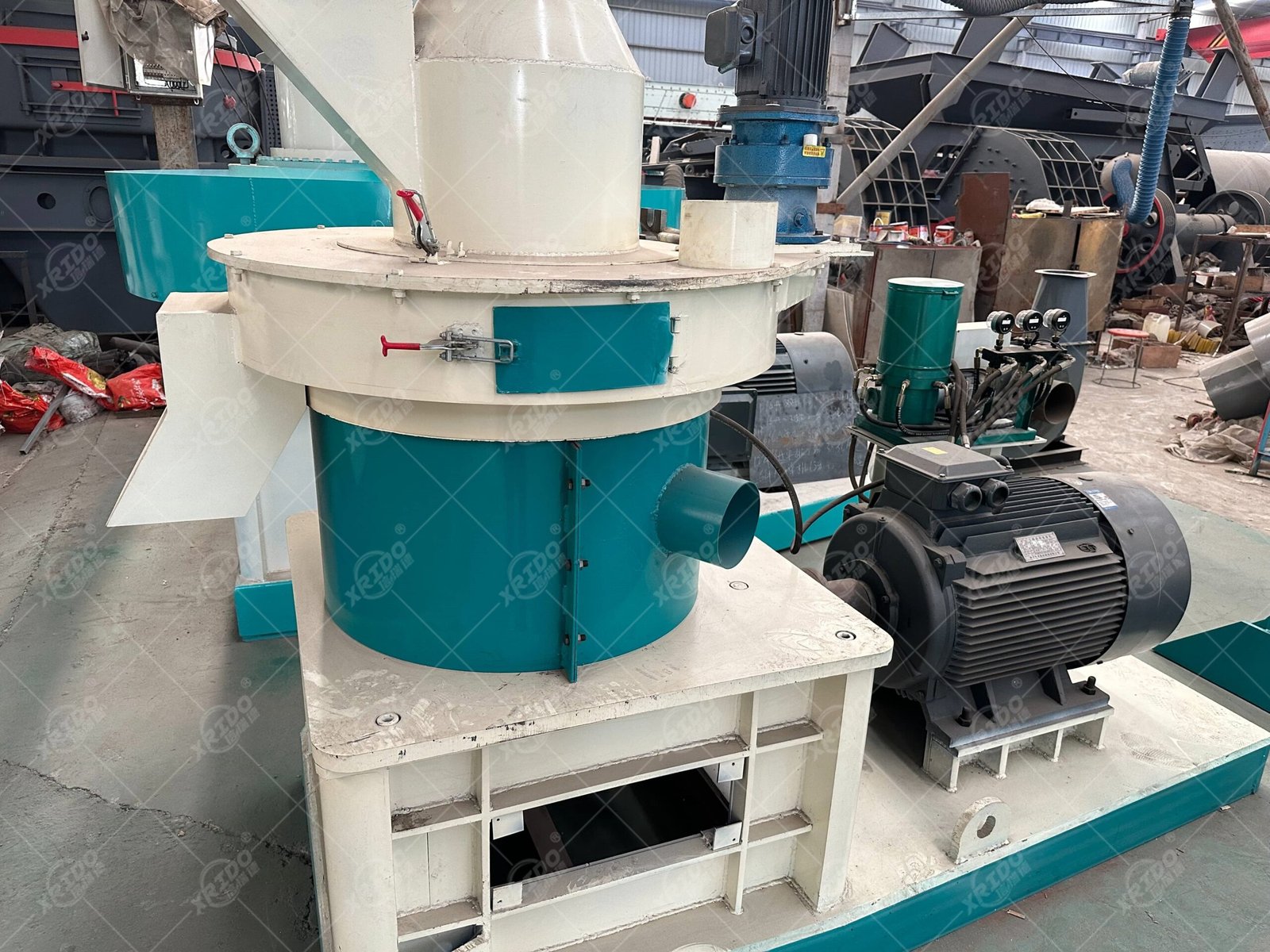
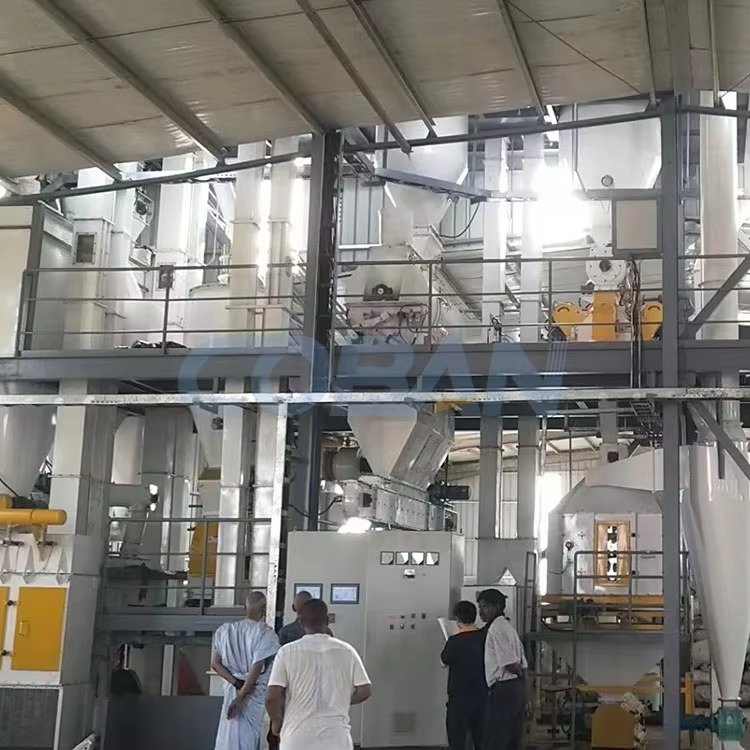
MAIKONG designed a complete feed production line with automated batching, mixing, and pelletizing. The system produces 600kg per hour with minimal labor input.
The farm now produces specialized formulas for different pig growth stages. Precise nutrition control improved daily weight gain by 12%. Feed conversion ratios dropped from 3.2:1 to 2.8:1.
Become a MAIKONG Distributor in Nigeria
MAIKONG seeks established agricultural equipment dealers and agribusiness entrepreneurs to distribute our feed pellet machines across Nigerian states. We offer competitive wholesale pricing, comprehensive technical training, marketing support, and exclusive territory options. Our 20-year industry reputation helps partners build profitable, sustainable businesses serving Nigerian farmers.
Choosing the Right Feed Pellet Machine for Your Nigerian Farm
Selecting appropriate equipment requires understanding your specific requirements. MAIKONG helps Nigerian customers evaluate their needs and choose optimal solutions.
Assess Your Production Requirements
Calculate daily and weekly feed consumption for your operation. Add 20-30% buffer capacity to prevent operating at maximum load continuously.
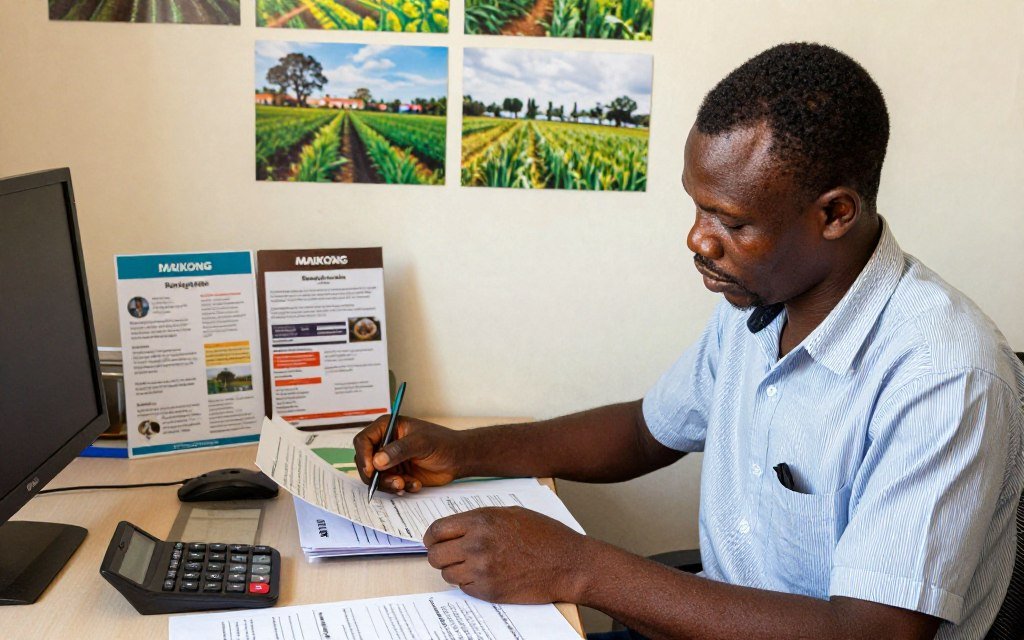
Consider future expansion plans when sizing equipment. Purchasing slightly larger capacity now prevents costly upgrades within 2-3 years. Most Nigerian farms grow 15-25% annually once feed costs decrease.
Evaluate Available Space and Power
Pellet machines require dedicated space for operation and maintenance. Measure available area including clearance for materials handling and product storage.
Verify electrical supply capacity matches machine motor requirements. Three-phase power serves larger models best. Single-phase machines suit small farms with limited electrical infrastructure.
Budget Total Investment Costs
Realistic budgeting includes all costs beyond the machine purchase price. Account for shipping, installation, training, and working capital for raw materials.
Initial Investment
- Machine purchase price
- Shipping and customs
- Installation and commissioning
- Operator training
- Initial spare parts
Working Capital
- Raw ingredients inventory
- Packaging materials
- Electricity/fuel budget
- Labor costs
- Maintenance supplies
Ongoing Costs
- Monthly electricity/fuel
- Operator wages
- Routine maintenance
- Die and roller replacement
- Quality testing
Consider Technical Support Availability
Reliable after-sales support prevents costly downtime during production seasons. MAIKONG maintains technical support via WhatsApp, email, and phone for all Nigerian customers.
We stock spare parts in South Africa for quick shipping to Nigerian dealers. Common wear parts ship within 3-5 business days. Emergency technical support responds within 24 hours.
WhatsApp Technical Support: +86-135-1090-7401
Verify Customization Options
Standard machines serve most applications effectively. Some operations benefit from custom features matching specific requirements.
MAIKONG offers customization including:
- Custom die sizes for specialized pellet dimensions
- Alternative power options (diesel, solar-hybrid)
- Automation levels from manual to fully automatic
- Capacity modifications for unique production needs
- Branding and appearance customization for distributors
- Integration with existing feed processing equipment
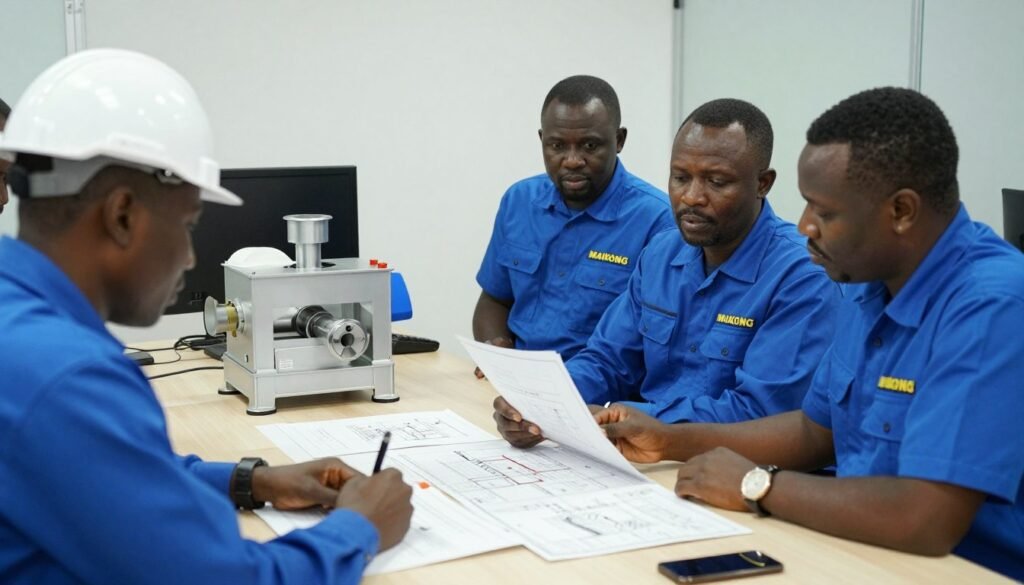
Frequently Asked Questions About Feed Pellet Machines
What materials can I use in a feed pellet machine?
Feed pellet machines process a wide variety of agricultural materials. Common ingredients include maize, sorghum, wheat, rice bran, soybean meal, fish meal, groundnut cake, and palm kernel cake. You can also pelletize grass, hay, crop residues, and food processing byproducts.
The machine handles materials with moisture content between 10-15%. Fibrous materials should not exceed 18% fiber content for optimal pelletizing. Always grind ingredients to 3-4mm particle size before processing.
How long do dies and rollers last before replacement?
MAIKONG dies and rollers typically last 800-1200 hours of active operation. Actual lifespan depends on feed formula abrasiveness and proper maintenance practices.
Materials with high mineral content wear dies faster. Regular cleaning and lubrication extends component life. We recommend inspecting dies every 200 hours and replacing when hole diameter increases by more than 10%.
Replacement dies cost ₦85,000-180,000 depending on size. Rollers range from ₦65,000-140,000. Ordering spare components during initial purchase ensures quick replacement when needed.
Can I make floating fish feed with a standard pellet machine?
Standard pellet machines produce sinking pellets only. Floating fish feed requires an extruder-type machine that uses higher temperature and pressure.
MAIKONG manufactures both sinking and floating fish feed equipment. Extruders cost approximately 40-60% more than standard pelletizers but create pellets that float for 6-8 hours. This feature suits surface-feeding fish species like tilapia.
For catfish and bottom feeders, standard sinking pellets work perfectly and cost less to produce. Discuss your specific fish species with our technical team to choose appropriate equipment.
What electrical power supply does the machine require?
Machine power requirements vary by model size. Small units (100-150kg/hr) operate on single-phase 220V power with 4-7.5kW motors. Medium capacity models (200-400kg/hr) need three-phase 380V power with 11-22kW motors.
Large commercial machines require three-phase power with 30-75kW motors. Nigerian farms with unstable electricity should consider diesel-powered models or invest in generator backup systems.
MAIKONG can supply voltage adapters for regions with non-standard electrical systems. Solar-diesel hybrid power options serve remote farm locations effectively.
How much training is needed to operate a pellet machine?
Basic operation training takes 1-2 days for motivated learners. MAIKONG provides comprehensive training during installation covering machine operation, maintenance, safety procedures, and quality control.
We supply detailed operation manuals in English with clear photos and diagrams. Training videos demonstrate proper procedures for Nigerian operators. Our WhatsApp support helps operators solve problems quickly during initial production runs.
Experienced grain mill or agricultural equipment operators learn even faster. Most Nigerian farmers become proficient within one week of regular operation.
What is the typical payback period for a feed pellet machine?
Payback periods range from 6-18 months depending on farm size and feed consumption. Larger operations with high feed usage recover investments faster.
A 1000-bird layer farm typically achieves payback in 8-12 months. Fish farms with 10+ ponds recover costs within 10-14 months. Small backyard operations may need 15-18 months.
These estimates assume feed cost savings of 45-60% compared to commercial products. Actual results vary based on local raw material prices and production efficiency.
Can I produce feed for multiple animal species with one machine?
Yes, one machine produces feed for different species by changing die sizes and formulas. Most farms operate with 2-3 different dies covering their animal types.
Produce poultry feed using 3-5mm dies, fish feed with 2-4mm dies, and livestock feed with 5-8mm dies. Clean the machine thoroughly between different formulas to prevent cross-contamination.
MAIKONG supplies additional dies at discounted prices when ordered with the main machine. Quick die changes take only 20-30 minutes with proper tools.
Why Choose MAIKONG Feed Pellet Machines
MAIKONG serves African farmers with reliable equipment backed by decades of manufacturing experience. Our commitment to Nigerian agriculture extends beyond machine sales to comprehensive support and partnership.
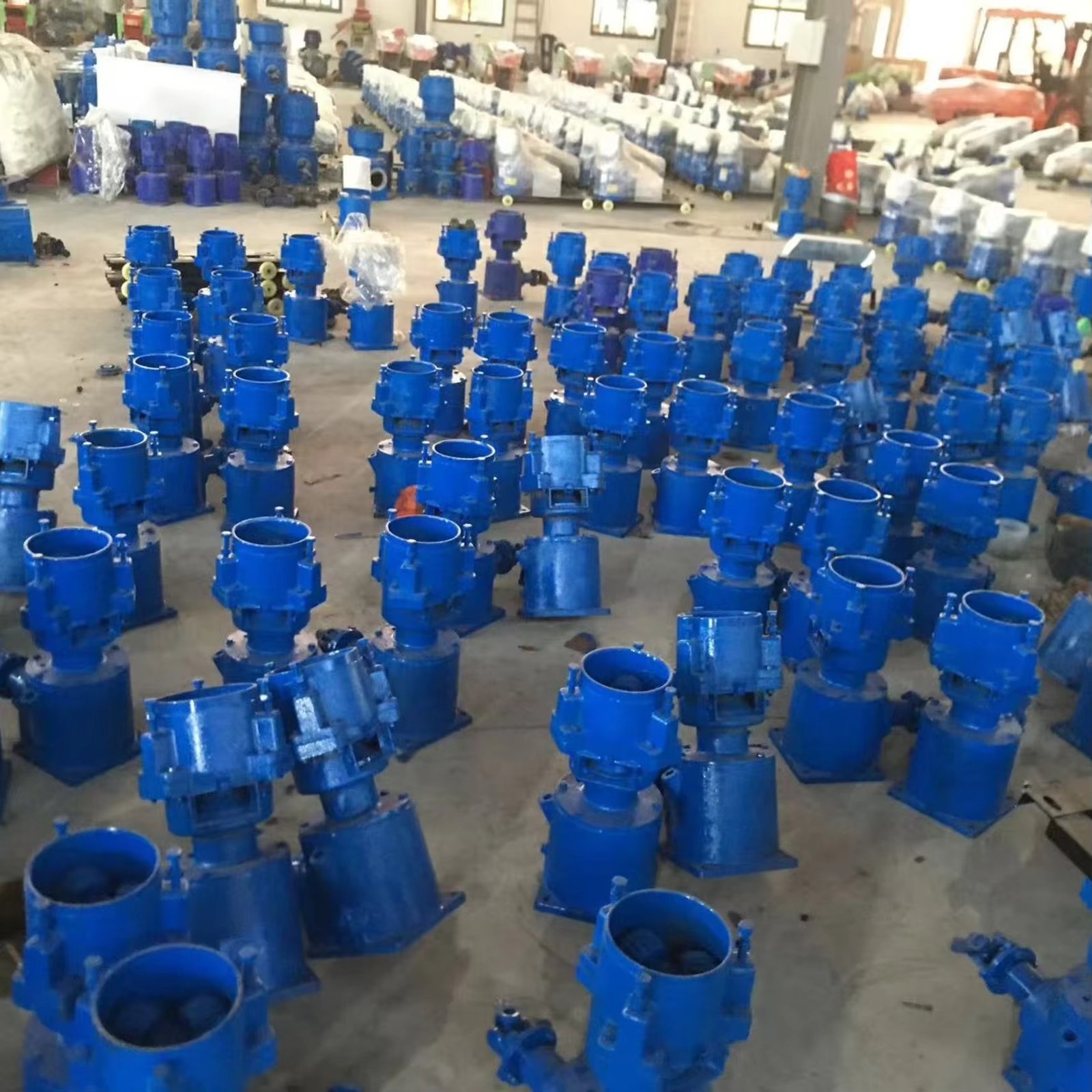
20+ Years Manufacturing Excellence
Since 2003, MAIKONG has specialized in pellet production equipment. We manufacture complete product lines including feed pellet machines, wood pellet machines, fertilizer pellet machines, and biomass processing systems.
Our South African facility combines international engineering standards with understanding of African agricultural conditions. Every machine undergoes rigorous testing before shipping to ensure reliable performance in Nigerian environments.
Customization and OEM Services
Standard machines serve most operations effectively. MAIKONG also provides extensive customization for unique requirements.
Appearance Customization
Distributors and large farms benefit from branded equipment:
- Custom color schemes and paint
- Logo placement and branding
- Personalized control panels
- Branded packaging and manuals
Technical Customization
Specialized operations need tailored features:
- Modified production capacities
- Custom die configurations
- Alternative power systems
- Integration with existing equipment
Production Line Solutions
Complete systems for large operations:
- Automated batching and mixing
- Multiple pelletizer integration
- Cooling and packaging systems
- Quality control equipment
OEM Manufacturing
White-label production for distributors:
- Your brand on MAIKONG equipment
- Custom specifications
- Exclusive designs
- Marketing material support
Comprehensive Technical Support
MAIKONG maintains multiple support channels serving Nigerian customers. Our technical team understands both equipment and Nigerian farming conditions.
WhatsApp Support: +86-135-1090-7401 provides instant answers to operational questions. Share photos and videos of machine issues for quick diagnosis.
Email Support: Lucy@pelletmachine.co.za handles detailed technical inquiries, spare parts orders, and warranty claims. We respond within 24 hours on business days.
Phone Consultation: Schedule calls with technical specialists for complex troubleshooting. Our team speaks clear English and understands Nigerian agricultural terminology.

Profitable Partnership Opportunities
MAIKONG actively recruits distributors and agents across Nigerian states. We offer genuine partnership benefits that help agricultural equipment dealers grow profitable businesses.
Competitive Wholesale Pricing
Distributors receive 25-35% margin on machine sales. Volume discounts apply for quarterly orders exceeding 10 units. Special pricing for government and institutional contracts.
Marketing Support
MAIKONG provides brochures, demonstration videos, and technical specifications in English. Co-branded marketing materials available. Social media content and advertising templates supplied.
Training Programs
Distributor staff receive comprehensive training on machine operation, maintenance, and sales techniques. Technical certification programs build expertise and customer confidence.
Quality Assurance and Warranty
Every MAIKONG machine carries comprehensive warranty protection. We stand behind our products with genuine manufacturer support.
Standard warranty covers 12 months from installation date. This includes all manufacturing defects and parts failures under normal operation. Extended warranty options available for 24-36 month coverage.
Wear parts like dies and rollers carry 6-month warranty against manufacturing defects. Normal wear from operation is not covered. We maintain competitive prices on replacement components.
Start Your Feed Production Journey Today
Nigerian farmers face increasing pressure from rising feed costs and competitive markets. A quality feed pellet machine from MAIKONG provides the solution. Our equipment delivers consistent pellet quality, substantial cost savings, and reliable long-term performance.
Twenty years of manufacturing experience enables MAIKONG to serve African agriculture effectively. We understand Nigerian farming conditions, climate challenges, and infrastructure limitations. Our machines perform reliably whether you operate in Lagos, Kano, or rural villages.
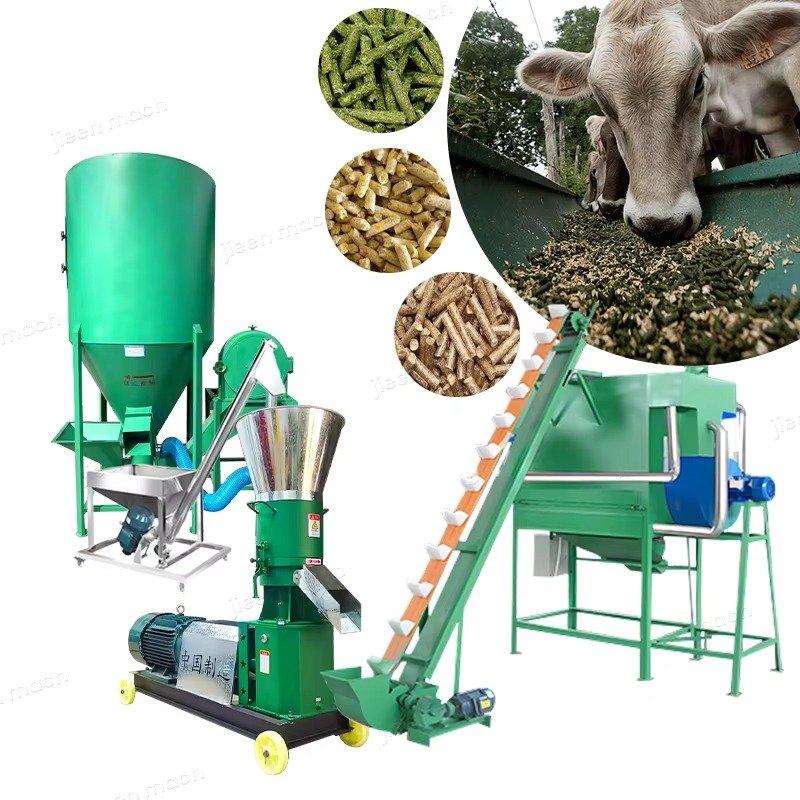
From small backyard operations to large commercial farms, MAIKONG offers appropriate solutions. Our product range spans manual units for 50kg/hour to automated production lines processing several tons daily. Customization capabilities ensure your machine matches specific requirements precisely.
Partnership opportunities welcome agricultural equipment dealers and agribusiness entrepreneurs. MAIKONG supports distributors with competitive pricing, marketing materials, technical training, and ongoing support. Our reputation for quality equipment helps partners build successful businesses.
Contact MAIKONG for Your Feed Pellet Machine Solution
Ready to reduce feed costs and take control of your farm’s nutrition program? MAIKONG provides free consultation to discuss your specific needs. Our team helps you choose the right machine capacity, understand total investment costs, and plan successful pellet production.
Nigerian agriculture continues growing and modernizing. Successful farmers invest in equipment that improves efficiency and profitability. A feed pellet machine represents one of the smartest investments for any livestock or aquaculture operation.
MAIKONG commits to supporting Nigerian farmers with quality equipment, fair pricing, and genuine partnership. Our success depends on your success. We provide the tools, knowledge, and support needed to transform your feed production and increase farm profitability.
Contact MAIKONG today. Let us help you start producing high-quality, cost-effective feed pellets for your farm or business.